

Table of Contents
- Why Aluminum Repair Requires Specialized Tools
- Quick Comparison: Top Aluminum Repair Tool Systems
- Comprehensive Aluminum Repair Stations
- Stud Welding Systems for Aluminum Dent Pulling
- Glue Pulling Repair (GPR) Kits and Non-Invasive Methods
- Aluminum Repair Cross-Contamination Prevention
- Aluminum Body Repair Best Practices and Tool Selection
- Which Tool System Is Right for Your Shop?
- Frequently Asked Questions
Last Updated: September 21, 2026
Why Aluminum Repair Requires Specialized Tools
Aluminum panels require different tools than steel. Their lower melting point and susceptibility to galvanic corrosion mean standard steel repair tools won’t work and can damage panels beyond repair.
Specialized aluminum repair tools are essential because aluminum conducts heat differently than steel and corrodes when exposed to ferrous metals. Proper aluminum repair tools address these challenges through specialized welding systems, non-ferrous synthetic tools, and dedicated pulling stations.
Shops that invest in dedicated aluminum repair tools see faster cycle times, fewer comebacks, and the ability to charge appropriately for the skill required.
Quick Comparison: Top Aluminum Repair Tool Systems
| Tool System | Best For | Key Advantage | Starting Investment |
|---|---|---|---|
| Dent Fix Aluspot Deluxe Extended | Full-service collision centers | All-in-one station with complete tooling | $11,878 |
| Dent Fix Aluspot Mini | Smaller shops with space constraints | Stud welding + compact footprint | $4,779.99 |
| KECO Glue Pull Repair (GPR) | Non-invasive aluminum dent repair | Preserves factory finish on panels | Contact for pricing |
| OTC Synthetic Body Tools | Cross-contamination prevention | Prevents galvanic corrosion issues | Contact for pricing |
| VEVOR Dent Puller Kit | Budget-conscious shops | Portable, affordable entry point | $190 |
Comprehensive Aluminum Repair Stations
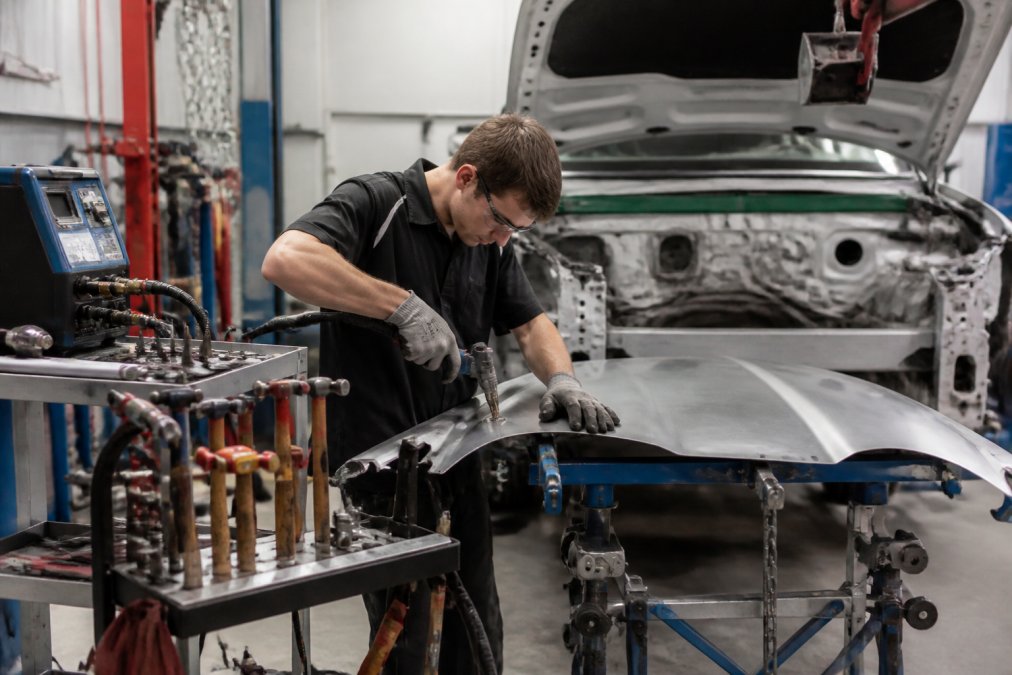
A complete aluminum repair station eliminates guesswork by integrating welding equipment, pulling systems, shaping tools, and storage into one organized workspace.
Dent Fix Aluspot Deluxe Extended Repair Station
The Dent Fix Aluspot Deluxe (DF-900DXE) is the top-tier option for shops handling high aluminum volumes. This station includes aluminum hammers, a 12-piece nylon dolly set, and a mobile cart with two storage drawers, backed by a 5-year manufacturer warranty. Everything lives on one cart, so technicians spend less time hunting for tools and more time pulling dents. The nylon dolly set is critical, traditional steel dollies cause cross-contamination issues with aluminum, while synthetic tools prevent galvanic corrosion entirely.
Pro Tip
The mobile cart design lets you position the station exactly where the work happens, allowing technicians to transition smoothly between pulling and finishing work.
The mobile cart design lets you position the station exactly where the work happens, allowing technicians to transition smoothly between pulling and finishing work.
Dent Fix Aluspot Mini Aluminum Repair Station
For shops with limited floor space, the Dent Fix Aluspot Mini (DF-900B) delivers dedicated aluminum capability without consuming your entire bay. This compact system integrates stud welding directly into the station, ideal for smaller operations testing their aluminum capacity.
Stud Welding Systems for Aluminum Dent Pulling
Stud welding is the fastest, most reliable method for pulling aluminum dents. A stud is welded to the dented panel, then pulled to remove the dent. Quality stud welding systems include temperature control and multiple welding modes for different aluminum thicknesses. Traditional stud welders designed for steel can overheat aluminum, causing panel warping or structural compromise. Aluminum-specific systems manage heat carefully and provide consistency, once settings are dialed in, technicians can replicate pulls repeatedly without variation, reducing rework and speeding cycle time.
Glue Pulling Repair (GPR) Kits and Non-Invasive Methods
Glue pulling represents a fundamentally different approach to aluminum dent removal. Instead of welding studs, GPR systems use specialized adhesive tabs that bond to the panel’s surface. A pulling tool then removes the dent without drilling holes or creating stress points. The KECO Glue Pull Repair system exemplifies this technology. Factory finish stays intact with no structural compromise from welding or drilling. The learning curve is real, proper tab placement, pull angle, and timing require practice.
Watch Out
Improper glue pull technique can damage the aluminum panel’s surface coating or cause the tab to slip during pulling. Invest time in training before using GPR on customer vehicles.
Improper glue pull technique can damage the aluminum panel’s surface coating or cause the tab to slip during pulling. Invest time in training before using GPR on customer vehicles.
Aluminum Repair Cross-Contamination Prevention
Galvanic corrosion is the silent killer of aluminum repairs. When ferrous metals contact aluminum, an electrochemical reaction begins immediately. Within weeks, corrosion spreads beneath the paint, creating white oxidation that weakens the panel and forces comebacks. This happens even with microscopic contact, a steel shaving embedded in a panel, a steel tool dragged across aluminum, or ferrous dust settling during welding.
Tool Selection and Material Substitution
The first line of defense is eliminating ferrous tools from aluminum work entirely. Steel hammers and steel dollies cannot touch aluminum panels. The OTC Synthetic Body Tools line offers nylon and composite alternatives. Dent Fix’s nylon dolly sets are synthetic throughout, eliminating any ferrous core. Standard high-speed steel (HSS) drill bits leave ferrous particles in aluminum; use carbide or cobalt drill bits designed for non-ferrous metals instead. Any clamp or fixture holding an aluminum panel must have synthetic contact surfaces.
Environmental Contamination Control
Your shop environment must actively prevent ferrous contamination. Maintain separate bays for aluminum work, physically isolated from steel repair areas. If dedicated bays aren’t feasible, establish a “clean zone” protocol: cover adjacent work areas with plastic sheeting during aluminum jobs. Maintain separate tool carts exclusively for aluminum work with color-coded storage to prevent accidental cross-use.
Temperature Control and Oxidation Prevention
Aluminum oxidizes more readily at elevated temperatures. Quality heat guns should have integrated temperature gauges and adjustable output. Most aluminum repair work requires temperatures between 200°F and 400°F; exceeding 500°F risks weakening the metal. After heat-based repair work, allow aluminum panels to cool naturally in a clean, dry environment for 30-60 minutes before proceeding.
Testing and Verification
Establish a verification protocol to confirm cross-contamination prevention is working. Inspect all repair areas under bright light for ferrous particles, steel shavings, or discoloration. Use a ceramic magnet to identify ferrous contamination, if it attracts particles, ferrous material is present and must be removed before painting. Record which tools were used on each aluminum panel and any contamination issues encountered to guide equipment replacement decisions.
Cost-Benefit Reality
Investing in cross-contamination prevention requires upfront spending: synthetic tool sets cost 40-60% more than steel equivalents, dedicated storage adds expense, and environmental controls require capital investment. However, shops that implement rigorous cross-contamination protocols report reduced comebacks, faster cycle times, higher customer satisfaction, and the ability to charge premium pricing for aluminum repairs.
Aluminum Body Repair Best Practices and Tool Selection
Choosing the right aluminum repair tools depends on your shop’s specific needs and workload. However, tool selection alone is insufficient, technicians must understand aluminum-specific repair principles and be trained on equipment-specific procedures.
Subscribe to our newsletter! →
Workload-Based Tool Investment Framework
Under 10% of repair volume: Invest in a quality stud welding system and synthetic hand tools. The VEVOR Dent Puller Kit ($190-$400) provides basic capability without overcommitting capital. 10-30% of repair volume: A compact station like the Dent Fix Aluspot Mini ($4,779.99) makes economic sense. 30%+ of repair volume: A comprehensive station like the Dent Fix Aluspot Deluxe Extended ($11,878) becomes economically essential.
Technician Training and Certification Requirements
Aluminum repair is a specialized skill requiring formal instruction. The Collision Repair and Refinish (B2) ASE certification covers structural repair principles that apply to aluminum. Equipment manufacturers offer training programs covering stud welding parameters, heat management, and troubleshooting ($500-$2,000 per technician, 1-3 days). I-CAR offers aluminum repair courses ($300-$800 per technician) that demonstrate to customers and insurers that your shop has trained technicians.
Aluminum-Specific Repair Protocols
Once technicians are trained, establish written protocols:
Material Identification: Identify the specific alloy before beginning repair. Different alloys have different properties affecting heat tolerance, pulling force, and finishing techniques.
Institutional Knowledge and Documentation
Capture your shop’s developing expertise:
Repair Log: Maintain a database including vehicle information, panel type and alloy, damage type, repair method, heat settings, pulling parameters, cycle time, and outcome. Over 50-100 repairs, patterns emerge revealing which techniques work best for specific damage types.
ROI Analysis for Aluminum Repair Investment
Before committing to a comprehensive station, calculate expected return:
Revenue per repair: Estimate your average aluminum repair revenue.
Cycle time improvement: Estimate time saved per repair. Calculate labor savings at your labor rate.
Which Tool System Is Right for Your Shop?
Start by assessing your aluminum workload. Are you getting regular aluminum repair requests, or is it occasional? Do you have dedicated space and technician capacity?
Frequently Asked Questions
What tools are required for aluminum body repair?
Aluminum body repair requires specialized tools including stud welding systems for pulling dents, glue pulling kits for non-invasive repairs, synthetic body tools to prevent cross-contamination, heat guns with temperature gauges for controlled heating, aluminum hammers and dolly sets for panel shaping, and weld breakers for removing fasteners. A comprehensive aluminum repair station integrates many of these tools into one workstation, while smaller shops may build toolkits based on their specific repair volumes and panel types.
Why does aluminum repair require dedicated tools instead of steel repair equipment?
Aluminum has different physical properties than steel: it’s softer, more prone to galvanic corrosion when in contact with steel, and requires lower heat application to avoid warping. Steel tools can contaminate aluminum panels through metal transfer, causing corrosion. Synthetic body tools and specialized aluminum hammers prevent this cross-contamination. Additionally, aluminum responds differently to pulling and shaping techniques, making dedicated aluminum repair tools essential for quality results and preventing structural damage or finish issues.
How do you prevent cross-contamination when repairing aluminum?
Cross-contamination occurs when steel particles transfer to aluminum surfaces, triggering galvanic corrosion. Prevent this by using only synthetic or aluminum-specific tools on aluminum panels, never use steel hammers, dollies, or drill bits directly on aluminum. Maintain separate tool sets for aluminum and steel work, use synthetic wedges and weld breakers, and ensure your workspace is clean of steel shavings. Many professional shops dedicate specific workstations to aluminum repair to eliminate cross-contamination risk and maintain panel integrity.
Is a dedicated aluminum repair station necessary for smaller shops?
For shops performing aluminum repairs regularly, a dedicated station reduces cycle time and improves consistency. However, smaller operations with limited bay space can start with portable glue pulling kits and modular stud welding systems that require less floor space. The Dent Fix Aluspot Mini is designed for compact environments and includes essential aluminum-specific pulling tools. As your aluminum repair volume grows, investing in a more comprehensive station becomes cost-effective. Contact KGM Equipment for guidance on systems that scale to your operation size.
What’s the real ROI timeline for investing in aluminum repair equipment?
ROI depends on your current repair volume and labor costs. For specific ROI projections based on your shop’s volume, KGM Equipment can provide guidance and financing options to help you build the right system at the right pace.
