

Table of Contents
- Why Shops Are Searching for a GradeATools Alternative
- What Performance Actually Means in Collision Repair Equipment
- Aluminum Dent Repair Equipment: What Separates Professional-Grade Systems
- Collision Repair Shop Efficiency Tools That Cut Turnaround Time
- Total Cost of Ownership: The Numbers Competitors Don’t Show
- Safety and Compliance Standards for Structural Repair Equipment
- How KGM Equipment Stacks Up Against Other Performance Alternatives
- Frequently Asked Questions
Last Updated: September 20, 2026
Why Shops Are Searching for a GradeATools Alternative
Collision repair shops rarely switch equipment vendors for fun. They switch because a machine failed mid-job, a supplier went quiet on a Friday afternoon, or a tool that looked industrial-grade on the website couldn’t survive six months of daily use. If you’re evaluating a GradeATools alternative for performance in 2026, the real question isn’t brand loyalty.
What Performance Actually Means in Collision Repair Equipment
Performance in collision repair equipment is the ability to restore a vehicle to manufacturer tolerances repeatedly, within a predictable cycle time, without the machine losing accuracy or breaking down. Speed alone isn’t performance. A fast pull that overshoots the datum point costs you more in rework than a slower, controlled pull ever would.
Pull Force, Cycle Time, and Structural Integrity
Three numbers separate professional-grade systems from everything else:
- Pull force rating: measured in tons, and it must hold at the top of its range, not just peak there
- Cycle time: the realistic time from setup to verified alignment, not the marketing figure
- Repeatability: whether the tenth pull lands where the first one did
A common mistake is buying on peak pull force. In practice, what matters is sustained force through the full pull, because structural steel and high-strength alloys resist differently as they move.
Compatibility With ADAS Calibration and Modern Vehicle Platforms
Modern vehicles changed the job. Advanced driver assistance systems depend on precise sensor positioning, and that positioning depends on the structure underneath being correct. A frame that’s within tolerance for panel gaps can still be out of tolerance for radar and camera aiming. Equipment that lets you verify and document structural alignment before calibration saves a second trip to the bay.
Skipping post-repair structural verification before ADAS calibration is one of the most expensive mistakes in a modern shop. If the structure is off, the calibration won’t hold, and the comeback lands on your labor budget, not the customer’s.
Aluminum Dent Repair Equipment: What Separates Professional-Grade Systems
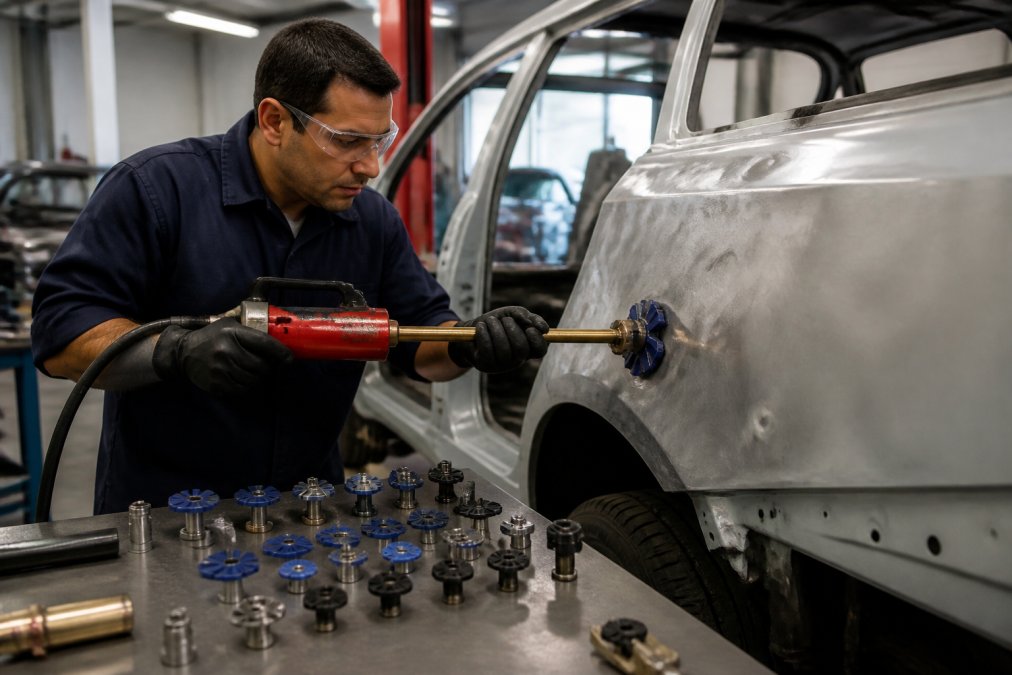
Aluminum dent repair equipment is built around a different problem than steel tooling: aluminum work-hardens, tears more easily, and responds badly to heat. Professional-grade systems control how the force is applied rather than simply applying more of it.
Glue Pulling, Forming Dies, and Removal Dies Compared
Each method solves a different stage of the repair:
- Glue pulling lifts shallow dents without penetrating the panel, which preserves the factory finish and avoids heat
- Forming dies shape and stretch metal back toward its original contour during panel repair
- Removal dies extract stubborn dents and creases where pulling alone won’t move the metal
The practical difference between a professional setup and a budget one comes down to how precisely the dies are machined and how consistently the pulling system holds adhesion. A technician who has to re-glue a tab three times per panel has already lost the cycle time the cheaper tool saved.
Collision Repair Shop Efficiency Tools That Cut Turnaround Time
Collision repair shop efficiency tools work by removing waiting, not by making technicians move faster. The gains come from setup time, tool access, and handoffs between bays.
| Bottleneck | Practical Fix | Effect on Turnaround |
|---|---|---|
| Searching for dies and adapters | Kit tooling by repair type | Less setup time per job |
| Shared pulling equipment | Schedule heavy pulls in blocks | Fewer bay idle hours |
| Failed verification | Verify structure before refinishing | Fewer rework cycles |
| Vendor downtime | Confirm support response terms | Less unplanned downtime |
Total Cost of Ownership: The Numbers Competitors Don’t Show
Ask the vendor for their support response commitment in writing, including what happens on a Friday afternoon. A machine down over a weekend with no parts channel is a Monday problem that becomes a Tuesday problem.
Financing and ROI timelines vary by shop size and job mix, so treat any break-even figure you’re quoted as a starting point for your own math, not a promise.
Safety and Compliance Standards for Structural Repair Equipment
Structural repair equipment must be anchored, rated, and maintained to recognized safety standards, and the documentation should be available before purchase, not after. Most competitor pages treat safety as a footnote. This section treats it as a buying criterion, because a pulling system that fails a compliance check is a liability, not a tool.
The Standards That Actually Apply to a Collision Bay
Three layers of requirements govern structural repair equipment in a working shop:
- Workplace safety obligations. General industry workplace safety rules for shops fall under OSHA regulations for general industry. That covers machine guarding, lockout/tagout during maintenance, PPE, and housekeeping around pulling towers and hydraulic systems.
- Equipment rating and anchoring. A pulling system’s rated capacity must match how your techs actually use it, and the anchor system must meet the manufacturer’s specification for your specific floor type and slab thickness. A pulling tower bolted to an inadequate slab is a hazard, not a tool.
- Technician certification. Structural repair and ADAS calibration work is increasingly tied to manufacturer and industry certification programs. I-CAR is the recognized training and certification body for collision repair in the United States, and many insurers and OEM repair procedures now expect documented technician qualification before certain structural and calibration operations are signed off.
What to Verify Before You Sign
Ask the vendor for four documents, not four reassurances:
- The rated capacity certificate for the pulling system, stated as a sustained rating, not a peak.
- The anchoring specification, including the slab thickness and concrete strength the anchor design assumes.
- The maintenance schedule and the lockout/tagout procedure for the hydraulic and pulling components.
- The training pathway for your techs, including whether it maps to a recognized certification.
Anchoring failures are the most common serious incident with frame pulling equipment, and they usually trace back to a slab that was never verified against the manufacturer’s spec. Confirm floor type and thickness before the machine is delivered, not after it is bolted down.
Compliance as a Performance Metric
Compliance is not separate from performance. A machine that is properly rated, correctly anchored, and operated by certified techs holds tolerance longer, produces fewer failed verifications, and generates documentation that supports insurance claims and OEM repair procedures. Shops that treat the paperwork as part of the equipment spec tend to see fewer comebacks and cleaner claim approvals than shops that treat it as an afterthought.
The Unique Angle Most Guides Skip
Competitor pages list features. They rarely connect equipment selection to the compliance chain that runs from anchoring spec to technician certification to insurer acceptance. For a shop evaluating a GradeATools alternative for performance, that chain is the real test: the tool has to perform, and the shop has to be able to prove it did.
How KGM Equipment Stacks Up Against Other Performance Alternatives
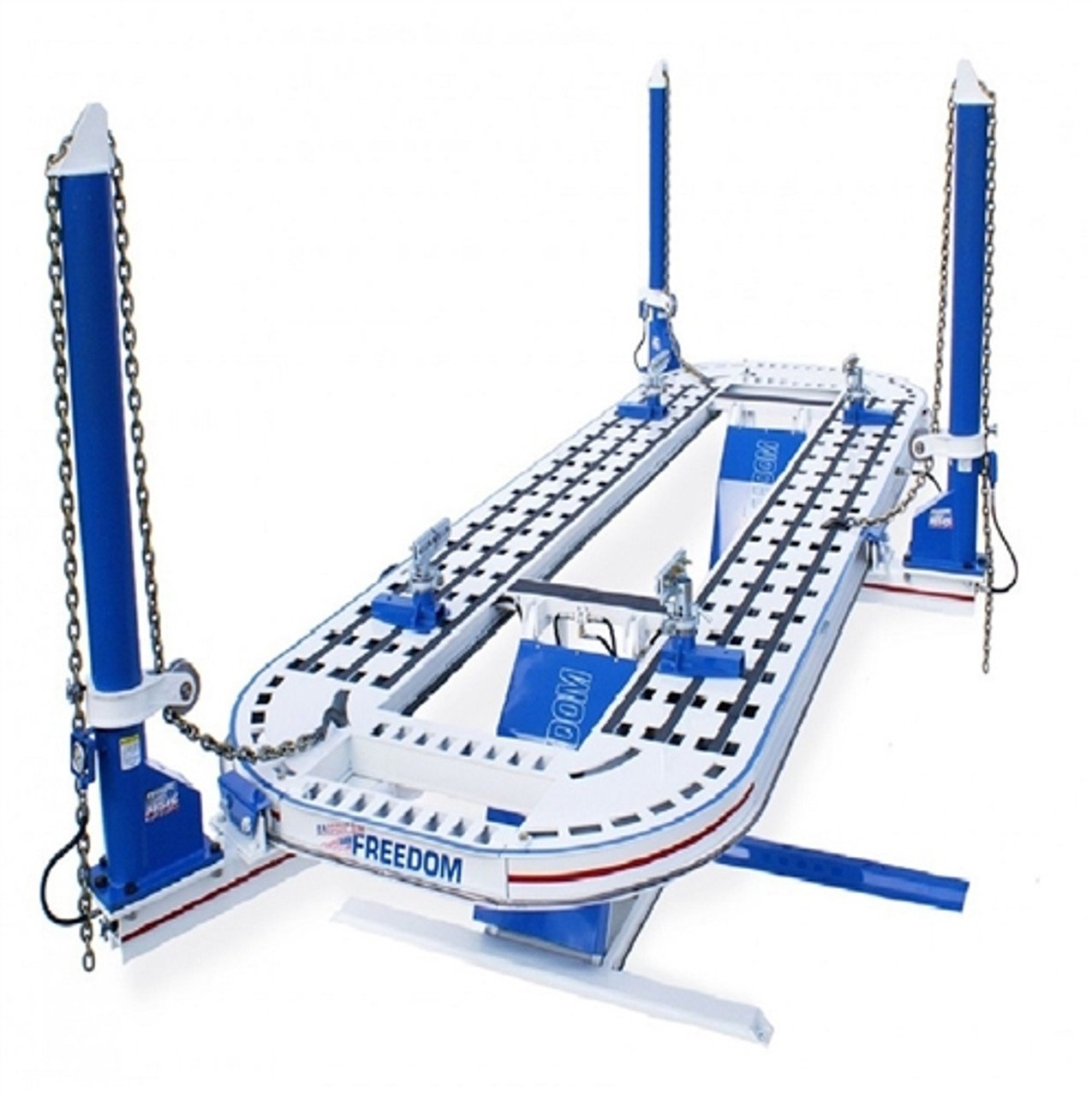
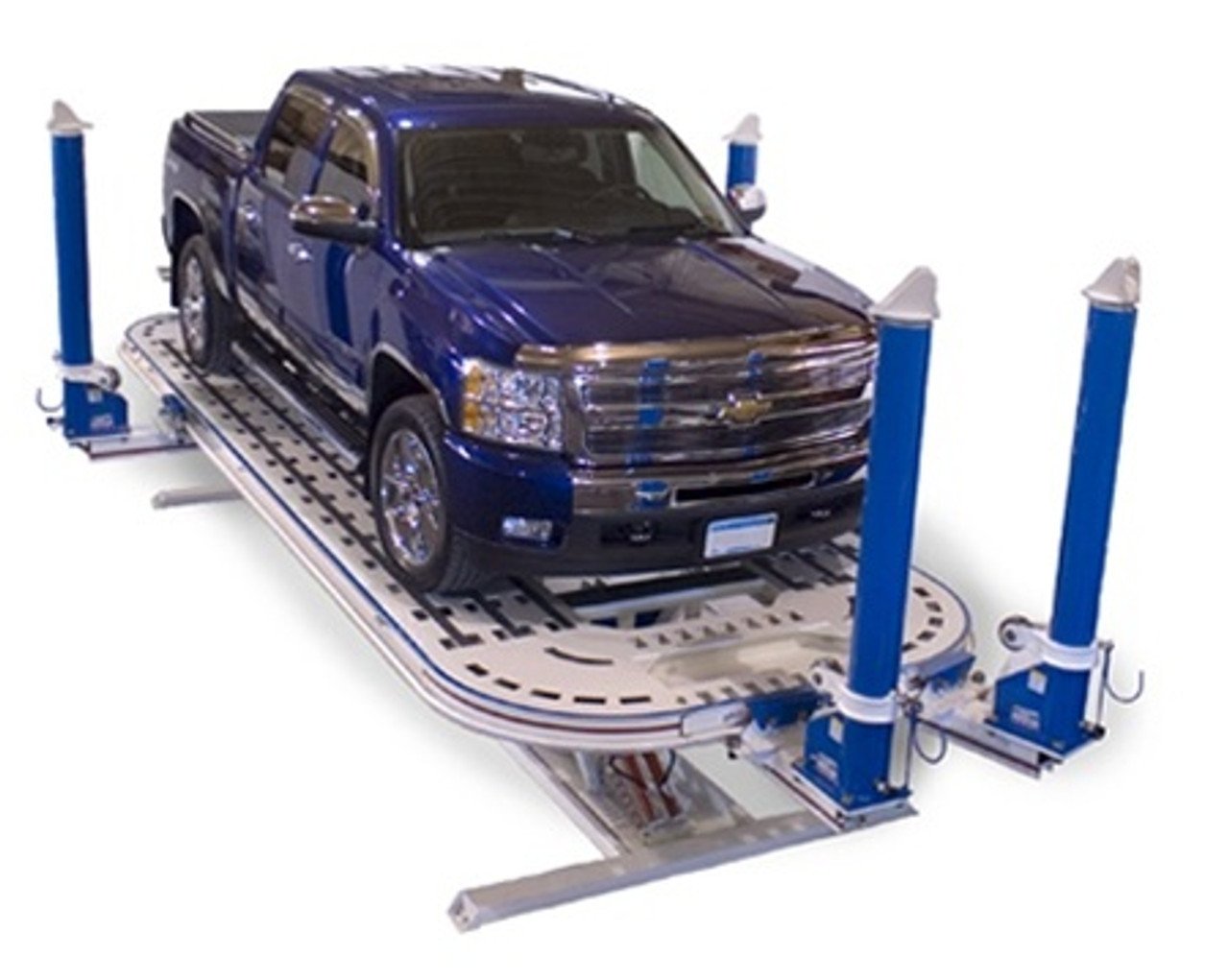
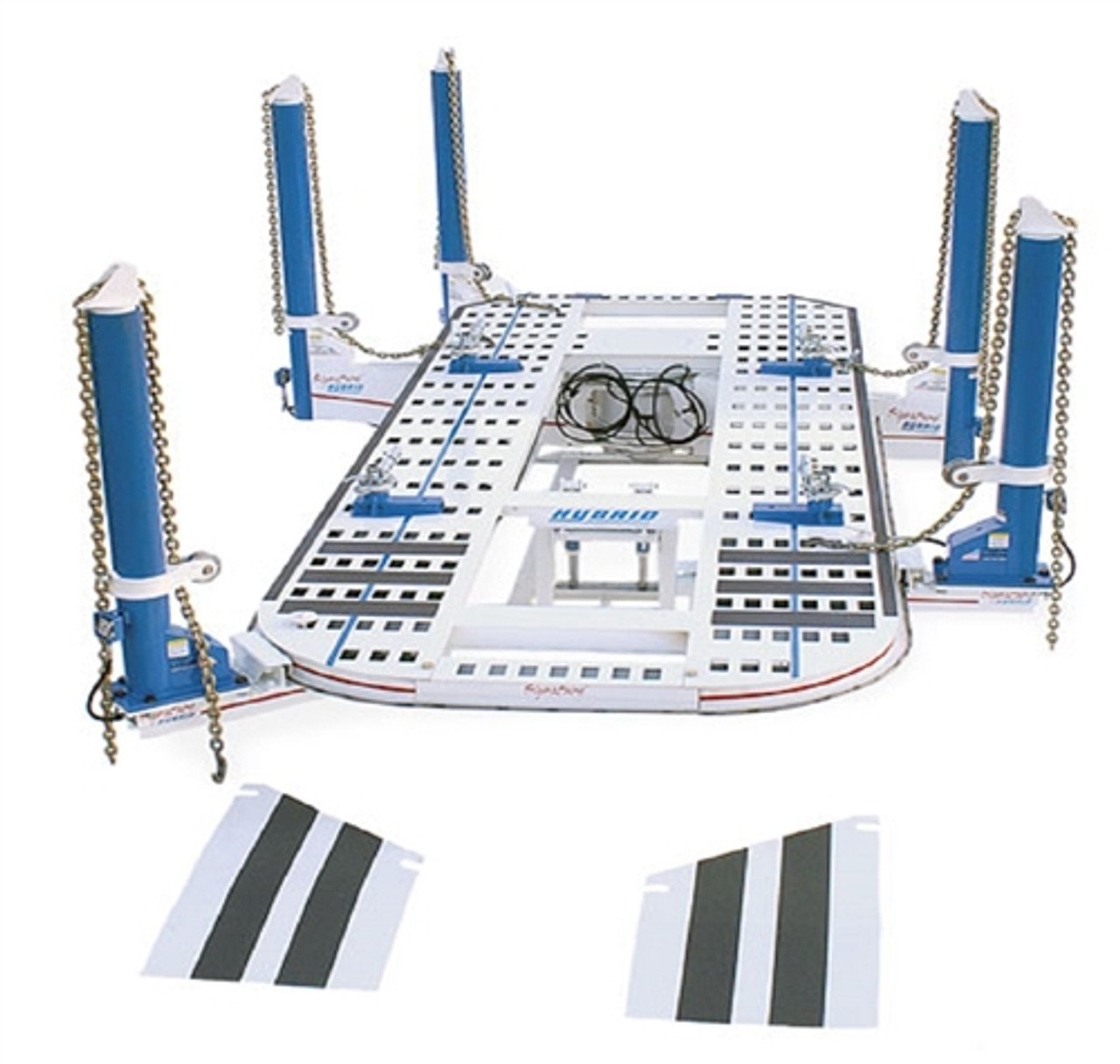
KGM Equipment offers top-quality auto body and industrial machinery built for reliable performance on every job site, with lightweight and effective aluminum collision repair tools that handle both aluminum and traditional steel work.
How to Benchmark Alternatives Without a Lab
Most competitor pages compare features on paper. A shop can run a practical benchmark in a single afternoon using four repeatable tests:
- Sustained pull test. Set the pulling system to a load near the top of its rated range and hold it. Watch for drift, hydraulic creep, or chain stretch. A machine that holds steady under sustained load is doing what the spec sheet claims.
- Repeatability test. Pull the same reference point ten times and measure the result each time. The spread between the first and tenth pull tells you more about real-world accuracy than any peak rating.
- Cycle-time test. Time a full setup-to-verified-alignment cycle on a representative job, not a demo panel. Include die changes, adapter swaps, and verification.
- Adhesion test on aluminum. Run a glue-pulling sequence on a scrap aluminum panel and count how many tabs you re-glue. Re-glue count is the fastest proxy for whether the system is actually built for aluminum.
Tool Maintenance and Longevity: The Cost Competitors Hide
Longevity is where the total cost of ownership math gets real. Three maintenance factors drive most of the difference between a system that lasts a decade and one that lasts three years:
- Hydraulic fluid and seal service intervals. Follow the manufacturer’s schedule, and confirm replacement seals and fluid are available from more than one source. Single-source consumables are a hidden lock-in.
- Die and adapter wear. Forming dies and removal dies wear at the contact surfaces. A shop that tracks die wear and replaces them on a schedule gets more consistent pulls than one that waits for a visible failure.
- Anchor and frame inspection. Pulling towers and their anchors should be inspected on a set interval, not just after an incident. Documented inspections support both safety compliance and warranty claims.
Where KGM Equipment Stands Out
Durability focus, specialized collision repair tooling, and access to expert customer support when something goes wrong. That support matters more than spec sheets for a five-bay shop that can’t afford a machine sitting idle. The aluminum-and-steel capability in one setup also removes the second-purchase problem that shows up in most competitor configurations.
Where It Falls Short
If you need a single-purpose tool for one narrow task, a general industrial machinery line may be more than the job requires. Match the system to your actual mix of work.
The Deciding Factors
For shops comparing a GradeATools alternative for performance, the deciding factors are usually structural integrity under sustained load, whether the equipment handles aluminum and steel without a second purchase, how the system holds up under a documented maintenance schedule, and how fast the vendor responds when a machine goes down. KGM Equipment addresses all four, and readers can review current equipment specifications and availability before committing.
Frequently Asked Questions
What is the best aluminum dent puller for professional body shops?
The best aluminum dent puller depends on the panel type and damage severity. Glue pulling systems work well for shallow dents on aluminum panels because they avoid heat distortion. For deeper structural damage, a pulling tower with dedicated aluminum adapters gives more control. Look for equipment with adjustable pull force, compatible forming dies, and a support network that stocks replacement parts. KGM Equipment offers aluminum repair tools designed for both light dent removal and heavier structural pulls.
How do professional-grade collision repair tools improve shop performance?
Professional-grade tools reduce cycle time by handling repeated pulls without flex or failure. A pulling tower rated for consistent heavy-duty use lets technicians complete structural realignment faster, which shortens repair turnaround time. Precision calibration features on measuring systems also reduce rework. Shops that invest in equipment built for daily wear see fewer breakdowns and less downtime, which directly affects throughput and revenue per bay.
What features should I look for in a high-performance dent pulling system?
Check the rated pull force, the range of forming dies and removal dies included, and whether the system handles both steel and aluminum. Adjustable height and 360-degree rotation help with off-angle pulls. Also verify compatibility with your existing frame straightening setup, so you are not buying a separate anchoring system. Finally, confirm that consumables like glue sticks and pulling tabs are available from multiple sources to avoid supply lock-in.
Are there industrial-grade alternatives to standard collision repair equipment?
Yes. Several brands make equipment rated for heavier duty cycles than standard shop tools. When comparing, look at the equipment durability specs, warranty terms, and whether the manufacturer stocks replacement parts domestically. Industrial-grade does not always mean better for a collision shop; the key is matching the duty rating to your daily volume. A 5-bay shop has different needs than a 20-bay production facility, so size the equipment to your actual workload.
How does KGM Equipment compare to traditional collision repair tool suppliers?
KGM Equipment focuses on durable auto body machinery and aluminum repair tools with direct technical support. Traditional suppliers often sell through distributors, which can slow down warranty claims and parts orders. KGM’s model emphasizes responsive support and equipment built for daily shop use. For shops concerned about downtime, the ability to reach a technical support team quickly matters as much as the equipment specs themselves.
The hardest part of switching equipment vendors isn’t the purchase. It’s trusting that the next machine will still hold tolerance a year from now, and that someone answers when it doesn’t. KGM Equipment builds collision repair and industrial machinery around durability, supports it with lightweight aluminum repair tools that work on steel too, and backs it with expert customer support. Subscribe to the KGM Equipment newsletter for equipment guidance and shop performance tips.

