

Table of Contents
- Why Aluminum Repair Tools Cannot Safely Handle Steel
- Cross-Contamination in Collision Repair: The Hidden Risk
- Steel vs. Aluminum Body Panel Repair: Key Distinctions
- Selecting the Right Aluminum Repair Tool Kits for Your Shop
- Dual-Material Repair Systems: A Practical Solution
- Common Mistakes When Switching Between Materials
- Frequently Asked Questions
Last Updated: September 1, 2026
Why Aluminum Repair Tools Cannot Safely Handle Steel
Aluminum repair tools are engineered for a specific material with distinct properties. Using them on steel creates immediate problems: tool damage, compromised repairs, and serious safety risks. The fundamental issue lies in material incompatibility. Aluminum is softer, lighter, and behaves differently under stress than steel. Tools designed for aluminum’s specific tensile strength, thermal conductivity, and work hardening characteristics will fail or perform unpredictably when forced onto steel panels.
At KGM Equipment, we’ve worked with collision repair shops across the country and seen firsthand what happens when teams try to stretch aluminum tools beyond their design parameters: damaged equipment, longer cycle times, and repairs that don’t meet OEM specifications. The cost of replacing a stud welder or glue pull system far exceeds the cost of owning the right tools for each material.
Material Property Differences
Steel and aluminum have fundamentally different characteristics that demand different repair approaches. Steel is denser, stronger, and more rigid than aluminum. Its tensile strength, the maximum stress a material can withstand before breaking, is significantly higher. Aluminum panels are lighter and more prone to deformation under the same force that steel would easily resist.
When you apply an aluminum dent pulling system to a steel panel, you’re asking the tool to generate forces it wasn’t designed to handle. The stud welder’s capacitor discharge mechanism, calibrated for aluminum’s conductivity, will either undershoot or overshoot on steel, creating weak welds or burning through the panel. Glue pull systems designed for aluminum’s surface chemistry won’t bond properly to steel without different adhesive formulations.
Tensile Strength and Panel Rigidity Variations
Steel typically has a tensile strength between 36,000 and 100,000 PSI depending on the grade. Aluminum alloys used in automotive panels typically range from 25,000 to 45,000 PSI. Panel rigidity follows the same pattern: steel panels are stiffer and require more force to reshape. An aluminum repair tool is calibrated to work with aluminum’s lower rigidity. Apply that same tool to a stiffer steel panel, and you either can’t generate enough force to move the metal, or the tool’s mechanical advantage fails because it’s working outside its design envelope.
This creates a cascading problem. Your technician compensates by applying more power or more cycles. The tool overheats. Components fail. You’re now looking at equipment downtime, rushed repairs, and potential liability if a poorly executed steel repair fails in the field.
Cross-Contamination in Collision Repair: The Hidden Risk
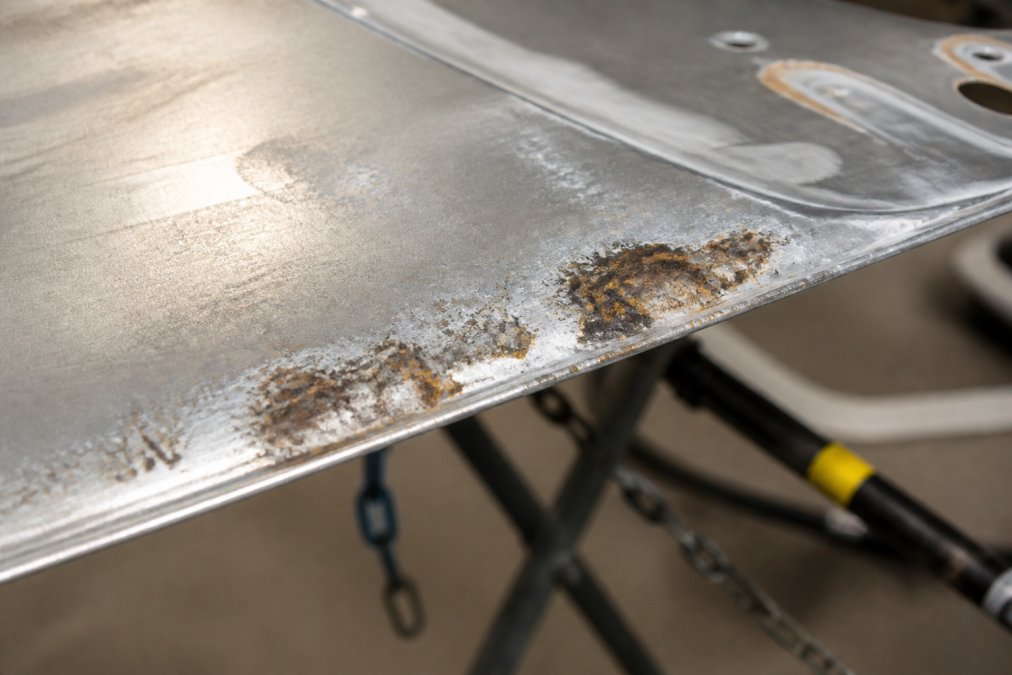
Cross-contamination is a structural and chemical problem that can compromise vehicle safety and create liability for your shop. When aluminum repair tools contact steel panels, or when steel tool residue remains on aluminum surfaces, you’re initiating galvanic corrosion.
A technician uses an aluminum stud welder on a steel panel, then switches back to aluminum work without cleaning the tool. Steel particles remain embedded in the tool’s contact surfaces. Those particles accelerate corrosion on the next aluminum panel they touch. The vehicle owner doesn’t see the damage immediately; it develops over months or years. By then, the repair is out of warranty, and your shop’s reputation is on the line.
Galvanic Corrosion and Metal Fatigue
Galvanic corrosion occurs when two different metals contact each other in the presence of moisture. Steel and aluminum form a galvanic couple, a natural battery that accelerates rust and oxidation. When steel tool residue sits on an aluminum panel, corrosion begins immediately.
The process accelerates in humid environments and salt-air climates. Within weeks, white oxidation forms around contact points. Within months, structural integrity begins to fail. The panel weakens. Metal fatigue sets in. A repair that looked perfect on delivery day becomes a safety hazard because modern vehicles rely on panel integrity for structural support and crash performance.
Prevention Protocols for Mixed-Material Vehicles
Modern vehicles use both aluminum and steel components. Your shop needs protocols to prevent cross-contamination.
First: dedicated tools for each material. Aluminum tools stay with aluminum work. Steel tools stay with steel work. Label your equipment clearly and store them separately.
Second: cleaning protocols between material switches. If a technician must use the same work area for both materials, clean all contact surfaces thoroughly with a wire brush and cloth. Follow manufacturer cleaning recommendations for specialized equipment.
Third: documentation. Track which tools were used on which vehicles and materials. If a customer reports corrosion or panel failure months later, you have a record showing the repair was executed correctly.
Fourth: material identification training. Your team needs to recognize aluminum versus steel on sight. Aluminum is lighter and doesn’t rust like steel. Steel develops red-orange rust.
Steel vs. Aluminum Body Panel Repair: Key Distinctions
Steel panels respond predictably to traditional collision repair methods. They handle aggressive pulling, hammering, and heating without degrading. Welding steel is straightforward; the metal fuses reliably with standard MIG or stick welding equipment.
Aluminum panels require gentler handling. They spring back more aggressively, a phenomenon called spring back. They’re sensitive to heat, and excessive heating during welding or pulling can weaken the metal through work hardening. Aluminum cannot be filled like steel; any filler must be specifically formulated for aluminum substrates.
Heat Sensitivity and Work Hardening
Heat is aluminum’s enemy. When you apply heat to aluminum during welding or aggressive pulling, the metal’s crystalline structure changes through work hardening, making it harder but also more brittle. Push it too far, and the panel becomes prone to cracking and loses its ability to absorb impact energy.
Steel tolerates heat much better. Aluminum welding requires shielding gas (typically argon) to prevent oxidation. Steel welding is more forgiving. This is why aluminum repair requires specialized training and equipment. A technician experienced in steel repair cannot simply transfer those skills to aluminum.
Spring Back and Memory Characteristics
Spring back is aluminum’s tendency to return toward its original shape after being reshaped. Steel does this too, but aluminum’s lower modulus of elasticity means it springs back more aggressively. A dent pulled out of aluminum can partially return to its original position hours or days later.
This memory characteristic requires different pulling strategies. Aluminum repairs often use multiple light pulls rather than one aggressive pull. Glue pull repair systems are particularly effective for aluminum because they distribute force gradually. Steel panels have less memory and stay reshaped once corrected, making steel repairs faster and more forgiving.
Selecting the Right Aluminum Repair Tool Kits for Your Shop
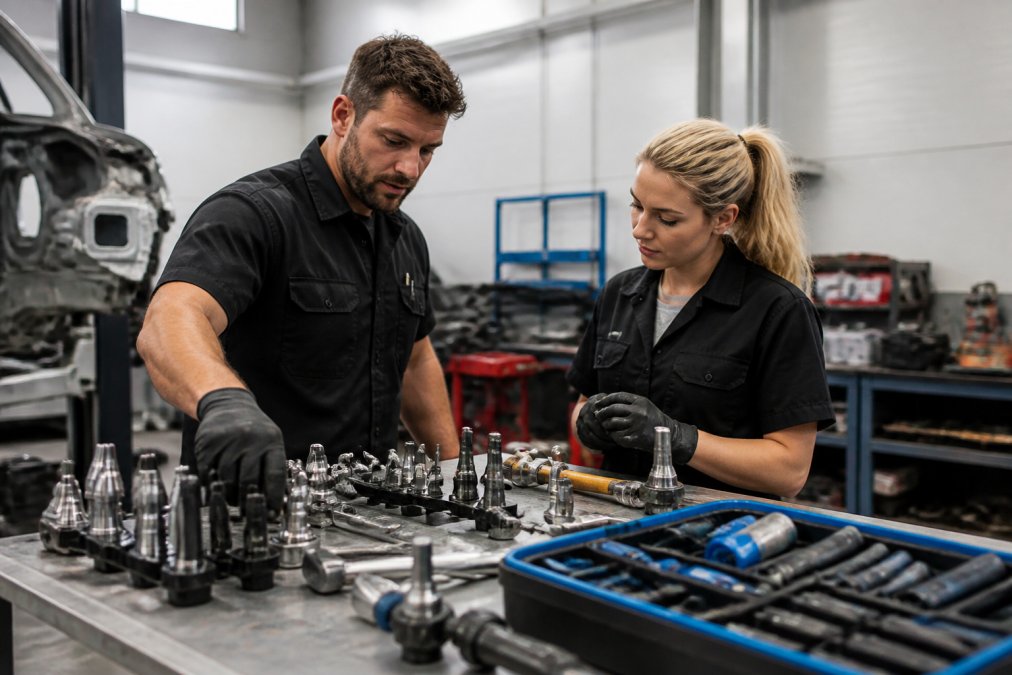
Building a capable collision repair operation means investing in the right tools for the materials you work with. If your shop handles both aluminum and steel, you need separate systems. The upfront investment is higher, but the alternative, damaged equipment, poor repairs, and liability, costs far more.
Subscribe to our newsletter! →
KGM Equipment specializes in collision repair tools engineered for specific materials and designed to prevent cross-contamination. Our aluminum repair systems are engineered for aluminum’s specific properties: lower tensile strength, heat sensitivity, and spring back characteristics.
Specialized Tooling: Stud Welders, Glue Pull Systems, and Hand Tools
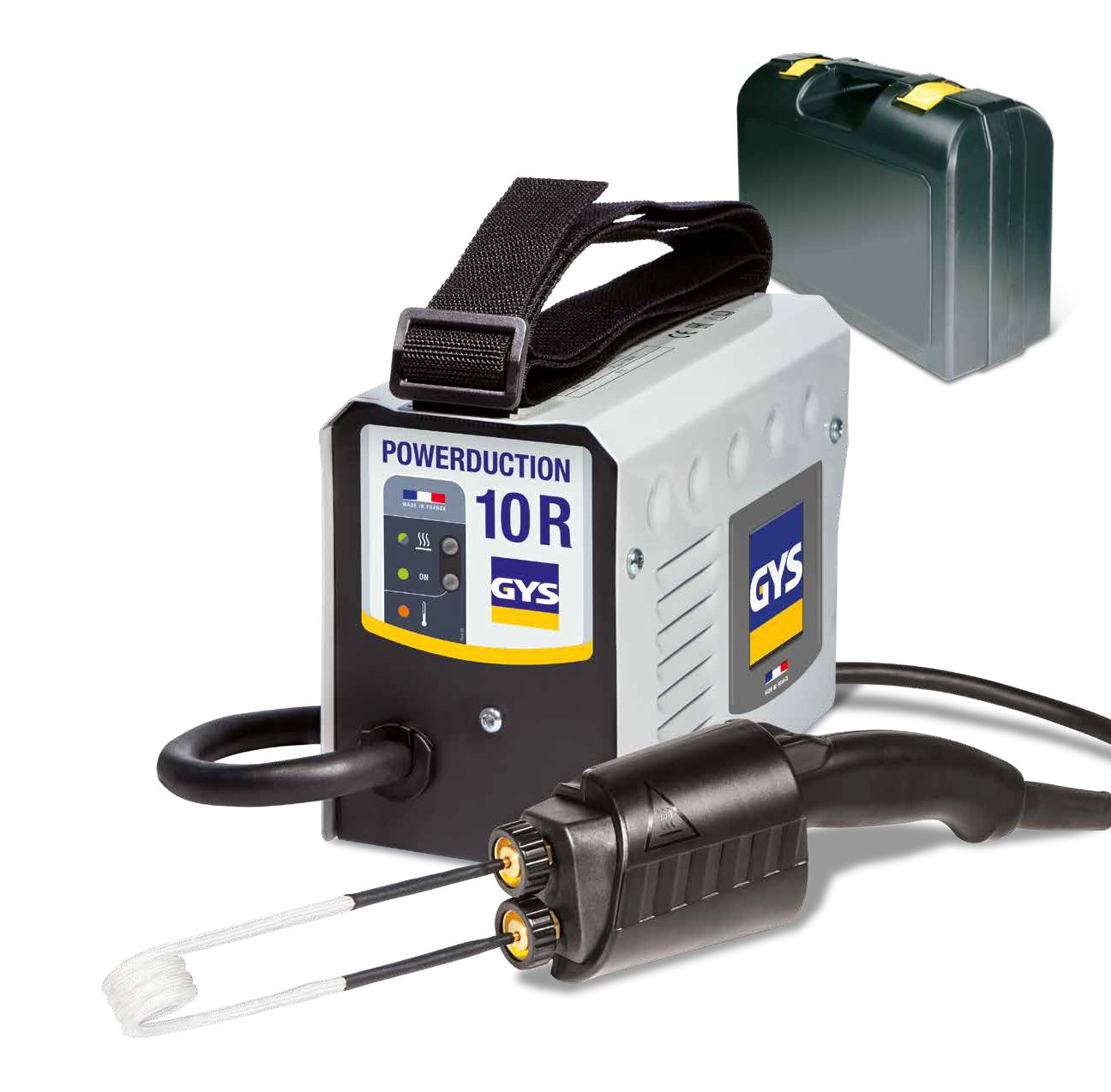
Stud welders designed for aluminum use lower power and faster pulse cycles than steel systems. If you try to use an aluminum stud welder on steel, the power output is insufficient to create a reliable weld on the higher tensile strength material.
Glue pull repair systems work on both aluminum and steel surfaces, but adhesive formulations differ. Aluminum requires adhesives that bond to oxidized surfaces and flex with the metal’s spring back. Using the wrong adhesive type results in poor adhesion and failed pulls.
Hand tools matter too. Using steel hand tools on aluminum creates surface damage requiring additional repair work.
DIY vs. Professional-Grade Tooling
Professional-grade tooling is optimized for specific materials and delivers superior results. A professional stud welder designed for aluminum outperforms a general-purpose system every time. It’s faster, more reliable, and produces better welds.
For a small shop with 5 bays, the question becomes: do you invest in separate systems for aluminum and steel, or focus on one material? If most of your work is aluminum, invest in aluminum-specific tools. If your work is split between materials, dual-material systems make sense. They cost more upfront but eliminate the need for duplicate equipment.
Dual-Material Repair Systems: A Practical Solution
Dual-material systems bridge the gap between aluminum-only and steel-only tooling. These systems handle both materials with configuration changes.
These systems cost more than single-material tools but eliminate cross-contamination risk. You’re reconfiguring one system rather than switching between different pieces of equipment. The tradeoff is complexity: technicians need training on both modes, and setup time increases when switching materials. For most shops, this tradeoff is acceptable.
When evaluating dual-material systems, look for intuitive controls and clear documentation on switching between modes. The easier the transition, the more likely your team will follow proper protocols.
Common Mistakes When Switching Between Materials
Most cross-contamination problems stem from predictable mistakes.
Mistake 1: Assuming tools are interchangeable. They’re not. Train your team that tool selection is material-specific.
Mistake 2: Skipping cleaning between material switches. Build cleaning into your workflow as standard practice.
Mistake 3: Misidentifying the material. Require visual material verification before tool selection.
Mistake 4: Ignoring manufacturer guidelines. Follow material-specific settings and procedures. Deviating from guidelines is how equipment fails.
Mistake 5: Storing tools together without labeling. Use color coding or clear identification to prevent grabbing the wrong tool.
Mistake 6: Rushing the material identification step. Build enough time into your schedule that verification is standard practice.
The answer to “can aluminum repair tools handle steel” is clear: they can’t, safely or effectively. The materials are too different, the tools are too specialized, and the risks are too high. Your shop’s reputation, your technicians’ safety, and your equipment’s lifespan all depend on using the right tools for the right material.
KGM Equipment provides collision repair systems engineered for specific materials and designed to prevent cross-contamination. Whether you’re investing in dedicated aluminum tools, steel-capable equipment, or dual-material systems, we have solutions that match your shop’s size and workload. Contact KGM Equipment today to discuss which system fits your operation.
Frequently Asked Questions
Q: What happens if you use steel tools on aluminum body panels?
A: Steel tools can scratch, gouge, and contaminate aluminum surfaces, leading to galvanic corrosion and structural weakness. Steel particles embedded in aluminum accelerate oxidation and metal fatigue. Even small scratches compromise the panel’s integrity and create pathways for corrosion. Professional shops use synthetic or aluminum-specific tools to prevent this damage and maintain panel rigidity for proper repair outcomes.
Q: Can you use the same dent pulling tools for aluminum and steel?
A: No. Aluminum and steel have different tensile strength, heat sensitivity, and spring back characteristics. Aluminum repair tools are designed for lower force application and minimal heat to prevent work hardening and distortion. Steel panels require higher force and different stud specifications. Mixing tools risks panel damage, improper reshaping, and compromised structural integrity. Most professional shops maintain separate aluminum repair tool kits and steel-specific equipment.
Q: Why must aluminum repair tools be kept separate from steel tools?
A: Cross-contamination causes galvanic corrosion when steel and aluminum contact moisture. Steel particles left on aluminum panels accelerate oxidation and create metal fatigue points. Separate tooling prevents this chemical reaction, protects OEM paint, and maintains panel structural integrity. This is especially critical in collision repair where panel memory characteristics and thermal conductivity must remain uncompromised for safe vehicle performance.
Q: What are the primary differences between aluminum and steel collision repair?
A: Aluminum has higher thermal conductivity and lower tensile strength than steel, requiring gentler force and specialized tooling. Steel panels tolerate higher impact force but are prone to rust without proper coating. Aluminum work hardens when repeatedly reshaped, losing flexibility. Steel allows more traditional welding and riveting. Glue pull repair (GPR) works effectively on both, but stud welders, dent pulling systems, and hand tools must be material-specific to prevent damage and galvanic corrosion.
This article was written using GrandRanker

