

Table of Contents
- What Makes Professional Auto Body Shop Machinery Worth the Investment
- Frame Machines and Structural Alignment Equipment
- Best Aluminum Repair Tools for Collision Shops
- How to Troubleshoot Industrial Welding Power Supplies
- Paint Booths and Refinishing Prep Systems
- Total Cost of Ownership: Durability, Maintenance, and Long-Term Performance
- Shop Size and Workflow Considerations
- Frequently Asked Questions
Last Updated: August 31, 2026
What Makes Professional Auto Body Shop Machinery Worth the Investment
Investing in professional auto body shop machinery determines how quickly your technicians work, how accurately they repair vehicles to OEM specifications, and ultimately, how profitable your shop becomes. The machinery you select today will impact your repair cycle times, customer satisfaction, and operational efficiency for years to come.
At KGM Equipment, we understand that every collision repair facility faces the same core challenge: balancing upfront capital costs against long-term operational efficiency. This guide breaks down the professional auto body shop machinery that matters most, examining frame machines, welding systems, paint booths, and the diagnostic tools that tie everything together.
Frame Machines and Structural Alignment Equipment
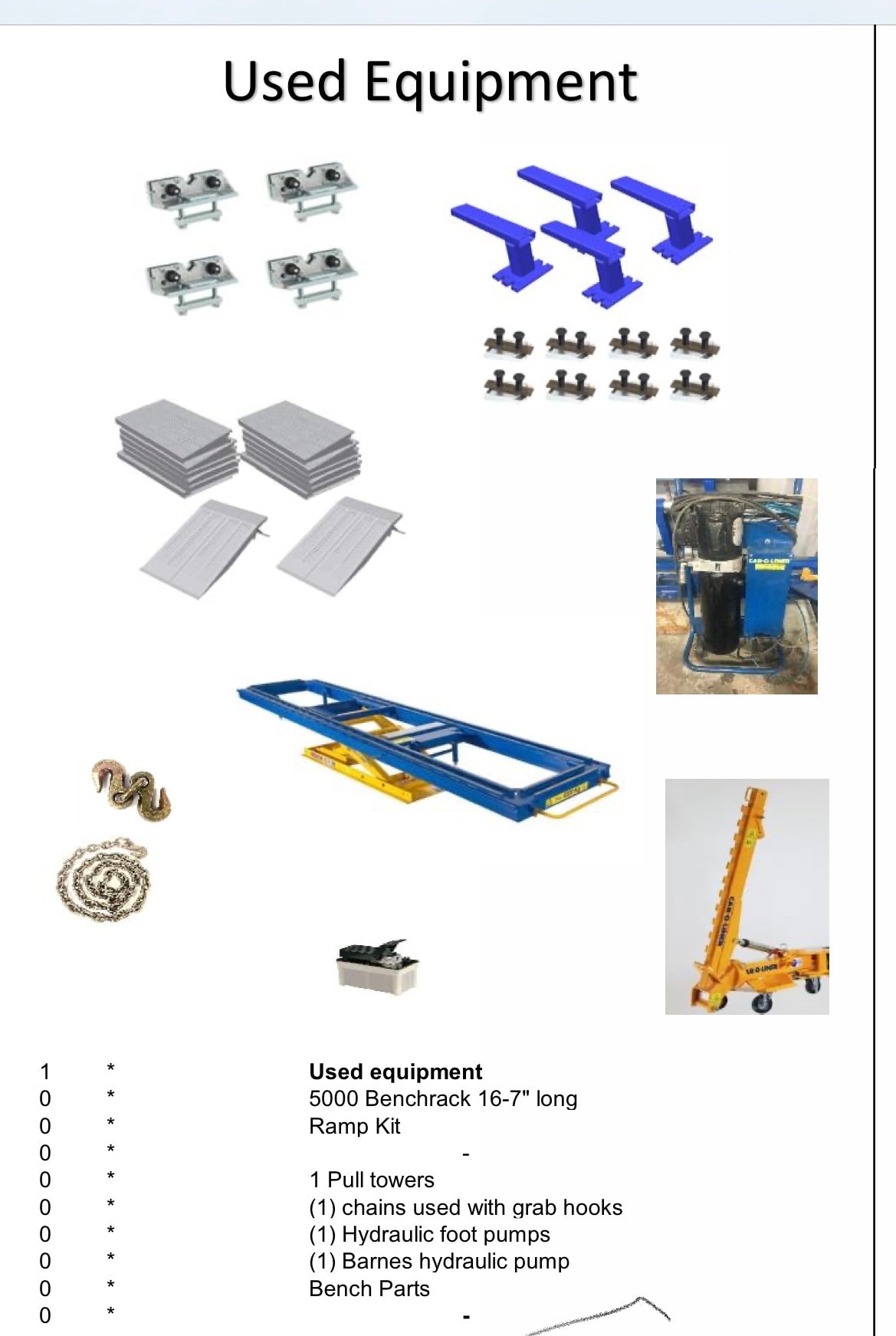
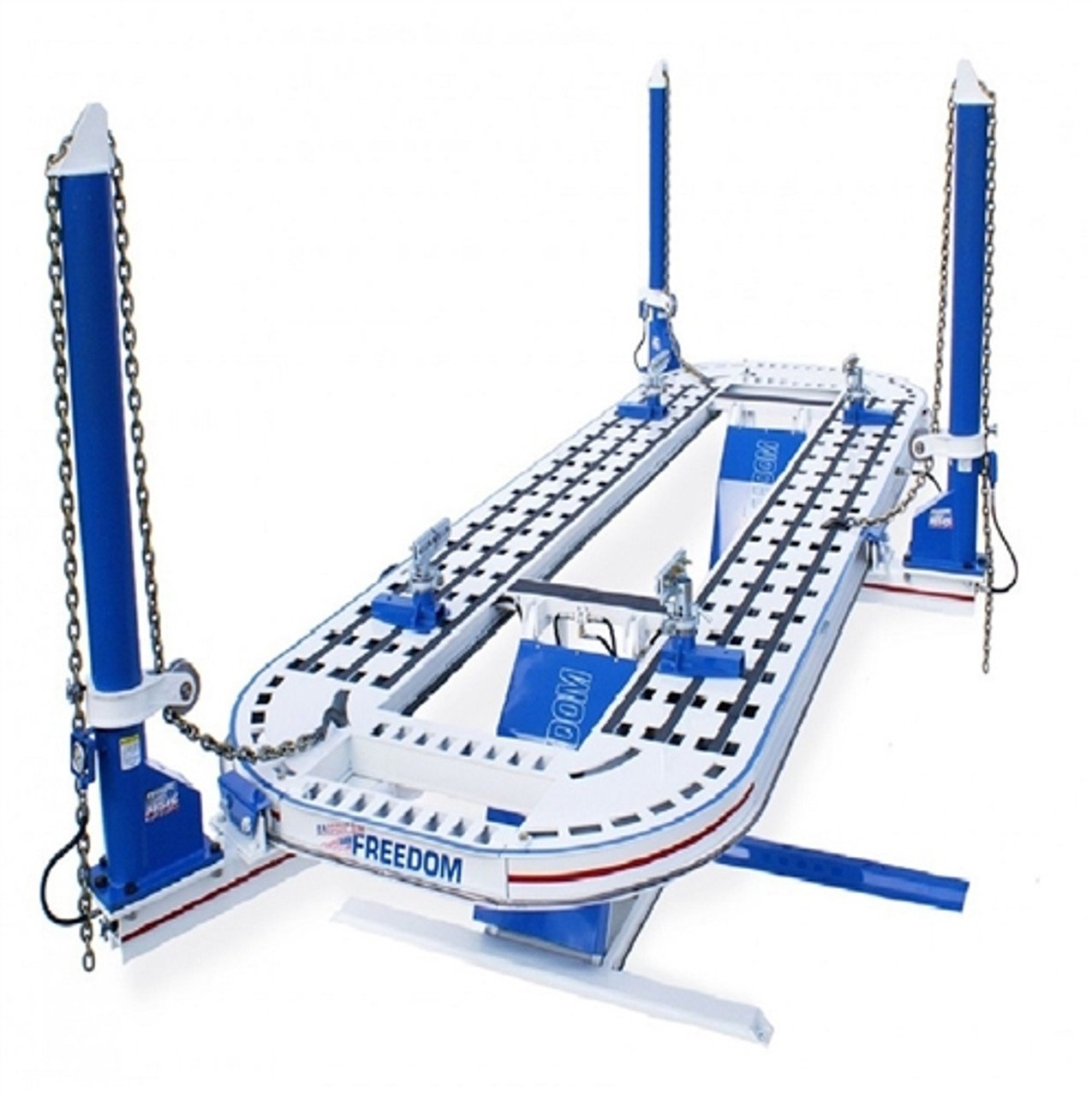
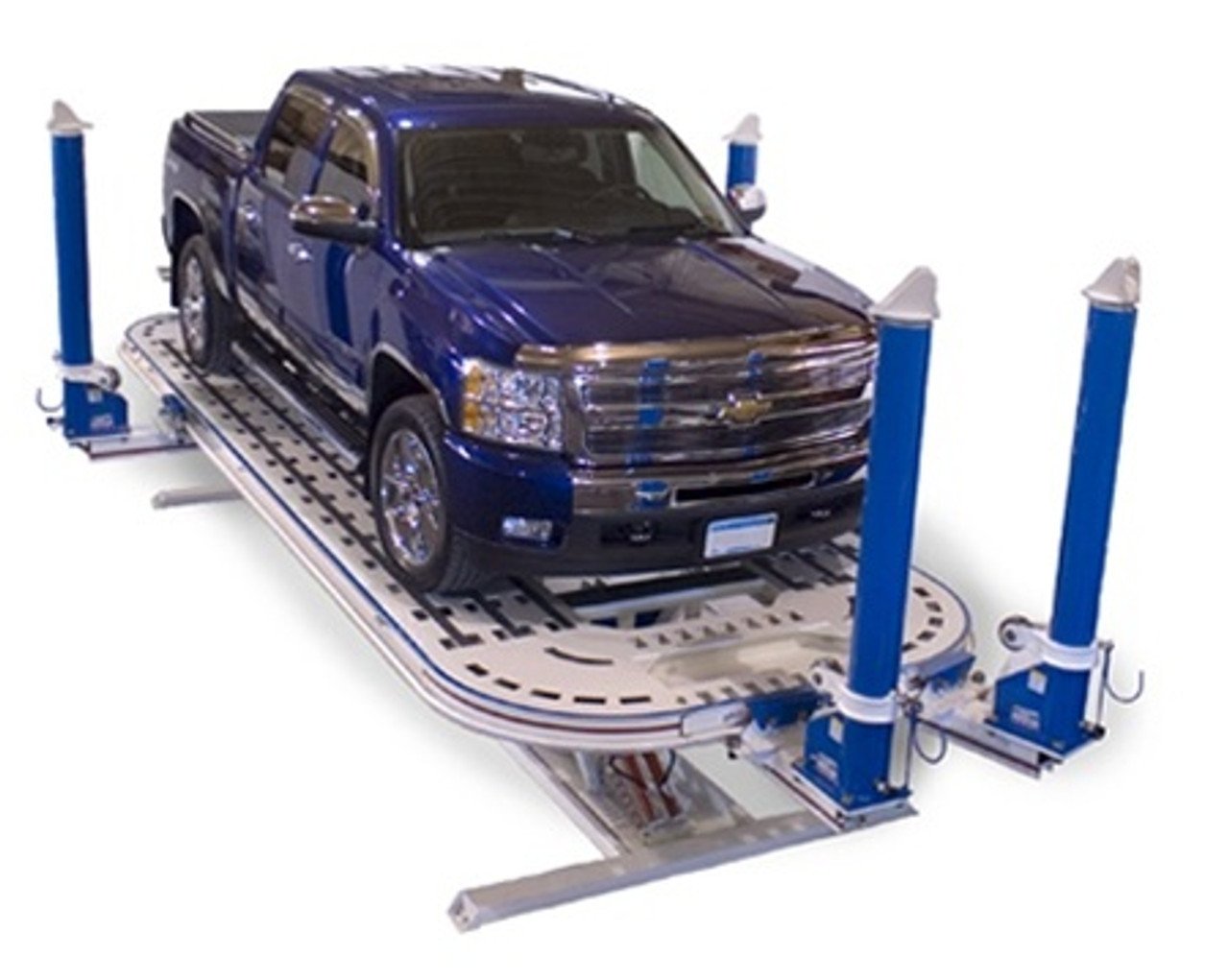
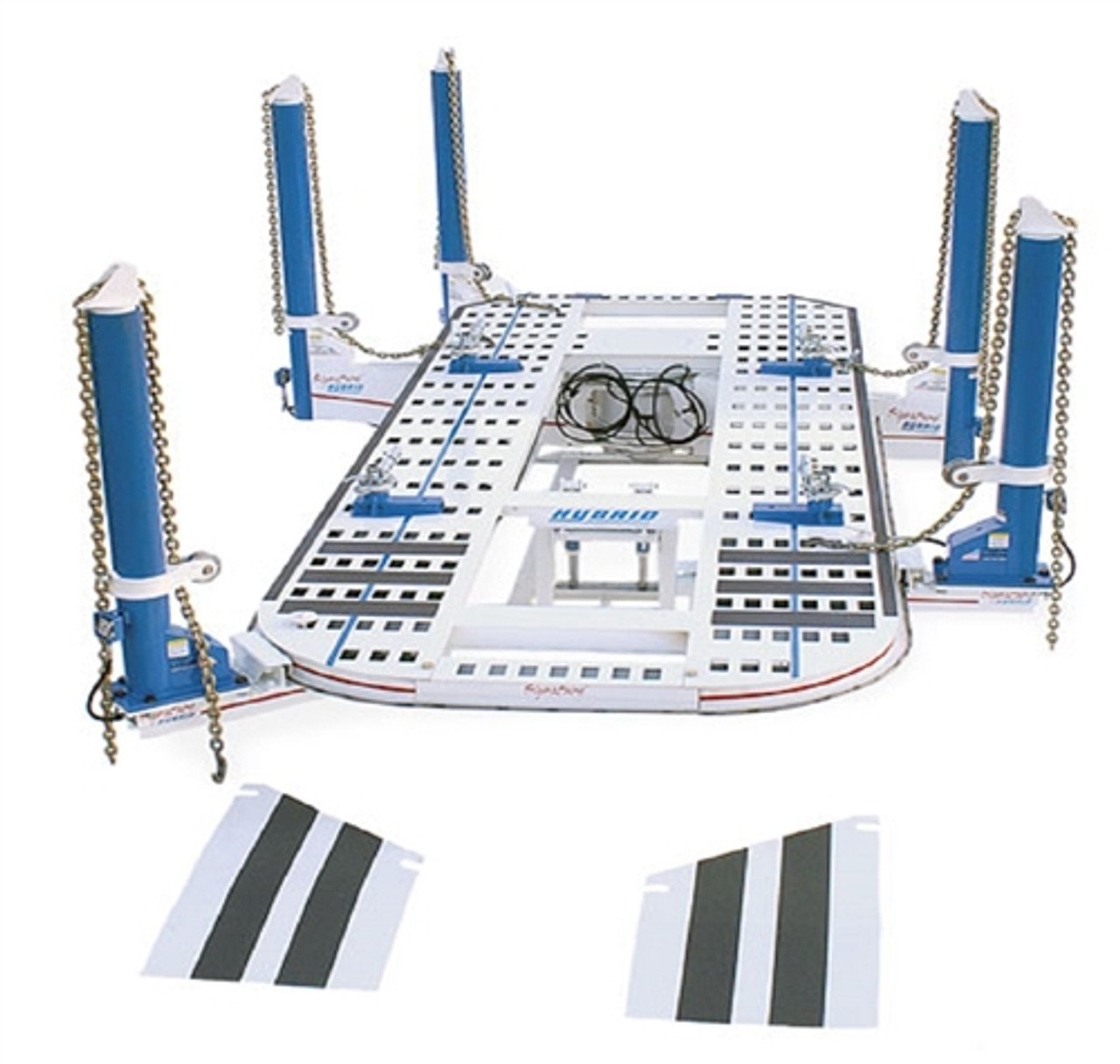
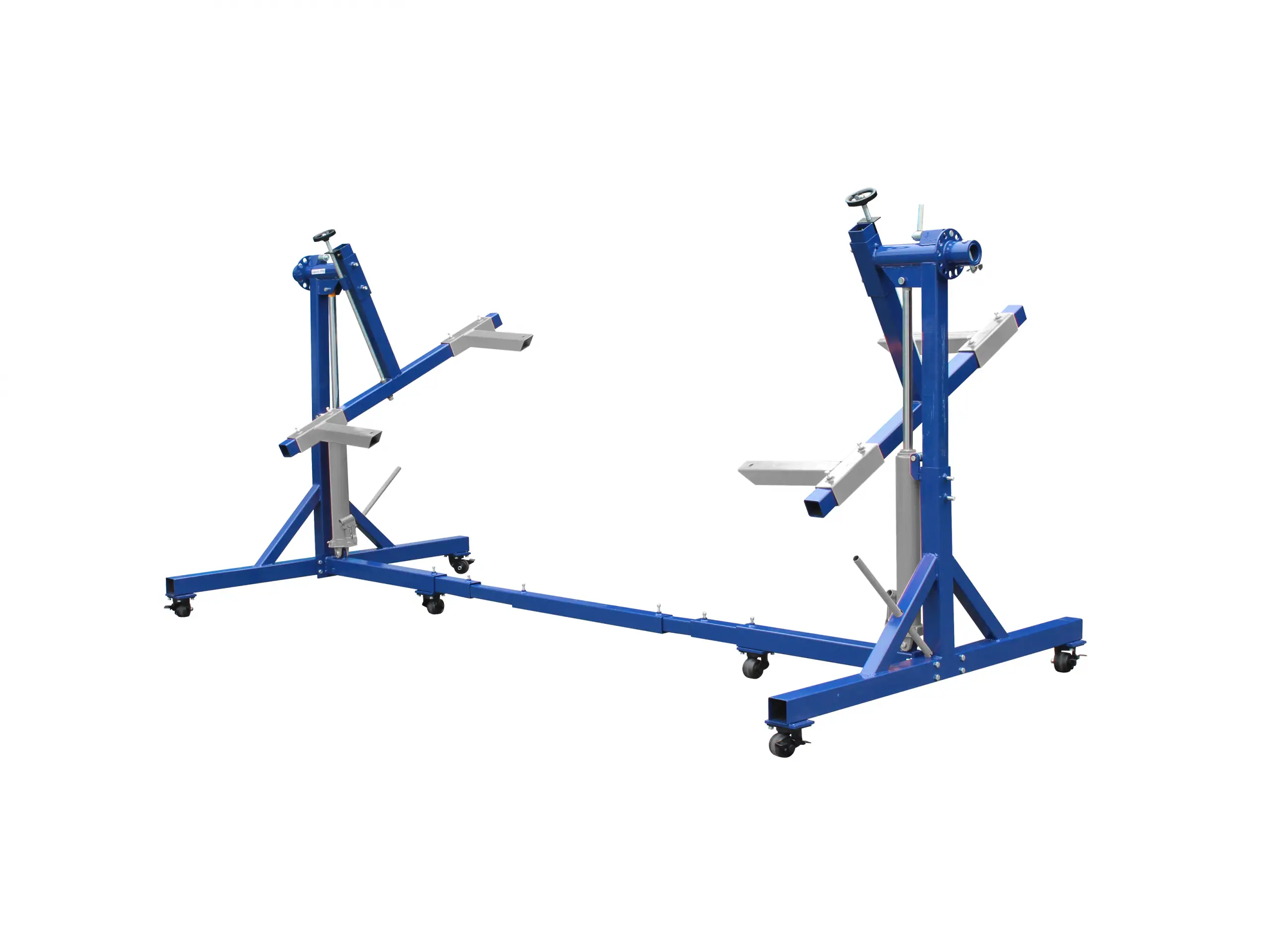
A frame machine is the backbone of any serious collision repair operation. Frame machines fall into two primary categories: drive-on benches and pulling racks. Drive-on benches allow technicians to drive a vehicle directly onto the platform, eliminating manual positioning and reducing setup time. Pulling racks require more manual anchoring but provide greater flexibility for different vehicle types and damage patterns.
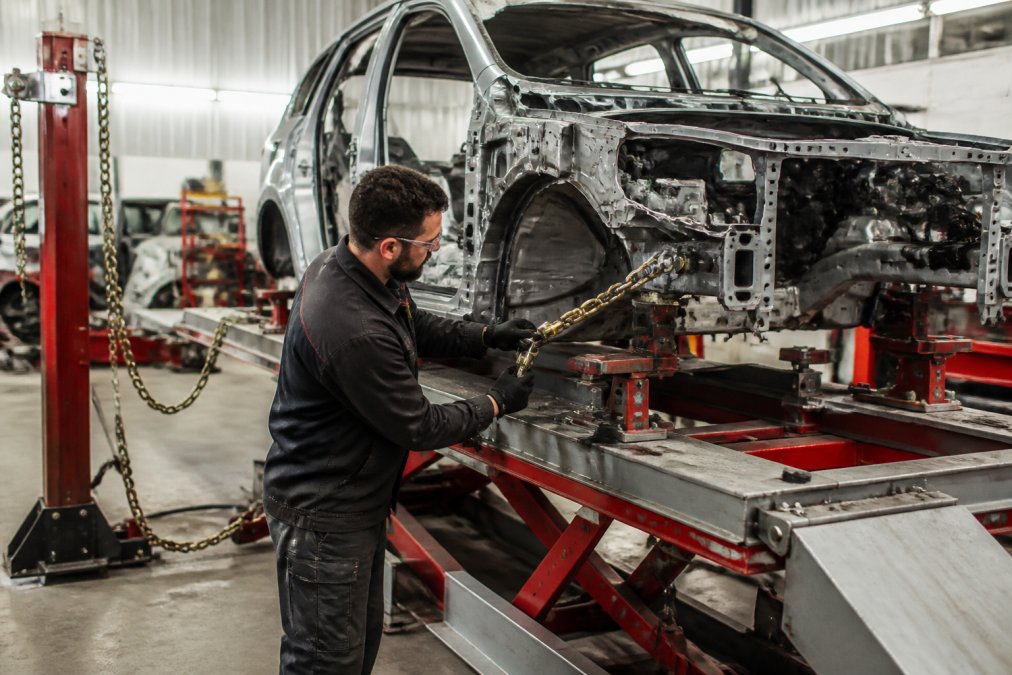
The Celette Rhone XL Frame Bench represents the high end of drive-on systems. Its double scissor lift design handles long-wheelbase vehicles and light commercial applications with a 5,500 kg capacity, allowing technicians to pull and measure simultaneously. For shops handling high volumes of SUVs and commercial vehicles, this system reduces setup time significantly compared to traditional pulling racks.
The Chief Phoenix Pulling Rack prioritizes capacity and flexibility, with a 12,000 lb. lifting capacity and a 22′ by 92″ deck accommodating everything from compact cars to large delivery vans. The advanced pulling technologies and quick-set anchoring systems make it reliable for high-volume shops, though setup time is longer than drive-on systems.
Drive-On Benches vs. Pulling Racks
Drive-on benches excel when your shop focuses on standard passenger vehicles and needs to maximize throughput. Pulling racks offer greater flexibility for shops handling diverse vehicle types and damage patterns. Consider your shop’s typical repair profile: if 70% of your work involves standard passenger vehicles, a drive-on bench justifies the investment. If you repair a diverse mix of vehicles, a pulling rack provides the flexibility to handle everything without compromise.
Measuring Systems and Diagnostic Integration
Accuracy in structural alignment depends entirely on your measuring system. Modern measuring systems use electronic or photo-based methods to identify correct measuring points against OEM specifications, ensuring repairs meet factory standards and reducing the risk of supplements or comebacks.
The Car-O-Liner PointX II uses a photo-based system that quickly identifies measuring points on any vehicle. Technicians take photos of the damage, and the system accesses the Car-O-Data vehicle measurement database to provide accurate reference points. The Chief Genesis Velocity takes a more advanced approach with real-time 3D laser scanning, assessing frame damage instantly and comparing measurements against original factory specifications.
Modern measuring systems work best when paired with your frame machine. Verify compatibility before purchasing, a measuring system designed for pulling racks won’t integrate seamlessly with a drive-on bench, and forcing integration creates workflow delays.
Best Aluminum Repair Tools for Collision Shops
Aluminum repair has become essential as manufacturers use more lightweight materials to improve fuel efficiency. Traditional steel repair techniques don’t work on aluminum, as the material behaves differently under heat and stress.
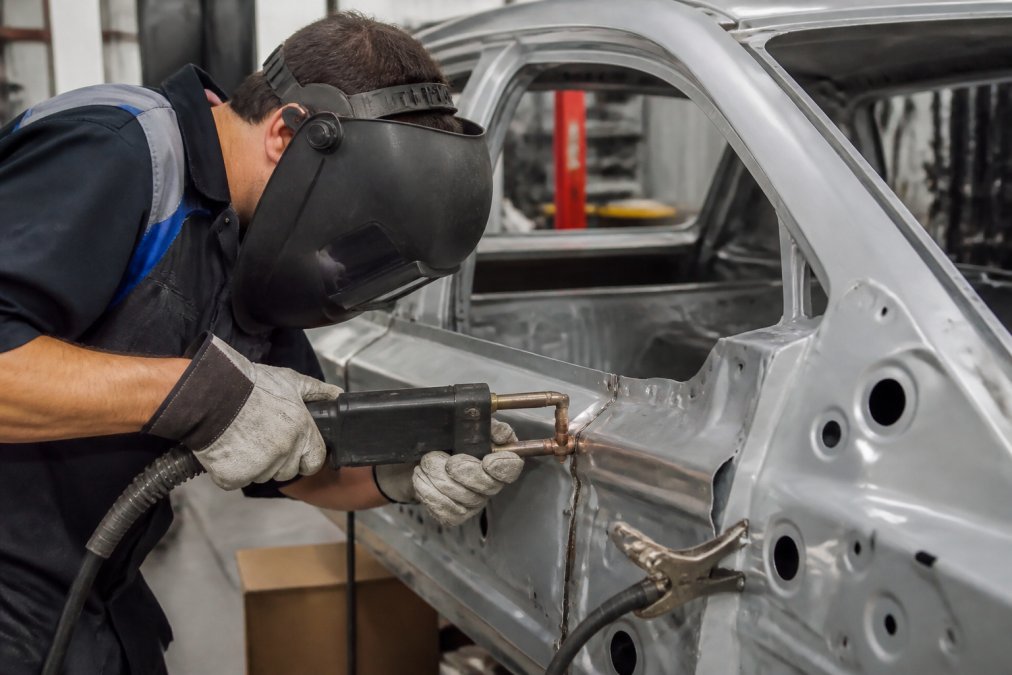
The Pro Spot International i4 Smart Spot Welder is specifically designed for aluminum and modern steels. The inverter resistance spot welding technology provides consistent heat control, which is critical for aluminum where overheating can weaken the material. The i4 produces reliable welds on aluminum panels without the brittleness that can result from improper technique.
What distinguishes aluminum repair tools from traditional welding equipment is precision temperature control. Aluminum conducts heat differently than steel, requiring faster welding cycles and more precise amperage settings. The i4 handles this automatically, reducing the learning curve for technicians transitioning from steel-only work.
Aluminum repair failures often stem from improper surface preparation, not the welding equipment itself. Aluminum oxidizes quickly, and oxide layers must be removed immediately before welding. Invest in surface preparation as seriously as you invest in the welding equipment.
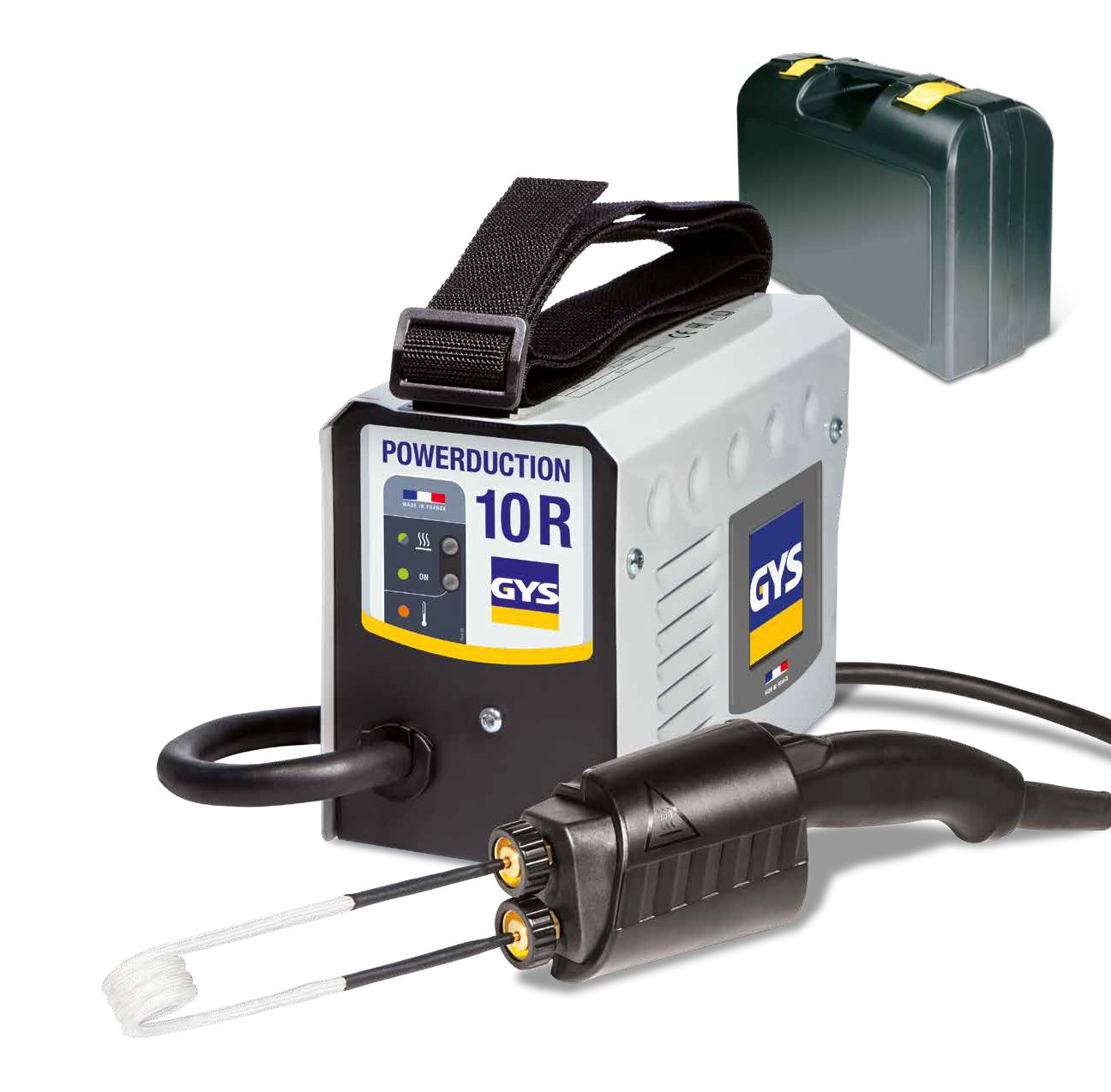
How to Troubleshoot Industrial Welding Power Supplies
Welding equipment downtime directly impacts your shop’s productivity. Understanding common issues and how to troubleshoot them keeps your machinery running and reduces the need for expensive service calls.
Common Welding Equipment Issues and Solutions
Inconsistent Weld Quality or Weak Welds
This typically indicates amperage drift or electrode wear. Check that your electrical supply is stable, fluctuations in incoming power can cause the power supply to vary output. If the electrical supply is stable, inspect the electrodes. Worn or contaminated electrodes produce weak welds even with correct amperage. Replace electrodes according to your equipment manufacturer’s schedule, typically after every 500-1,000 welds.
Power Supply Won’t Activate or Cycles Off
This usually signals a thermal overload or internal fault. Industrial welding power supplies have built-in thermal protection that shuts down the system if internal temperatures exceed safe limits. Allow the unit to cool for 15-20 minutes, then restart. If it cycles off repeatedly, the cooling fan may be blocked or failing. Check for dust accumulation around air vents and clean them thoroughly.
Intermittent Connection or Erratic Output
Loose connections between the power supply and the welding gun cause intermittent performance. Inspect all cable connections at both the power supply and the gun end. Corrosion on connectors reduces conductivity and creates resistance that generates heat. Clean corroded connectors with a wire brush and apply dielectric grease to prevent future corrosion.
Electrode Sticking or Arcing Issues
This indicates insufficient electrode force or timing problems in the control system. Check that the electrode arms apply consistent pressure, misaligned or worn arms reduce contact force, causing arcing instead of clean welds. If pressure is adequate, the issue likely lies in the control system’s timing circuits.
Subscribe to our newsletter! →
Regular maintenance prevents most welding equipment issues before they become problems. Establish a maintenance schedule that includes electrode replacement, connection inspection, and cooling system cleaning.
The most common cause of welding equipment failure is insufficient maintenance, not equipment defect. A simple schedule of electrode replacement, connection inspection, and cleaning prevents 80% of downtime issues.
Paint Booths and Refinishing Prep Systems
Paint quality separates shops that command premium pricing from those competing on volume alone. A professional paint booth controls dust, humidity, and airflow to ensure flawless finishes that meet OEM standards and reduce the risk of comebacks.
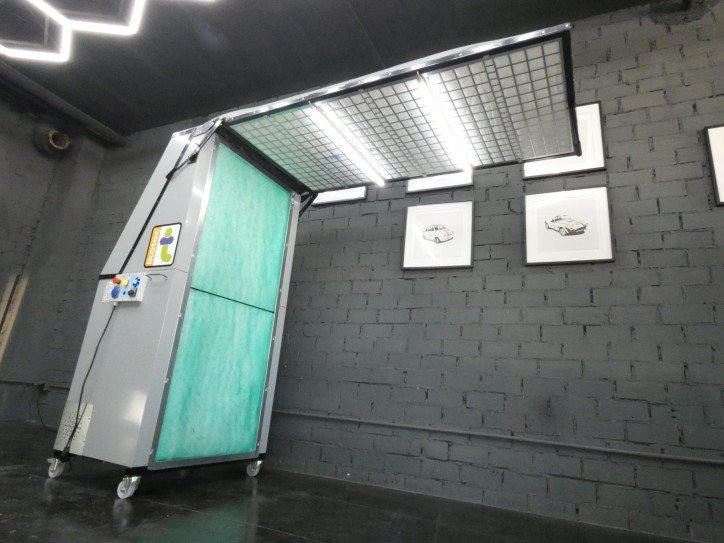
The Global Finishing Solutions Ultra XP1 Paint Booth uses semi-downdraft airflow to create a clean, controlled environment for painting. The system draws air from above and sides, directing it downward and out through floor vents. Optional heat addition accelerates drying, allowing technicians to move vehicles through the refinishing process faster.
Paint booth performance depends on three factors: airflow consistency, air quality, and temperature control. Inconsistent airflow creates dry spots or areas where dust settles on the wet finish. Poor air quality contaminates the paint. Temperature fluctuations slow drying and can cause paint defects. Shops using professional-grade booths report fewer paint defects and faster cycle times compared to older, simpler booth designs.
Total Cost of Ownership: Durability, Maintenance, and Long-Term Performance
Evaluating professional auto body shop machinery requires looking beyond the purchase price. The true cost of ownership includes maintenance, repair parts, consumables, and the impact of downtime on your business.
A frame machine that costs 20% more upfront but requires half the maintenance over five years delivers better value than a cheaper alternative that breaks down frequently. Build quality directly impacts long-term costs. Heavy-duty machinery with reinforced components, quality hydraulics, and strong electrical systems experiences fewer failures and longer service life.
Calibration Schedules and Equipment Maintenance
Professional auto body shop machinery requires regular calibration to maintain accuracy and safety. Measuring systems should be calibrated every 3-6 months, depending on usage volume. Welding equipment should be tested monthly for amperage accuracy and electrode force consistency. Frame machines require visual inspection of hydraulic lines, hoses, and connections every week, with hydraulic fluid changes every 2-3 years.
Parts Availability and Consumable Sourcing
Equipment downtime becomes catastrophic when replacement parts aren’t available. Before purchasing machinery, verify that the manufacturer maintains adequate parts inventory and can ship critical components quickly. Verify that consumables are readily available and reasonably priced.
KGM Equipment maintains strong parts inventory and provides reliable customer support to minimize your downtime. When equipment issues arise, responsive technical support and quick parts availability keep your shop running.
Shop Size and Workflow Considerations
The right equipment depends on your shop’s specific size, repair profile, and growth trajectory.
Small shops with 3-5 bays benefit from versatile equipment that handles diverse vehicle types without requiring separate specialized systems. A pulling rack with a mid-range measuring system and a single-station paint booth covers most needs without excessive capital investment.
Medium shops with 8-12 bays can justify more specialized equipment. A drive-on frame machine for high-volume standard vehicles, combined with a pulling rack for complex damage, provides efficiency without redundancy. Multiple paint booths or a larger booth with faster drying capacity keep vehicles moving through refinishing.
Large collision centers with 15+ bays benefit from dedicated equipment for each repair type. Separate aluminum repair stations, multiple frame machines optimized for different vehicle classes, and high-capacity paint systems maximize throughput.
| Equipment Category | Small Shops (3-5 bays) | Medium Shops (8-12 bays) | Large Centers (15+ bays) |
|---|---|---|---|
| Frame Machine | Single pulling rack | Pulling rack + drive-on bench | Multiple specialized systems |
| Measuring System | Photo-based (PointX II) | Photo or laser-based | Laser-based with real-time integration |
| Welding | Spot welder for steel + aluminum | Dedicated aluminum station | Multiple welding stations by material |
| Paint Booth | Single standard booth | Single professional booth or two standard booths | Multiple professional booths with advanced controls |
| Support Equipment | Basic hand tools + pneumatic tools | Expanded pneumatic + specialized tools | Comprehensive tool inventory by specialty |
Professional auto body shop machinery reviews consistently show that shops investing in quality equipment experience shorter cycle times, fewer comebacks, and higher customer satisfaction. The upfront investment pays dividends through improved efficiency and reduced downtime.
Choosing the right professional auto body shop machinery requires balancing upfront costs against long-term operational performance. The equipment you select today will determine your shop’s efficiency, accuracy, and profitability for years to come. KGM Equipment provides the durable, commercial-grade machinery that collision repair professionals trust to deliver consistent results on every job. Our lightweight and effective aluminum repair tools, combined with reliable structural alignment equipment and expert customer support, ensure your shop stays productive and profitable. Subscribe to our newsletter for equipment insights, maintenance tips, and industry updates delivered to your inbox.
Frequently Asked Questions
What are the essential pieces of machinery for a professional auto body shop?
A fully equipped collision repair operation requires frame machines (drive-on benches or pulling racks), structural alignment equipment, spot welders for both steel and aluminum, paint booths with proper ventilation, measuring systems for OEM compliance, and pneumatic hand tools. The specific mix depends on your shop size and vehicle types. Smaller shops with 5 bays may prioritize a versatile frame bench and quality welding equipment, while high-volume centers invest in dedicated pulling racks and advanced diagnostic measuring systems. Your workflow and repair complexity determine which machinery delivers the best return.
How do you evaluate the reliability of industrial collision repair equipment?
Assess build quality through material thickness, welding standards, and component sourcing. Check calibration frequency requirements and whether parts are readily available through multiple suppliers or locked to one vendor. Review maintenance schedules and labor costs for routine service. Verify that the manufacturer provides responsive technical support for troubleshooting. Ask existing users about downtime frequency and how quickly issues get resolved. Equipment that holds precision over time, requires minimal recalibration, and has accessible spare parts typically delivers lower total cost of ownership despite higher upfront investment.
What factors should shop owners consider when investing in new frame machines?
Evaluate vehicle capacity (maximum weight and wheelbase length), platform size relative to your shop floor, lifting speed and pulling power, compatibility with your measuring system, and integration with digital diagnostic tools. Consider whether you need drive-on convenience or can use a traditional pulling rack. Factor in floor space, electrical requirements, and whether the machine handles both unibody and full-frame vehicles. Analyze repair cycle time improvements based on shops similar to yours. Request demos and speak with current users about real-world performance, not just manufacturer specs. Total cost of ownership including maintenance, calibration, and parts availability matters more than purchase price alone.
How does high-quality machinery impact collision repair turnaround times?
Professional-grade frame machines reduce setup time, improve measurement accuracy, and enable faster pulling sequences compared to older or entry-level equipment. Advanced measuring systems identify damage quickly and track corrections in real time, reducing rework and supplements. Paint booths with proper airflow and temperature control speed drying cycles. Reliable welding equipment minimizes equipment downtime that halts the entire repair. Shops using integrated diagnostic tools and precision machinery report faster cycle times, which directly increases bay throughput and profitability. The efficiency gains compound across multiple repairs daily, making equipment investment recoverable for most operations.
Can professional auto body shop machinery handle both aluminum and steel repair without separate setups?
Modern inverter-based spot welders and most frame machines handle both materials with parameter adjustments, not separate equipment. Aluminum requires different heat settings and pulling speeds than steel, but quality machinery accommodates both through software settings. Measuring systems are material-agnostic. However, some specialized aluminum repair tools (like specific dent pullers) may be dedicated. Check equipment specifications for aluminum capability before purchase. Shops doing significant aluminum work benefit from machines designed for versatility, avoiding the cost and floor space of duplicate systems. Verify with manufacturers that your chosen equipment supports the material mix in your typical repair volume.
This article was written using GrandRanker

