

Table of Contents
- Why Technicians Are Moving Beyond Lombard Equipment
- What to Look For in a Professional Auto Body Spot Welder
- Top Lombard Equipment Alternative: KGM Equipment
- Key Alternatives Compared: Features at a Glance
- Reducing Cycle Time with Better Equipment: What Upgrades Deliver
- Planning Collision Repair Equipment Upgrades That Pay Off
- Which Alternative Fits Your Shop?
- Frequently Asked Questions
Last Updated: September 4, 2026
Why Technicians Are Moving Beyond Lombard Equipment
Many shop owners stick with legacy brands out of habit, not because those machines still deliver the best value. The collision repair landscape has shifted toward OEM-specified procedures, mixed-material vehicle construction, and demanding cycle-time expectations that older equipment often cannot meet. When a spot welder cannot handle the precision required for modern high-strength steel or aluminum panels, technicians lose time fighting the tool instead of completing the repair.
That frustration directly impacts technician retention. Skilled body technicians want equipment that makes their job easier and produces consistent, quality results. When they spend hours compensating for outdated machinery, they look for shops that invest in better tools. A professional auto body spot welder that performs reliably on the first pass does more than improve output; it signals to your best people that you value their craft.
At KGM Equipment, we have watched shops struggle with equipment that fails to integrate with current OEM repair procedures. The decision to find a lombard equipment alternative usually starts with one breakdown too many or one repair that took twice as long as it should. This guide breaks down what to look for in replacement equipment and why upgrading delivers measurable returns across your entire operation.
What to Look For in a Professional Auto Body Spot Welder
A professional auto body spot welder must deliver consistent welding precision across the range of materials your shop actually sees. The days of one machine handling every task adequately are fading. Modern structural repair demands equipment that can switch between steel thicknesses and aluminum panels without excessive setup time or compromised weld quality.
Key capabilities to evaluate before purchasing:
- Inverter-based power delivery for stable, repeatable welds on modern vehicle steels
- Adjustable settings that accommodate both traditional steel work and aluminum repair without a separate setup
- Ergonomic gun design that reduces technician fatigue during long structural repairs
- Compatibility with OEM-specified repair procedures for maintaining structural integrity and warranty compliance
A common mistake is buying on price alone and discovering the unit lacks the diagnostic capability or serviceability needed for daily shop operations. The real cost of equipment shows up in downtime, rework, and lost bay throughput, not just the invoice. Look for a machine with straightforward preventative maintenance requirements and a supplier who can support it when something breaks.
Top Lombard Equipment Alternative: KGM Equipment
For most collision repair operations, KGM Equipment represents the strongest upgrade path because the focus stays on durability and real-world performance. KGM Equipment provides top-quality auto body and industrial machinery engineered for the daily demands of professional shops. The lineup includes specialized collision repair tools and lightweight, effective aluminum repair solutions that let technicians achieve superior results with confidence.
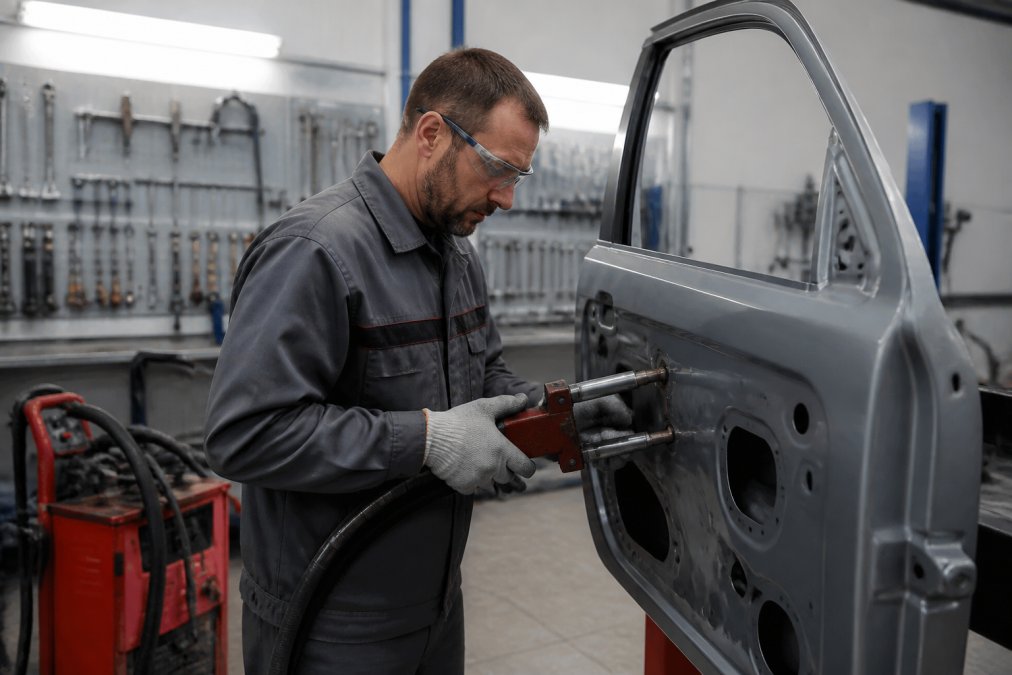
What sets this equipment apart is how it handles both traditional steel and modern aluminum work. Many shops worry that investing in aluminum capability means maintaining separate setups for their existing steel volume. KGM Equipment’s approach covers both material types, so a shop does not need to run parallel tooling investments to serve its current customer base.
Technical support is another critical factor. When a machine goes down on a Friday afternoon, you need a supplier who answers. KGM Equipment backs its machinery with reliable, expert customer support, which directly addresses the fear of being stranded by a vendor who disappears after the sale. This combination of durable tooling and responsive support makes it the top choice for shops ready to modernize.
Key Alternatives Compared: Features at a Glance
Most content on this topic is either a brand pitch or a list of names without substance. This section claims that gap by providing a structured, feature-level comparison of physical spot welding and structural repair systems, not software. The table below focuses on the technical specifications and service realities that determine whether a machine will perform in a modern collision center.
| Feature / Specification | KGM Equipment | GYS | CEBORA | TECNA |
|---|---|---|---|---|
| Core Technology | Inverter-based, multi-process | Inverter-based, multi-process | Inverter-based, multi-process | Inverter-based, multi-process |
| Material Support | Steel & aluminum (mixed-material) | Steel & aluminum (mixed-material) | Steel & aluminum (mixed-material) | Steel & aluminum (mixed-material) |
| Typical Application | Daily collision repair, mixed fleet | High-volume OEM-compliant centers | Heavy industrial & collision | Collision & fabrication |
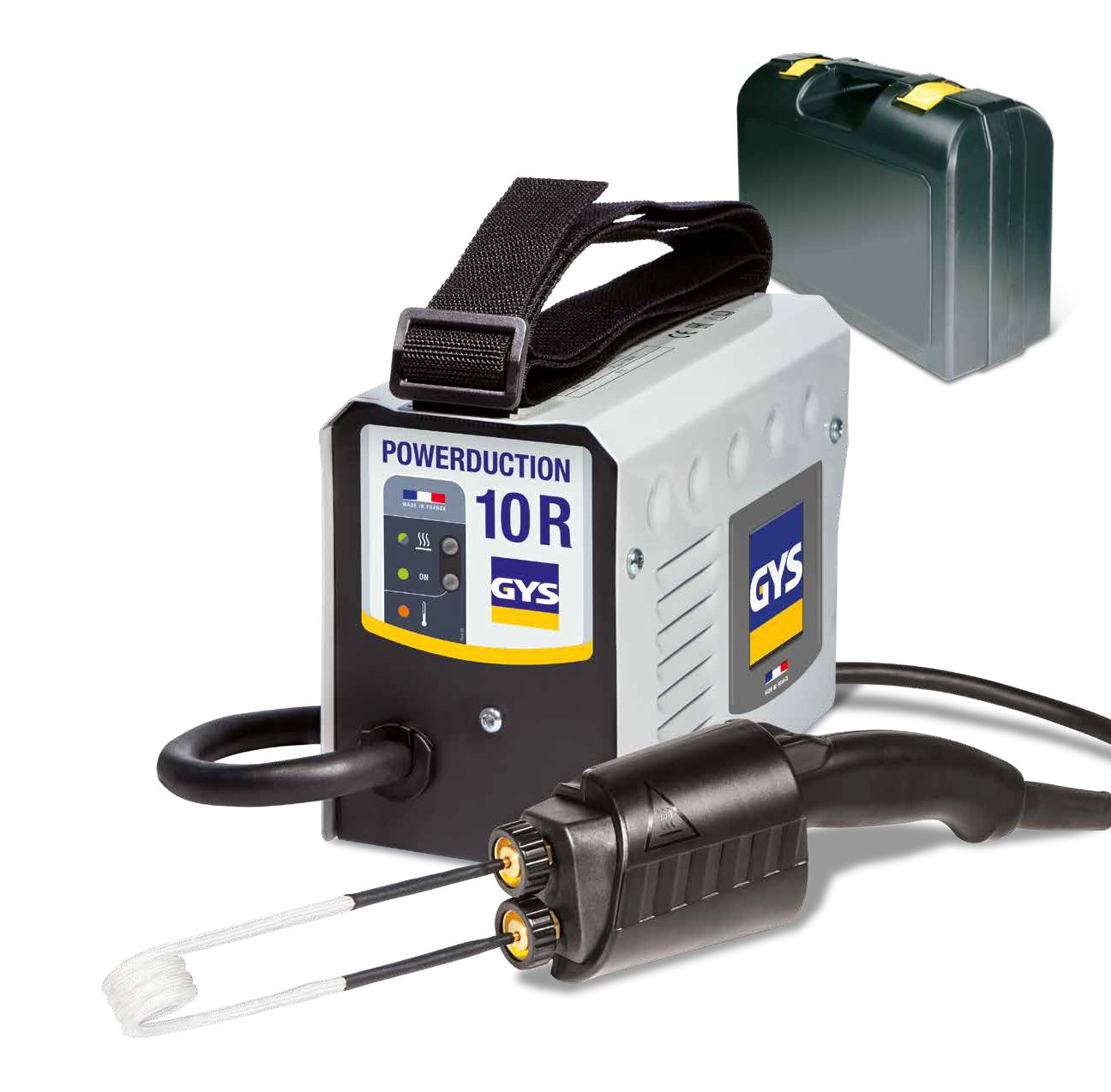
| Distinctive Capability | Lightweight, ergonomic guns for fatigue reduction | Self-piercing riveting (GYSPRESS 10T) | High-duty cycle for continuous use | Wide range of accessories |
| OEM Procedure Integration | Designed to meet common OEM specs | Strong, requires training for full compliance | Good, but varies by model | Good, but varies by model |
| Training Requirement | Moderate; supplier-provided | High; specialized for riveting systems | Moderate | Moderate |
| Typical Service Model | Direct supplier support | Distributor network | Distributor network | Distributor network |
| Parts Availability | Direct from supplier | Regional distributors | Regional distributors | Regional distributors |
What the table does not tell you:
- Maintenance cost of ownership: Inverter-based welders have fewer consumables than older transformer units, but the internal circuit boards are the most expensive component to replace. Ask any supplier for the mean time between failures (MTBF) data on their control boards. Most practitioners find that units with sealed, potted boards survive shop dust and vibration far longer than those with exposed components.
- Service Level Agreements (SLAs): A critical question is not just “do you offer support?” but “what is your guaranteed response time?” A common pattern among reputable suppliers is a 24-hour turnaround on replacement parts and a loaner unit policy for repairs that take longer. Avoid any vendor that will not commit to a written SLA.
- Calibration and verification: OEM procedures increasingly require documentation that the welder is performing within specification. Ask whether the machine has a self-diagnostic routine and whether the supplier offers annual calibration services. This is a point most marketing content ignores, yet it is central to audit compliance in many shops.
The takeaway: For a shop that needs one system to handle daily steel and occasional aluminum repairs, KGM Equipment’s direct support model and ergonomic design are the deciding factors. For a high-volume center that does significant self-piercing riveting, GYS has a specific tool for that job, but budget for the training. CEBORA and TECNA are credible alternatives, but their support is typically channeled through distributors, which can add a layer of delay when a machine is down.
Do not purchase any spot welder without first asking the supplier for a written service level agreement that specifies response times for technical support and parts shipment. A machine without a support commitment is a liability, not an asset.
Reducing Cycle Time with Better Equipment: What Upgrades Deliver
Reducing cycle time with better equipment comes down to eliminating the small delays that accumulate across every repair. A welder that requires repeated adjustments, produces inconsistent welds that need rework, or forces a technician to wait for a second person to hold panels in place directly extends cycle time and reduces bay throughput. Modern equipment compresses those steps.
Upgrading to equipment that matches OEM specifications means fewer judgment calls on the shop floor. The technician sets the machine for the panel and weld type, and the tool delivers the correct result the first time. That reliability shortens the time between pulling a vehicle into the bay and releasing it to the customer, which improves both profitability and customer satisfaction.
The workflow optimization also affects how many repairs a shop can complete per week. When a technician does not waste 20 minutes per job fighting a finicky tool, that time converts directly into additional billable labor. Equipment that supports technician productivity in this way pays for itself through improved operational costs over the life of the machine.
Planning Collision Repair Equipment Upgrades That Pay Off
Collision repair equipment upgrades require a capital expenditure plan that accounts for both immediate needs and future vehicle mix. The gap in most advice is that it stops at “make a list of what breaks.” This section goes further by quantifying the decision with a maintenance cost model and a realistic ROI timeline based on labor recovery.
Step 1: Build a maintenance cost ledger for your current equipment.
For each machine you are considering replacing, track these numbers over the last 12 months:
- Parts and consumables: Not just the obvious items like tips and arms, but the hidden ones: control board replacements, transformer repairs, and wiring harnesses. A single control board failure on a legacy spot welder can cost between $1,500 and $3,500 in parts alone, before labor.
- Downtime hours: Record every hour the bay was idle because the machine was down or waiting for a part. Multiply that by your shop’s effective labor rate. If your rate is $80 per hour and the machine was down for 8 hours, that is $640 in lost revenue for that single event.
- Rework rate: Track the number of welds that failed inspection and required rework. Each rework consumes at least 15 minutes of technician time plus material. At $80 per hour, that is $20 per rework event. If you see 10 rework events per week, that is $200 per week, or over $10,000 per year, lost to a tool that does not perform consistently.
Step 2: Compare the cost of repair against the cost of replacement.
A common rule of thumb in industrial maintenance is that if a machine requires repairs exceeding 50% of its replacement cost in a single year, replacement is the economically rational choice. Apply this rule to your ledger. If your legacy welder cost $8,000 new and you spent $4,500 on repairs and lost labor last year, the machine is not an asset; it is a drain.
Step 3: Calculate the ROI timeline for the replacement.
Let us model a realistic scenario. A modern inverter-based spot welder from KGM Equipment is priced competitively with other professional units, typically in the $6,000 to $12,000 range depending on configuration and accessories. Assume the purchase price is $9,000.
- Recovered labor from reduced rework: If the new machine cuts rework from 10 events per week to 2, that saves 8 events per week. At 15 minutes per event and $80 per hour, that is $160 per week, or $8,320 per year.
- Recovered labor from reduced downtime: If the new machine eliminates one 4-hour downtime event per month, that saves 48 hours per year. At $80 per hour, that is $3,840 per year.
- Total annual recovery: $8,320 + $3,840 = $12,160 per year.
In this model, the $9,000 machine pays for itself in under 9 months. Even if you halve the recovery estimates to be conservative, the payback period is still under 18 months. This is the calculation that justifies the investment to a shop owner or a financial stakeholder.
Step 4: Factor in the cost of financing.
Many suppliers offer lease or financing options. A typical equipment lease for a $9,000 machine over 36 months might carry an interest rate between 6% and 10%, depending on credit. The total interest paid over the lease term is between $860 and $1,460. Compare that against the annual recovery of $12,160; the financing cost is a rounding error on the benefit. Do not let the monthly payment obscure the total cost of ownership.
Step 5: Verify the supplier’s support commitment before signing.
A machine is only as good as the response you get when it fails. Before purchase, ask the supplier for:
- A written SLA with a guaranteed response time for technical support calls.
- A parts shipment guarantee, typically next-day for common consumables and within 48 hours for major components.
- A list of authorized service centers within a reasonable distance of your shop, or a loaner unit policy if the repair requires shipping the machine back.
The decision to upgrade is not about the sticker price. It is about the total cost of ownership, which includes parts, downtime, and rework. When you quantify those costs, a modern machine that eliminates them pays for itself in under a year in most shop environments.
Which Alternative Fits Your Shop?
The right equipment decision depends on your shop’s volume, the materials you work with most, and the level of technical support you require. For shops that handle a steady mix of traditional steel and increasingly common aluminum repairs, a single durable system like KGM Equipment eliminates the need for separate setups and simplifies technician training.
Smaller operations with five bays or fewer will find that KGM Equipment’s lineup scales to their size without requiring the infrastructure of a large collision center. The lightweight aluminum tools are designed for technician comfort, reducing fatigue during long structural repairs. And because KGM Equipment is not a fly-by-night supplier, you can count on support when a machine needs attention.
The decision to switch from a legacy brand is not just about replacing a tool. It is about choosing a partner who understands that tool reliability drives technician retention, repair quality, and ultimately your shop’s reputation. Evaluate your current bottlenecks, compare the real capabilities side by side, and invest in equipment that helps your technicians do their best work.
Frequently Asked Questions
What makes a reliable Lombard equipment alternative for my shop?
A reliable alternative must deliver consistent weld quality, meet OEM specifications, and survive daily shop use. Look for brands with a strong track record in structural repair, responsive technical support, and straightforward service access. KGM Equipment focuses on durable machinery and collision repair tools designed for professional environments. Verify that the manufacturer provides factory training and that replacement parts are readily available. A vendor who stands behind the equipment with real support prevents costly downtime and keeps your technicians productive.
How does equipment quality impact technician retention and shop efficiency?
Technicians want tools that work correctly the first time. Poorly performing equipment creates frustration, rework, and physical strain, which drives skilled staff to seek better workplaces. Modern, precise equipment reduces cycle time and improves repair quality, making jobs easier and more satisfying. When you invest in reliable tools, you signal that you value your team’s expertise. This reduces turnover and builds a more efficient shop where work flows smoothly and bay throughput increases, directly impacting your bottom line.
What features should I look for in a professional auto body spot welder?
Focus on features that affect daily workflow and repair quality. Look for inverter-based technology for precise control, multiple welding modes for different material thicknesses, and the ability to handle both steel and aluminum. The unit’s duty cycle matters for high-volume shops. Consider the availability of factory training and technical support, as these are critical for maximizing your investment. Also, check for compliance with OEM repair procedures to ensure structural integrity and warranty validity.
Can upgrading equipment really reduce cycle time in a collision repair shop?
Yes. Equipment that is slow, unreliable, or requires multiple passes to get a clean weld adds minutes to every repair. Modern upgrades, like advanced spot welders with fast setup and consistent output, reduce rework and speed up the process. Digital shop management software also cuts administrative time by streamlining estimates and communication. These improvements compound across every job, allowing your team to complete more repairs in the same amount of time and increasing bay throughput.
Choosing the right equipment partner is the difference between a shop that constantly fights its tools and one that consistently delivers quality repairs on schedule. KGM Equipment offers the durable machinery, specialized collision repair tools, and expert customer support that keep your operations running smoothly. Get started with KGM Equipment and give your technicians the reliable tools they deserve.
This article was written using GrandRanker

