

Table of Contents
- Why Collision Repair Diagnostic Tools Matter
- Pre- and Post-Repair Scanning Procedures
- OEM Scan Tool Requirements for Modern Vehicles
- Top Diagnostic Scanners for Collision Centers
- ADAS Calibration Equipment and Systems
- Electronic Measuring Systems for Frame Diagnostics
- Alignment and Post-Repair Verification Tools
- ROI and Profitability: Investing in Diagnostic Equipment
- Frequently Asked Questions
Last Updated: September 2, 2026
Why Collision Repair Diagnostic Tools Matter
Modern vehicles contain dozens of electronic control units managing everything from engine performance to safety systems. A single collision can trigger faults across multiple networks that aren’t visible to the naked eye, making specialized collision repair diagnostic tools essential rather than optional. Advanced Driver Assistance Systems, electronic stability control, and integrated sensor networks mean collision damage often extends far beyond visual inspection.
A technician working without proper diagnostic equipment is essentially guessing at what needs repair, leading to missed issues, comebacks, and liability exposure. Pre- and post-repair scanning has become standard practice in professional collision centers. The pre-repair scan establishes a baseline of all vehicle faults before work begins, protecting the shop from liability for pre-existing issues. The post-repair scan verifies that repairs were successful and no new faults were introduced.
Investing in proper diagnostic equipment improves efficiency significantly. When technicians have access to accurate fault codes, technical service bulletins, and OEM-specific repair procedures, they work faster and make better decisions. Cycle times drop, comebacks decrease, and insurance companies recognize shops with proper diagnostic protocols, often providing better reimbursement rates.
Pre- and Post-Repair Scanning Procedures
The pre-repair scan captures the vehicle’s current state before any work begins, creating documentation that protects the shop if a customer later claims additional damage was caused. Technicians connect to the vehicle’s data link connector and retrieve all active and stored diagnostic trouble codes (DTCs) from every electronic control unit.
The post-repair scan follows the same protocol but verifies that all previously active faults have been resolved and no new faults were introduced. This step is non-negotiable for modern vehicles, especially those equipped with ADAS systems requiring calibration verification.
Between scans, technicians use fault codes to guide their diagnostic process. A DTC like P0128 (coolant thermostat malfunction) tells them exactly which system needs attention. OEM-specific diagnostic software provides wiring diagrams and technical service bulletins necessary to troubleshoot electronic issues. Real-time monitoring during repairs allows technicians to watch live data streams from sensors and control modules, verifying that repairs actually resolved the underlying issue.
Documentation from scanning procedures serves multiple purposes. Insurance companies require proof of proper diagnostics, customers appreciate detailed reports showing what was wrong and what was fixed, and shops gain invaluable liability protection. Modern scanning tools generate professional reports suitable for printing or emailing to customers and insurers.
OEM Scan Tool Requirements for Modern Vehicles
Different vehicle manufacturers program their systems differently, making a one-size-fits-all scanner limited. OEM-specific diagnostic software provides direct access to manufacturer-proprietary protocols, allowing technicians to perform functions that generic scanners cannot. This is especially critical for vehicles with advanced electronics, luxury brands, newer model years, and ADAS-equipped vehicles.
Domestic manufacturers like Ford, General Motors, and Stellantis use different diagnostic protocols than Asian manufacturers including Honda, Toyota, Nissan, and Hyundai. European brands like BMW, Mercedes, and Volkswagen operate on yet another set of proprietary systems. A collision repair shop serving a diverse customer base needs access to multiple OEM platforms or a tool that bridges across manufacturers.
Vehicle manufacturers release new model years with updated electronics and frequently push over-the-air updates that change how systems communicate. A diagnostic tool purchased two years ago may lack the latest vehicle coverage or communication protocols. Subscription-based software updates are essential for staying current.
Gateway module access is another OEM-specific requirement. These modules control communication between different electronic control units. Some repairs require accessing the gateway to reprogram modules, perform calibrations, or clear faults, capabilities not all scanners possess. Technicians working with collision damage often encounter situations where the vehicle won’t start or communicate properly due to electrical damage. OEM scan tools sometimes offer alternative connection methods that generic scanners lack.
Top Diagnostic Scanners for Collision Centers
Snap-on ZEUS+ Diagnostic Tool
The Snap-on ZEUS+ stands out for its Fast-Track Intelligent Diagnostics system, which guides technicians through repairs with step-by-step instructions rather than just displaying fault codes. The tool includes SureTrack expert information containing verified parts replacement records from real repair shops, helping technicians make confident decisions about what needs replacement versus repair.
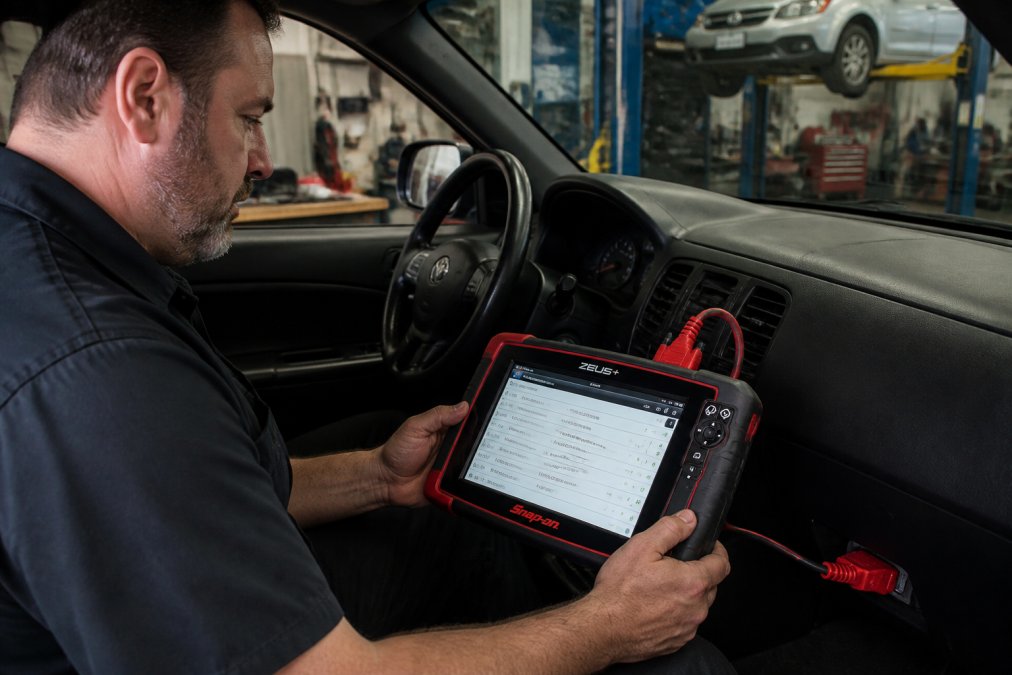
The ZEUS+ provides comprehensive vehicle coverage across domestic, Asian, and European manufacturers. Smart Data filtering automatically displays only parameters relevant to the fault being diagnosed. Pre- and post-repair scanning generates simplified reports that customers can understand, improving communication and reducing disputes.
Best for collision centers that prioritize guided diagnostics and integrated repair information. The SureTrack database is particularly valuable for shops handling high volumes of insurance claims.
TEXA Navigator TXT Multihub 2
The TEXA Navigator TXT Multihub 2 is a vehicle communication interface that operates across five different vehicle environments: cars, motorcycles, marine vessels, trucks, and off-highway equipment. The device automatically manages CAN, CAN FD, DoIP, and PassThru communication protocols without manual configuration.
The rugged IP53-certified design withstands splashes of water and dust, making it suitable for workshop environments. The built-in 2.42-inch display allows basic diagnostic viewing without requiring a separate tablet. Remote diagnosis and reprogramming capabilities support ADAS calibrations and component replacements.
Best for shops that service diverse vehicle types and need a versatile communication interface. The multi-environment capability is particularly valuable for shops in areas with mixed customer bases.
ADAS Calibration Equipment and Systems
Advanced Driver Assistance Systems have become standard on most new vehicles, and collision damage frequently misaligns cameras, radar sensors, or lidar systems. ADAS calibration is now a required service for post-repair verification. Even a one-degree misalignment can cause systems to function incorrectly, creating a safety hazard. Proper ADAS calibration equipment provides the targets, patterns, and measurement capability to verify that these systems function within OEM specifications.
The investment in ADAS calibration equipment is substantial but increasingly necessary for collision centers to remain competitive. Insurance companies and customers expect shops to verify that ADAS systems function correctly after repair.
Autel MaxiSYS ADAS MA600 All Systems 2.0
The Autel MaxiSYS ADAS MA600 All Systems 2.0 is a portable ADAS calibration package with a mobile frame, targets, and patterns for multiple ADAS system types. The portable design allows the system to fold and disassemble for transport, making it suitable for mobile technicians or shops with multiple locations. It supports LDW, ACC, Lidar, Radar, Night Vision, RCW, Lane Watch, and AVM system calibrations.
Vehicle coverage includes Alfa Romeo, Honda, Volkswagen, Mercedes, Hyundai, Kia, Nissan, Infiniti, Mazda, Mitsubishi, Subaru, Toyota, and Lexus. The system includes virtual setup and onboarding training from an Autel ADAS expert.
Best for collision centers and glass replacement businesses needing portable ADAS calibration capability. The training support and broad manufacturer coverage make it accessible for shops adding ADAS services.
LAUNCH X-431 ADAS Mobile Plus
The LAUNCH X-431 ADAS Mobile Plus offers extreme portability with a foldable two-arm design that fits into a mid-size vehicle’s trunk. The system supports over 50 vehicle makes, providing broad coverage across domestic and imported vehicles. Five-line and cross laser instruments provide precise centering positioning. Vehicle-specific step-by-step instructions guide technicians through the process, reducing setup time.
Best for mobile technicians and shops with limited space needing maximum portability without sacrificing calibration capability.
Bosch DAS 3000 ADAS Calibration Solution
The Bosch DAS 3000 is a computer-based ADAS calibration device designed for universal application across multiple vehicle manufacturers. It supports camera and radar calibration for Honda, Hyundai, Kia, Mazda, Nissan, Subaru, Toyota, Lexus, Volkswagen, and Audi. Bosch’s emphasis on structured calibration workflows means technicians follow proven procedures. Upgrade kits expand the system’s capabilities as customer bases evolve.
Best for automotive repair shops prioritizing calibration precision and wanting a system backed by a major manufacturer with extensive OEM relationships.
Subscribe to our newsletter! →
Electronic Measuring Systems for Frame Diagnostics
Electronic measuring systems create a 3D map of the vehicle’s structure, identifying damage that visual inspection misses. Hidden structural damage, bent frame rails, twisted subframes, or misaligned suspension points can compromise vehicle safety if not detected. Electronic measuring systems provide the precision necessary to identify every deviation from OEM specifications.
Technicians position measurement probes on reference points across the vehicle’s frame, and the system calculates current geometry. The software compares these measurements against OEM data, identifying deviations that drive repair planning. Post-repair measurements verify that the vehicle has been restored to factory specifications. Documentation from electronic measuring systems is essential for insurance claims and customer communication, protecting the shop from liability.
Spanesi Touch Electronic Measuring System
The Spanesi Touch is a modern 3D electronic measuring system that detects hidden structural damage through comprehensive point-to-point measurement. The “Follow the Pull” feature provides real-time measurement feedback during repairs, allowing technicians to see immediately whether straightening efforts move the frame correctly. This real-time feedback accelerates the repair process.
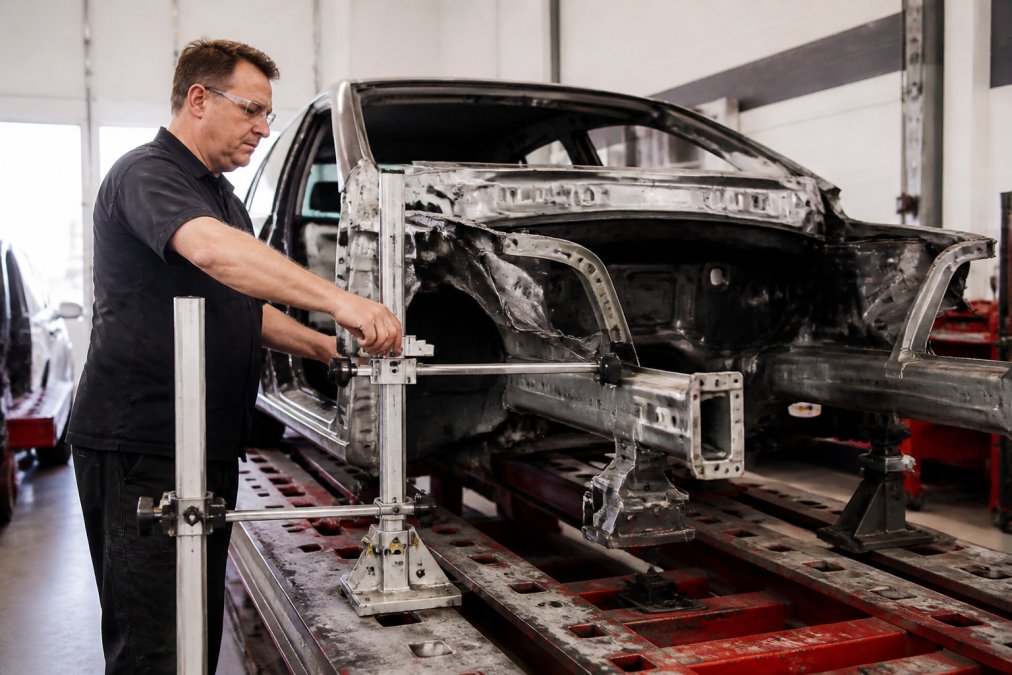
The system is lighter than some competitors, reducing technician fatigue. Automatic probe recognition eliminates manual configuration. The system functions as a standalone unit or integrates with frame machines, providing flexibility for different shop configurations.
Best for collision repair professionals prioritizing precision and wanting to identify hidden structural damage. The real-time feedback during repairs is particularly valuable for shops managing complex frame damage.
Car-O-Liner Car-O-Tronic Vision2 X3
The Car-O-Tronic Vision2 X3 measures upper and lower body points with state-of-the-art graphics, providing clear visual representation of vehicle geometry. Automatic centering, measuring, and documentation reduce manual work and improve consistency. The wireless measuring slide communicates via Bluetooth, unaffected by noise, wind, or sun.
The system automatically updates Car-O-Data, the world’s largest vehicle database containing specifications for over 18,000 vehicles. Suspension diagnosis capabilities add value for shops verifying suspension geometry after frame repairs.
Best for high-end collision repair shops handling complex frame damage wanting fast, accurate measurements with extensive vehicle database support.
Celette Naja 3D Electronic Measuring System
The Celette Naja uses Bluetooth wireless communication between the computer and sliding head, eliminating cable management issues and improving technician mobility. The user-friendly software employs green and red symbols for easy fault identification. The Naja is certified to NF X06044 EUROPE-USA standard, the international standard for vehicle measurement accuracy.
The system provides both comparative and point-to-point measurement options, allowing technicians to choose the method best suited to their repair scenario. This flexibility is valuable for shops handling diverse damage patterns.
Best for collision repair shops seeking a precise, reliable, and user-friendly electronic measuring system. The intuitive software interface appeals to shops with varying levels of technical expertise.
Alignment and Post-Repair Verification Tools
After frame straightening and structural repairs, alignment verification becomes critical. Suspension geometry must match OEM specifications, and wheel alignment must be precise. Modern alignment equipment measures and corrects camber, caster, toe, and thrust angle, ensuring the vehicle handles correctly and tires wear evenly.
Hunter Quick Check Drive represents an innovative approach to alignment verification. The system uses 32 lasers and 8 cameras to scan wheel alignment as vehicles drive past, requiring no stopping or manual setup. This unmanned inspection takes only 3-5 seconds per vehicle, making it feasible to check alignment on every vehicle as part of post-repair process. Automatic vehicle identification via license plate recognition ensures the system applies correct OEM specifications for each vehicle.
The optional automatic body image capture feature provides additional value. Forty-plus high-resolution images document the vehicle’s condition post-repair, protecting the shop against false damage claims. Alignment verification is particularly important for collision repairs because suspension damage often accompanies frame damage.
ROI and Profitability: Investing in Diagnostic Equipment
Equipment costs are substantial, a comprehensive diagnostic setup can easily exceed six figures. However, the profitability impact is equally substantial when properly implemented.
Cycle time reduction is the primary financial driver. Shops equipped with proper diagnostic tools complete repairs faster because technicians spend less time troubleshooting. Over a year, this translates to additional revenue from more vehicles processed through the same facility.
Insurance reimbursement rates improve when shops demonstrate proper diagnostic protocols. Many insurers provide better reimbursement rates or preferred shop status to facilities with modern diagnostic equipment. Comeback rates decrease dramatically with proper diagnostics, when technicians identify all faults during initial repair, vehicles don’t return with additional issues.
Labor efficiency improves when technicians have access to accurate technical information. ADAS calibration services represent a new revenue stream for equipped shops. Insurance companies and customers expect ADAS systems to be properly calibrated after collision repair.
The break-even timeline depends on shop volume and current profitability. A high-volume shop might recover the investment within 12-18 months through improved efficiency and additional revenue. A lower-volume shop might need 24-36 months. The equipment’s useful life typically extends 5-7 years, meaning the investment generates positive returns for years after break-even.
KGM Equipment recognizes that equipment investment is a significant decision for shop owners. Our approach focuses on providing tools that deliver measurable returns through improved efficiency, better documentation, and expanded service capabilities.
The collision repair industry has fundamentally changed, and shops that haven’t adapted their diagnostic capabilities are at a competitive disadvantage. Modern vehicles require modern diagnostic tools. The question isn’t whether to invest in these tools, but how to select the right combination for your specific operation. Whether you’re a smaller shop adding diagnostic capability or a large facility upgrading existing equipment, the tools and systems covered here represent the current standard in professional collision repair. The investment in proper diagnostic equipment pays dividends through improved efficiency, better customer satisfaction, and stronger relationships with insurance companies. Get started with KGM Equipment to explore how our collision repair solutions can help your shop implement the diagnostic capability you need to succeed.
Frequently Asked Questions
What are the most critical diagnostic tools for modern collision repair?
Modern collision repair requires three core tool categories: OBD-II and OEM-specific diagnostic scanners to read fault codes and electronic control unit data, ADAS calibration equipment for camera and radar system alignment, and 3D electronic measuring systems for frame damage assessment. Pre-repair scanning identifies all electronic and structural damage before work begins, while post-repair scanning confirms repairs meet OEM specifications. Shops without these tools risk incomplete repairs, customer safety issues, and liability exposure.
Why is pre- and post-repair scanning essential for collision shops?
Pre-repair scanning detects hidden electronic damage and fault codes that visual inspection misses, preventing costly rework. It documents the vehicle’s baseline condition and guides repair planning by identifying which electronic control units and sensors need recalibration. Post-repair scanning verifies that all systems function correctly and that sensor recalibration is complete before vehicle delivery. This process protects your shop from liability, reduces warranty claims, and ensures customer safety, especially critical for vehicles with ADAS systems that directly impact accident prevention.
How do OEM scan tool requirements differ from universal diagnostic scanners?
OEM-specific scan tools access manufacturer-proprietary diagnostic protocols and real-time data that universal scanners cannot reach. They provide accurate technical service bulletins, wiring diagrams, and repair procedures specific to each vehicle’s electronic architecture. Universal scanners read standard OBD-II codes but miss manufacturer-specific parameters and advanced diagnostics. For modern collision repair involving electronic control units, ADAS systems, and advanced driver assistance features, OEM tools are essential to ensure repairs meet factory specifications and avoid missed electronic faults.
What is ADAS calibration equipment and why do collision shops need it?
ADAS calibration equipment realigns camera and radar systems after collision repair or sensor replacement. Modern vehicles use these systems for lane-keeping, automatic braking, and collision avoidance, functions that depend on precise sensor alignment. If sensors are not recalibrated after repair, the vehicle’s safety systems may fail or malfunction, creating liability for your shop. Dedicated ADAS calibration tools like the Autel MaxiSYS ADAS MA600 or LAUNCH X-431 ADAS Mobile Plus provide the targets, measurement systems, and software needed to restore sensor accuracy to OEM specifications.
This article was written using GrandRanker

