

Table of Contents
- Understanding Aluminum Welding Hazards
- Aluminum Welding Fume Extraction Systems
- OSHA Welding Safety Standards
- Aluminum Dust Explosion Prevention
- Personal Protective Equipment (PPE) for Aluminum Welding
- Pre-Weld Surface Preparation and Material Storage
- Long-Term Health Monitoring and Safety Culture
- Conclusion
- Frequently Asked Questions
Last Updated: September 16, 2026
Understanding Aluminum Welding Hazards
Aluminum welding safety starts with understanding what makes this metal different from steel. The risks are not identical, and treating them as if they are is how injuries happen.
Aluminum conducts heat away from the weld zone roughly five times faster than steel, which pushes welders toward higher amperage and longer arc times. More arc time means more fume, more ozone, and more ultraviolet radiation in the breathing zone.
Below, we break down what is actually in the plume and why it behaves differently than steel fume.
Fume Composition and Toxic Emissions
Aluminum welding fume is a complex mixture of metal oxides, gases, and ultrafine particles, not a single substance. The exact composition shifts with the alloy, the filler wire, the shielding gas, and the process.
MIG welding on aluminum typically produces more fume than TIG because of higher deposition rates and longer arc-on time. The plume carries aluminum oxide particles, plus trace metals from filler and base alloys.
The biggest mistake in aluminum shops is judging air quality by what you can see. Aluminum fume is often lighter and less visibly dense than steel fume, so a “clean-looking” plume can still carry a heavy particle load. If you can smell the arc, you are already breathing it.
Ozone and Nitrogen Oxide Exposure
Ozone is a gas formed when the arc’s ultraviolet radiation reacts with oxygen in the air, and aluminum welding generates more of it than most steel processes. Nitrogen oxides form the same way when the arc interacts with nitrogen in the atmosphere.
Aluminum Welding Fume Extraction Systems
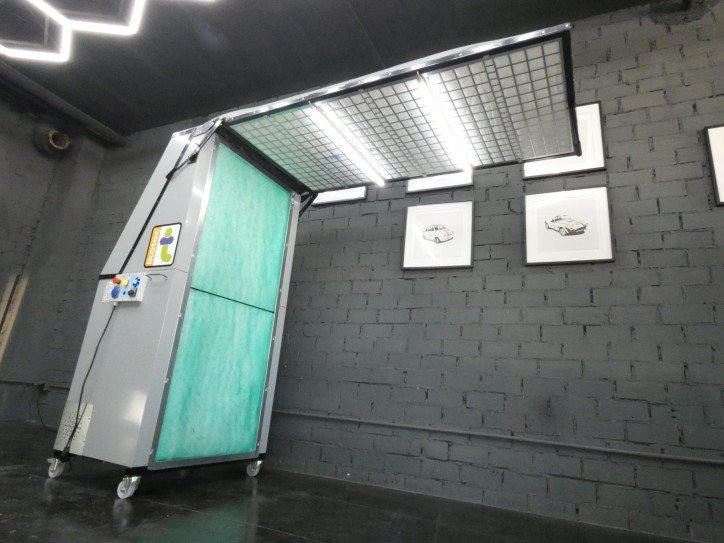
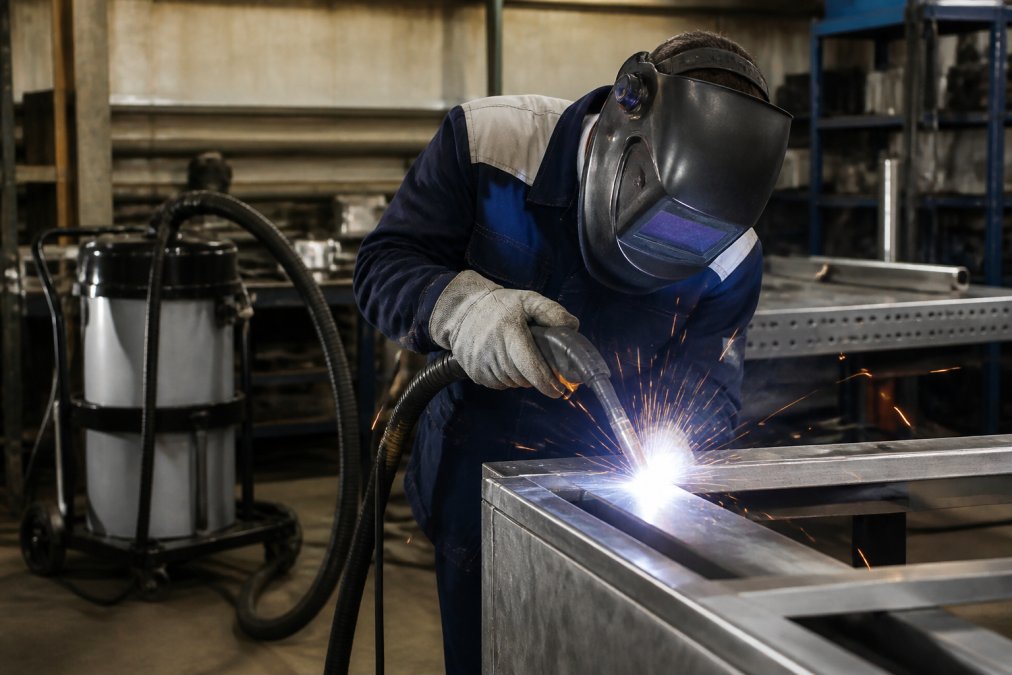
Fume extraction is the single most effective control for aluminum welding safety, and the choice between systems matters more than most buyers expect. There are two main approaches: source-capture and ambient ventilation.
Source-Capture vs. Ambient Ventilation
Source-capture wins on aluminum, and it is not close. Capturing fume at the arc removes it before it crosses into the breathing zone, while ambient systems only dilute what has already spread.
| Method | How It Works | Best For | Main Limitation |
|---|---|---|---|
| Source-capture (fume gun) | Extracts at the arc | High-production MIG stations | Needs dedicated vacuum unit |
| Local exhaust ventilation | Hood or arm near the weld | Fixed TIG benches | Position-sensitive |
| Ambient ventilation | Dilutes shop air | Backup, large open bays | Fume already inhaled |
A common mistake is sizing a vacuum unit for one station and then running two guns off it. Suction drops at both, and neither captures properly. Match the unit to the number of simultaneous arcs, not the number of welders on the payroll.
OSHA Welding Safety Standards
OSHA welding safety standards set the floor for compliance, and aluminum work does not get an exemption. The rules that matter most for aluminum live in three places, and knowing which one applies to your shop prevents both citations and guesswork.
Three requirements drive most aluminum shop citations:
- Mechanical ventilation or a compliant respiratory protection program when fume is present
- Appropriate filter lenses and eye protection for the arc
- Flame-resistant clothing and skin coverage for spatter and UV
A common pattern is a shop that buys respirators but never writes the program. The equipment is the easy part; the medical evaluation, fit testing, and documentation are what the standard actually requires, and what an inspector asks for first.
Aluminum Dust Explosion Prevention
Aluminum dust explosion prevention is the hazard most shops miss entirely, because it lives in the finishing area, not the weld booth. Fine aluminum particles, produced by grinding, sanding, and cutting, are combustible, and a dust cloud with an ignition source can ignite.
The fix is housekeeping and separation:
- Never dry-sweep aluminum dust; use wet methods or a rated vacuum
- Keep grinding dust away from welding arcs and other ignition sources
- Use dust collection rated for combustible metal dust, not a shop vac
- Avoid letting aluminum dust accumulate on ledges, cables, and equipment
Personal Protective Equipment (PPE) for Aluminum Welding
PPE is the last line of defense, not the first, but on aluminum it is doing more work than it does on steel. The right setup depends on your process, position, and ventilation.
Respiratory Protection: P95 vs. P100 vs. PAPR
Respirator choice is where most welders get conflicting advice, so here is the plain version.
| System | Filtration | Best For | Trade-off |
|---|---|---|---|
| P95 respirator | 95% particles | Short jobs, good ventilation | No gas protection, fit-critical |
| P100 respirator | 99.97% particles | Heavier fume loads | Higher breathing resistance |
| PAPR | High-efficiency + airflow | Confined spaces, long shifts | Cost, filters, battery upkeep |
Skin and Eye Protection
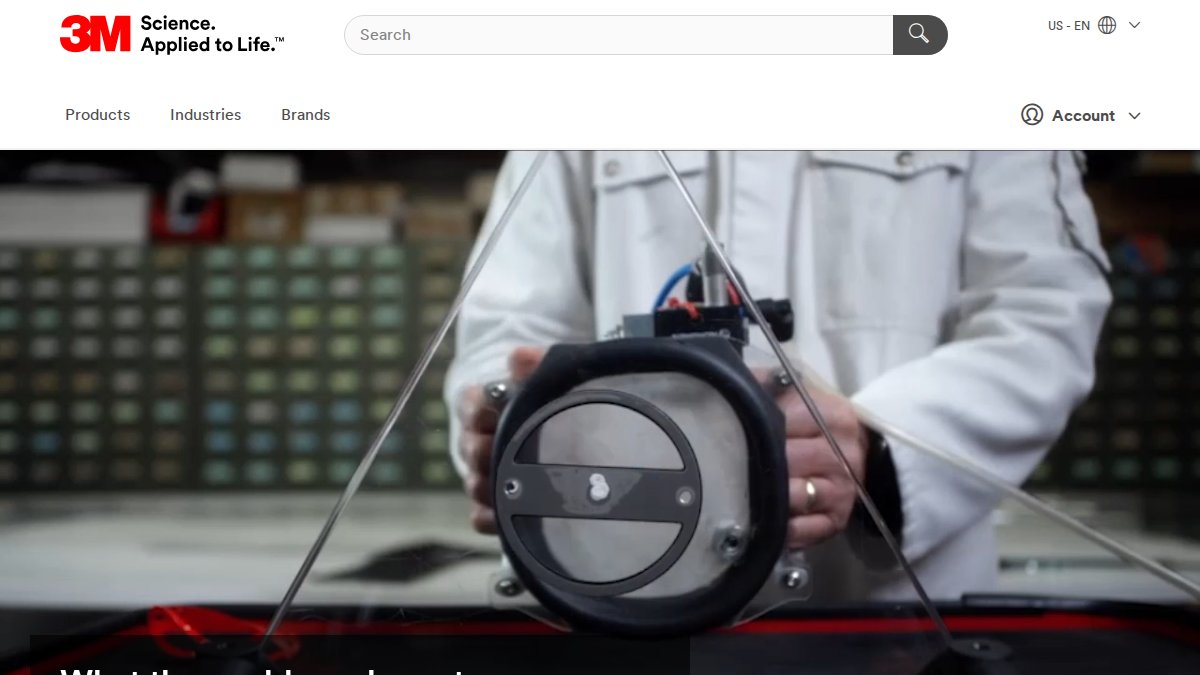
Aluminum’s high reflectivity makes arc radiation a bigger concern than many welders realize. UV reflects off bright aluminum surfaces and can burn skin and eyes from angles you did not expect.
For aluminum specifically, the helmet and skin protection matter more than on steel because reflected UV reaches you from more directions. Full coverage beats a partial setup every time.
Pre-Weld Surface Preparation and Material Storage
Surface prep and storage are safety issues, not just quality issues. Contaminated aluminum produces more fume and worse welds, and poor storage creates hazards that show up later.
Storage rules that keep both metal and people safe:
- Keep aluminum dry and off concrete to limit oxidation and moisture pickup
- Store filler wire sealed and clean
- Separate aluminum tooling from steel tooling
- Keep grinding and welding zones physically apart where possible
Long-Term Health Monitoring and Safety Culture
Health monitoring is the part of aluminum welding safety that most guides skip entirely, and it is the part that compounds. Fume exposure is cumulative, and the effects show up years later, not on the shift log. This is the gap worth claiming: a practical surveillance framework for career welders, not just a PPE checklist.
A workable program has four moving parts.
Pair the medical side with shop-side air quality monitoring. A fixed sensor or periodic sampling tells you whether your controls are holding between medical checks, so you catch a failing vacuum or a repositioned hood before it shows up in a lung function test.
Conclusion
The hard truth about aluminum welding safety is that the hazards are quieter than steel’s, which makes them easier to ignore until they are not. Fume, ozone, combustible dust, and reflected UV all punish the shop that assumes “it looks fine.”
Frequently Asked Questions
What are the safety precautions for aluminum welding?
Key precautions include using source-capture fume extraction to remove toxic fumes at the arc, wearing a P95 or P100 respirator or a PAPR system, and ensuring proper ventilation. Always prepare aluminum surfaces by removing oxide layers with a stainless steel brush to prevent porosity and reduce fume emissions. Wear flame-resistant clothing, welding gloves, and a helmet with appropriate shade. Follow OSHA standards for ventilation and PPE. Additionally, implement housekeeping to prevent aluminum dust accumulation, which can be explosive.
Why do welders drink milk after welding?
The milk myth likely stems from the idea that milk coats the stomach and helps neutralize ingested metal fumes. There is no scientific evidence that milk prevents or treats metal fume fever or other welding-related illnesses. The only proven protection is proper engineering controls, like fume extraction, and respiratory PPE. If you experience symptoms like fever, chills, or nausea after welding, seek medical attention. Do not rely on milk as a remedy; focus on prevention through ventilation and respirators.
What are common aluminum welding mistakes?
Common mistakes include failing to clean aluminum oxide from the surface, which leads to porosity and weak welds; using the wrong shielding gas or filler alloy; and not adjusting for aluminum’s high thermal conductivity, causing burn-through. From a safety perspective, welders often neglect fume extraction, assuming general ventilation is enough. They may also skip respiratory protection, especially in confined spaces. Another mistake is not monitoring for aluminum dust buildup, which poses an explosion risk. Proper training and adherence to safety protocols prevent these issues.
What are the specific respiratory risks associated with aluminum welding fumes?
Aluminum welding fumes contain aluminum oxide particles and gases like ozone and nitrogen oxides. Inhaling these can cause metal fume fever, respiratory irritation, and long-term lung damage. Ozone is a powerful irritant that can lead to pulmonary edema. Nitrogen oxides can cause inflammation and reduced lung function. The small particle size allows deep penetration into the lungs. To mitigate risks, use source-capture fume extraction and wear a P95 or P100 respirator. In confined spaces, a PAPR system is recommended.
How does aluminum welding safety differ from steel welding?
Aluminum welding requires more attention to fume extraction because aluminum fumes contain ozone and nitrogen oxides, which are more toxic than typical steel fumes. Aluminum also has a lower melting point and higher thermal conductivity, increasing the risk of burn-through and requiring different techniques. Additionally, aluminum dust is combustible, so housekeeping is critical to prevent explosions. While steel welding also poses respiratory hazards, aluminum welding demands stricter ventilation and respiratory protection. Pre-weld cleaning is more critical for aluminum to remove oxide layers.
What PPE is required for professional aluminum welding?
Professional aluminum welding requires a welding helmet with a shade level of 10-13, safety glasses for grinding, and a respirator such as a P95 or P100, or a PAPR system in confined spaces. Flame-resistant clothing like a leather jacket and gloves protect against spatter and UV radiation. Hearing protection may be needed for grinding. Always wear safety boots and ensure clothing covers exposed skin. For aluminum, use a full-face respirator if you need combined eye and respiratory protection. Follow OSHA standards for PPE selection.
Aluminum welding rewards shops that treat safety as part of the workflow rather than a poster on the wall. If you are equipping a bay for aluminum work, KGM Equipment offers specialized collision repair tools, durable machinery built for daily wear, and responsive technical support when you need it. Get started with KGM Equipment and build a safer, more productive aluminum station.

