






In 2025, the demand for efficient auto 4 post lift solutions is soaring as shops and home garages look for ways to boost both safety and productivity. With more vehicles on the road and diverse service needs, finding the right lifting equipment has never been more important.
This guide is packed with expert insights and practical tips to help you select, install, and care for your auto 4 post lift. Mastering these lifts is key to maximizing safety, workflow, and long-term value in any automotive setting.
We will break down the types of 4 post lifts, essential features, selection criteria, installation steps, safety practices, maintenance routines, and the latest trends. Get ready to make informed decisions and stay ahead in the evolving world of vehicle lifting.
Understanding Auto 4 Post Lifts: Types and Applications
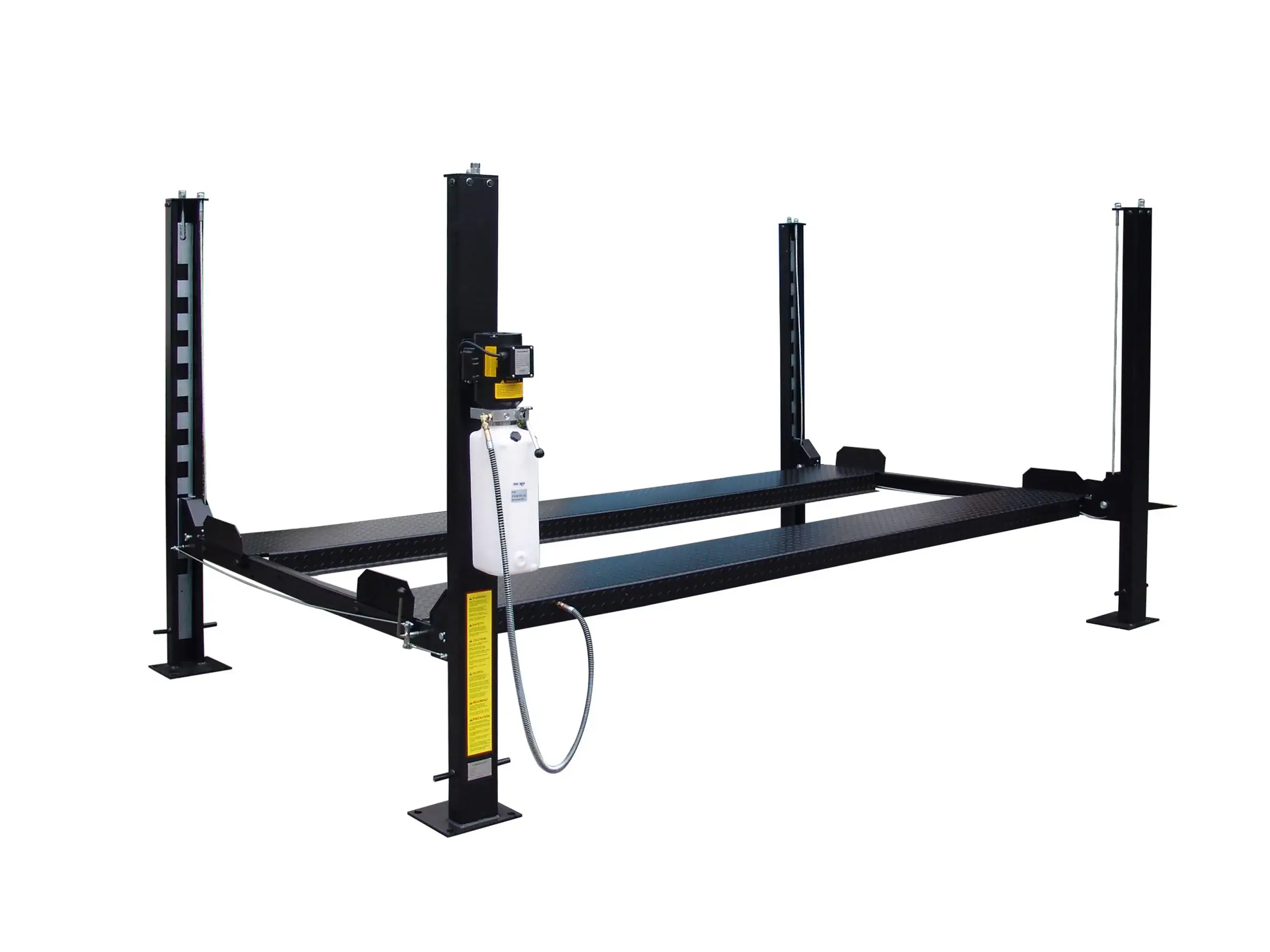
The auto 4 post lift is a cornerstone of modern vehicle maintenance and storage, offering robust support for cars, trucks, and specialty vehicles. Unlike 2 post or scissor lifts, which raise vehicles using arms or platforms, a 4 post lift uses four sturdy columns and long runways to cradle the entire vehicle. This design delivers unmatched stability, making it ideal for both heavy vehicles and long-term storage.
Most auto 4 post lift models handle loads from 8,000 to 14,000 pounds, accommodating everything from compact cars to large trucks. Many meet strict industry standards, such as ALI and ETL certifications, ensuring safety and reliability. If you want to explore more about different car lift types, check out this Car Lift Category Overview.
What is an Auto 4 Post Lift?
An auto 4 post lift is a heavy-duty piece of garage equipment designed to elevate vehicles using four upright posts and parallel runways. The vehicle drives onto the runways, which then lift together for balanced support. This system differs from 2 post lifts that use arms under the chassis, or scissor lifts that raise vehicles with a central platform.
Why do so many professionals and enthusiasts choose an auto 4 post lift? The answer is stability and versatility. These lifts distribute weight across a broad base, making them less prone to tipping and suitable for a wide range of vehicles. Typical load capacities range from 8,000 to over 14,000 pounds, covering most cars, SUVs, and even some commercial vehicles.
Auto 4 post lift models are often certified to meet industry standards, such as those set by the Automotive Lift Institute (ALI), which ensures their safety and performance.
Main Types of 4 Post Lifts
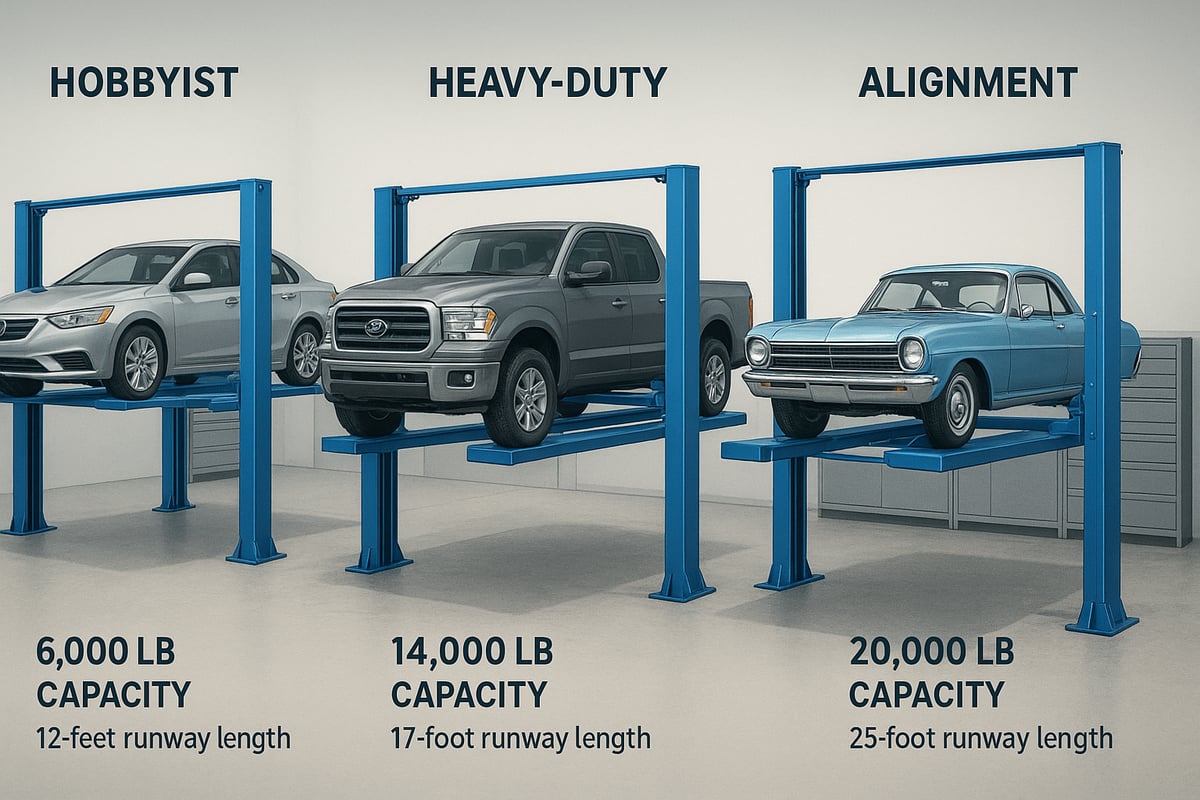
The auto 4 post lift comes in several types, each tailored for specific needs. Light-duty or hobbyist models are perfect for home garages and classic car collectors, while commercial or heavy-duty lifts serve busy repair shops and fleet operators.
There are also alignment 4 post lifts with built-in turn plates and slip plates for precise wheel alignment tasks. Parking and storage lifts maximize vertical space, making them popular in both residential and commercial settings. You can also choose between portable lifts for flexibility or fixed installations for permanent setups.
| Type | Typical Capacity | Key Features | Example Models |
|---|---|---|---|
| Hobbyist/Light-Duty | 8,000–9,000 lbs | Compact, easy install, affordable | Atlas 8000 LB Hobbyist |
| Commercial/Heavy-Duty | 12,000–14,000+ lbs | High capacity, robust build | Atlas 14000 LB Heavy Duty |
| Alignment | 12,000+ lbs | Alignment plates, precision | BendPak HDS-14LSX |
| Parking/Storage | 8,000–10,000 lbs | Maximizes space | Atlas Garage Pro 8000 |
| Portable vs. Fixed | Varies | Mobility or permanence | AMGO Portable 4 Post |
With so many options, choosing the right auto 4 post lift depends on your space, vehicle types, and workflow.
Common Applications in 2025
In 2025, the auto 4 post lift is indispensable across various automotive settings. In professional repair shops, these lifts handle diagnostics, repairs, and thorough inspections, streamlining workflows and improving safety.
Home garages benefit from auto 4 post lift systems for secure vehicle storage and DIY maintenance. Dealerships and commercial fleets use them for quick turnaround on multiple vehicles. Classic car collectors and enthusiasts appreciate how auto 4 post lift designs support long-term storage without stressing suspension components. Many shops integrate lifts with other equipment, such as wheel balancers and alignment tools, for a seamless workflow.
No matter your application, the auto 4 post lift delivers the versatility and reliability needed for modern vehicle care.
Pros and Cons of 4 Post Lifts
The auto 4 post lift brings several clear advantages. Its four-post design provides exceptional load stability and makes operation straightforward, whether you are lifting a compact car or a full-size truck. Many models are versatile enough for both storage and repairs.
Pros:
- Superior stability for heavy vehicles
- User-friendly operation and drive-on access
- Wide compatibility with different vehicle types
However, there are trade-offs. An auto 4 post lift takes up more floor space compared to 2 post lifts and often comes at a higher upfront cost. Yet, the enhanced safety features and reduced risk of accidents make it a preferred choice in many environments.
Cons:
- Larger footprint in the garage or shop
- Higher initial investment compared to 2 post lifts
According to recent industry data, the popularity of the auto 4 post lift has grown steadily, especially among home users and small businesses seeking flexibility and safety. Shop owners often cite the peace of mind and efficiency these lifts provide as key reasons for their growing adoption.
Key Features to Look for in a 4 Post Lift (2025 Edition)
Choosing the right auto 4 post lift means understanding the features that matter most for your needs in 2025. Whether you run a busy shop or want to upgrade your home garage, focusing on key specs helps you get the most value, safety, and long-term performance.
Load Capacity and Lift Height
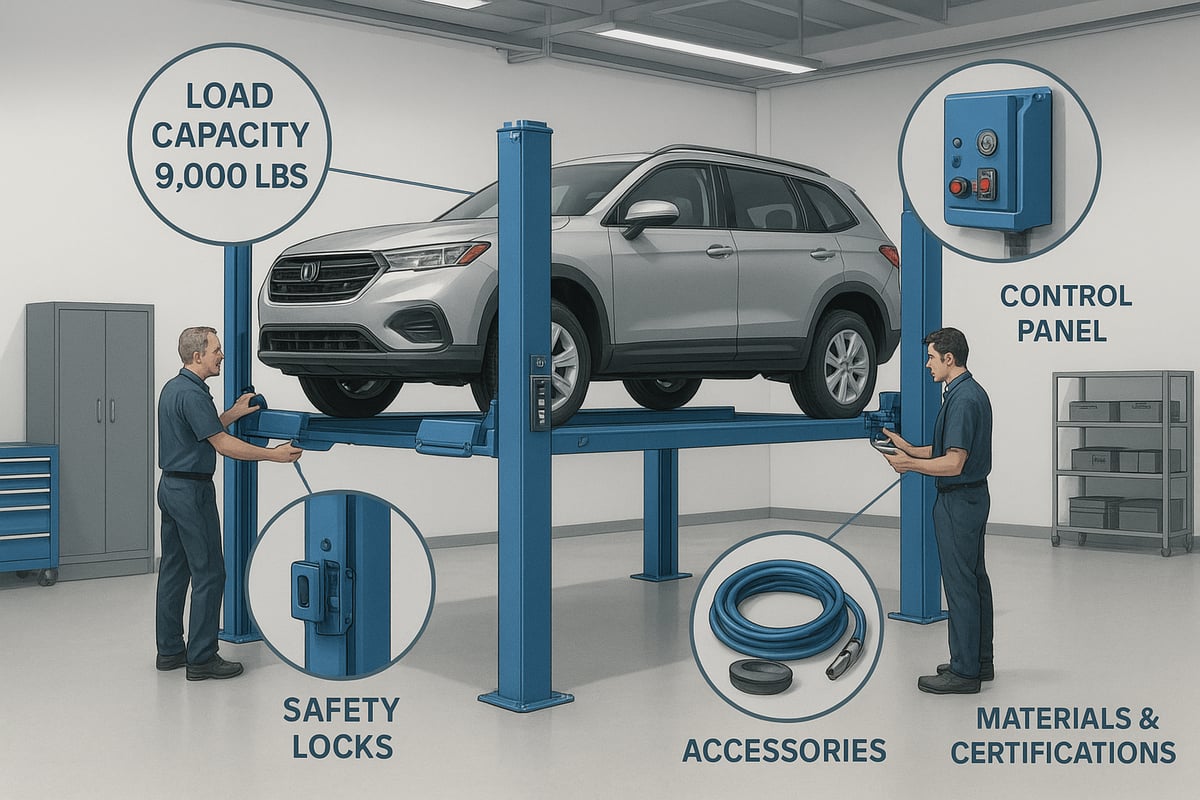
The first thing to check on any auto 4 post lift is its load capacity and lift height. Most models in 2025 support between 8,000 and 14,000 pounds. This range covers everything from standard sedans and SUVs to heavy-duty trucks.
Think about your most common vehicles. Do you work on light cars, or do you need to lift larger pickups and vans? Always match the lift's capacity to the heaviest vehicle you'll service. Lift height is also important, especially if you want to walk under the vehicle comfortably or need extra space for tools.
Industry data shows the 9,000 to 12,000-pound range is the most popular for small shops and home users. If you plan to service specialty vehicles or need extra clearance, look for models with adjustable heights and higher weight ratings.
Construction Quality and Materials
Build quality is a top priority when investing in an auto 4 post lift. The main factors include steel gauge, weld integrity, and corrosion resistance. Thicker, high-grade steel and precision welding ensure the lift will last for years, even with daily use.
Check for anti-corrosion coatings, especially if your shop is in a humid or coastal area. Leading brands like Atlas and BendPak offer lifts with powder-coated finishes and reinforced steel designs. Comparing their specs, you’ll notice differences in post thickness, runway width, and hardware quality.
Always look for ALI/ETL certification, which confirms the lift meets strict safety and performance standards. A well-built lift not only lasts longer but also reduces the risk of failure and costly downtime.
Safety Mechanisms and Certifications
Safety is non-negotiable when it comes to an auto 4 post lift. Modern lifts use redundant locking systems, cable safety devices, and both hydraulic and mechanical safeguards. These features prevent accidental drops and keep vehicles secure during maintenance.
Certifications are critical. In 2025, ALI and ETL certifications are the gold standards for lift safety. Redundant locks engage automatically at multiple points, and safety cables help distribute weight evenly. According to industry statistics, certified lifts have far fewer accidents than uncertified models.
To learn more about certification standards and what to look for, check out ALI’s Lift Certification Program. This resource explains the safety benchmarks every auto 4 post lift should meet.
Ease of Use and Controls
A user-friendly auto 4 post lift saves time and reduces frustration. Look for control panels that are easy to understand, with clear buttons and indicators. Power requirements matter too—most lifts need a dedicated 220V circuit, so check your shop's electrical setup before buying.
Smooth operation is a must. The best lifts use advanced hydraulics for quiet, steady lifting and lowering. Accessible maintenance points, like grease fittings and service panels, make routine care easier.
Leading 2025 models often include soft-start motors, low-noise pumps, and simple emergency stop functions. These features help both professionals and DIYers get the most from their lift without hassle.
Accessories and Expandability
The right accessories can turn a basic auto 4 post lift into a true multi-tasker. Popular add-ons include rolling jacks, drip trays, and runway extensions. Optional ramps make it easier to load low-clearance vehicles, while jack trays support extra repairs or wheel work.
Modular design is important if you want to future-proof your investment. Many 2025 lifts are compatible with alignment kits, tool brackets, and specialty adapters. This flexibility means your lift can grow with your needs, whether you add more vehicles or upgrade your shop.
Before buying, consider which accessories you’ll need now and in the future. Investing in a flexible auto 4 post lift setup ensures you’re ready for whatever the next project brings.
How to Choose the Right Auto 4 Post Lift for Your Needs
Selecting the ideal auto 4 post lift for your garage or shop is a crucial step that impacts safety, workflow, and long-term value. With so many models available in 2025, weighing your options carefully will help you avoid costly mistakes and boost your productivity. Let’s break down the essential factors so you can make a confident investment.
Assessing Your Space and Workflow
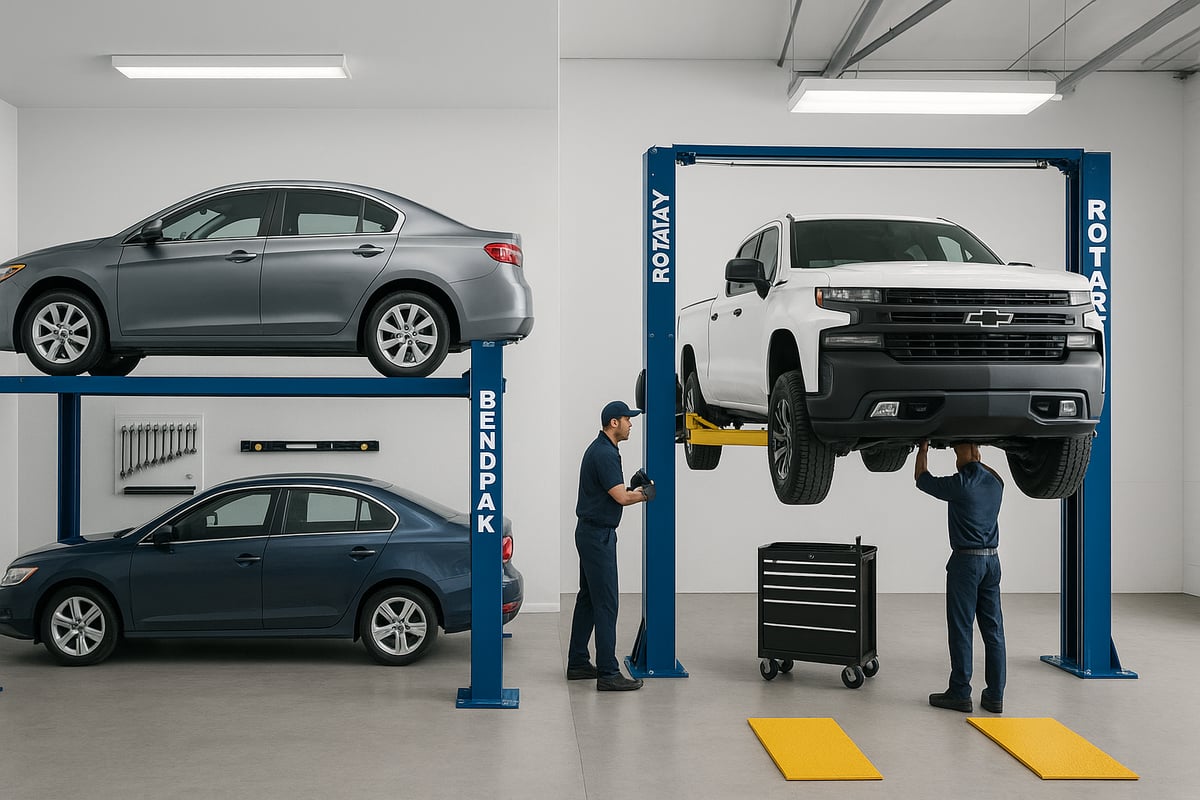
Before choosing an auto 4 post lift, start by measuring your available space. Accurate dimensions for length, width, and ceiling height are key. Most lifts require at least 12 feet of overhead clearance, especially for taller vehicles or stacked storage.
Consider your shop’s workflow. Will you need multiple lifts for higher volume, or is a single lift sufficient for your home garage? Think about vehicle approach, egress, and whether you’ll need space for tool carts or other equipment. Real-world layouts often reveal bottlenecks, so sketch your space to visualize how the auto 4 post lift will fit.
- Measure ceiling height and floor strength.
- Map out traffic flow for vehicles and personnel.
- Plan for future expansion or additional lifts.
A well-planned workspace ensures safety, efficiency, and room for growth.
Vehicle Types and Weight Considerations
Matching the auto 4 post lift to your vehicle lineup is essential. Standard capacity models (8,000–9,000 lbs) suit most passenger cars, but trucks, vans, or specialty vehicles may require heavy-duty options up to 14,000 lbs or more.
Check manufacturer specs for runway length and width to confirm compatibility with your vehicle fleet. In 2025, data shows a rise in larger SUVs and electric vehicles, which can be heavier than traditional cars. Avoid under-specifying your lift, as this can lead to unsafe operation or equipment failure.
- Assess your most common vehicle types.
- Consider the heaviest vehicle you plan to lift.
- Review wheelbase and clearance requirements.
Choosing the right auto 4 post lift capacity prevents damage and ensures reliable performance.
Budgeting and Total Cost of Ownership
Investing in an auto 4 post lift involves more than just the sticker price. Factor in maintenance, parts, and accessories over the lift’s lifespan. Some brands offer financing options, making high-quality lifts more accessible for small businesses and home users. For example, you can explore Financing Options for Equipment to spread out costs and manage your budget effectively.
Compare payment plans (some as low as $129 per month) and consider the total cost of ownership, including installation and future upgrades. Remember, a reliable lift may cost more upfront but save you money in repairs and downtime.
- Compare initial price vs. long-term value.
- Estimate annual maintenance and part costs.
- Evaluate financing or leasing options.
Smart budgeting helps you get the most from your auto 4 post lift investment.
Comparing Top Brands and Models
The 2025 market offers a wide range of auto 4 post lift brands, each with unique strengths. Atlas and BendPak are industry leaders, known for robust build quality and strong support. Challenger and AMGO also deliver popular models with competitive warranties and features.
Below is a quick comparison of best-selling models:
| Brand | Model | Capacity | Warranty | Key Feature |
|---|---|---|---|---|
| Atlas | 8000 LB | 8,000 lbs | 2-Year Parts | Great for home garages |
| Atlas | 14000 LB | 14,000 lbs | 2-Year Parts | Heavy-duty applications |
| BendPak | HD-9 | 9,000 lbs | 5-Year Structure | ALI certified |
| Challenger | CL4P9 | 9,000 lbs | 3-Year Parts | User-friendly controls |
| AMGO | PRO-12 | 12,000 lbs | 2-Year Parts | Wide runways |
Read customer reviews and check satisfaction ratings to see how models perform in real-world settings. Focus on features that matter most to your workflow and space.
Evaluating Warranty and Support
A strong warranty is vital for your auto 4 post lift. Leading brands offer multi-year coverage on structure, hydraulics, and parts. Quick access to replacement parts and responsive customer support can make a significant difference if problems arise.
Ask about warranty claim processes and look for real-life examples from other shop owners. In 2025, industry standards recommend minimum two-year coverage, with some brands providing longer structural warranties.
- Confirm warranty length and coverage details.
- Investigate support channels (phone, online, local dealers).
- Ensure parts availability for your chosen model.
Long-term support protects your investment and reduces downtime.
Common Mistakes to Avoid
When shopping for an auto 4 post lift, avoid these frequent pitfalls:
- Overlooking certification: Always choose ALI/ETL certified lifts for safety.
- Ignoring space constraints: Measure before you buy.
- Underestimating installation complexity: Some lifts require professional setup.
- Choosing based solely on price: Value and reliability matter most.
By steering clear of these mistakes, you’ll ensure your auto 4 post lift delivers safety, performance, and long-term value.
Installation and Setup: Step-by-Step Guide
Setting up your auto 4 post lift is a critical step in maximizing both safety and efficiency in your workspace. Proper installation ensures reliable operation and extends the lifespan of your investment. Whether you are a first-time installer or upgrading your current setup, following a structured approach will help you avoid common pitfalls and get the most out of your lift.
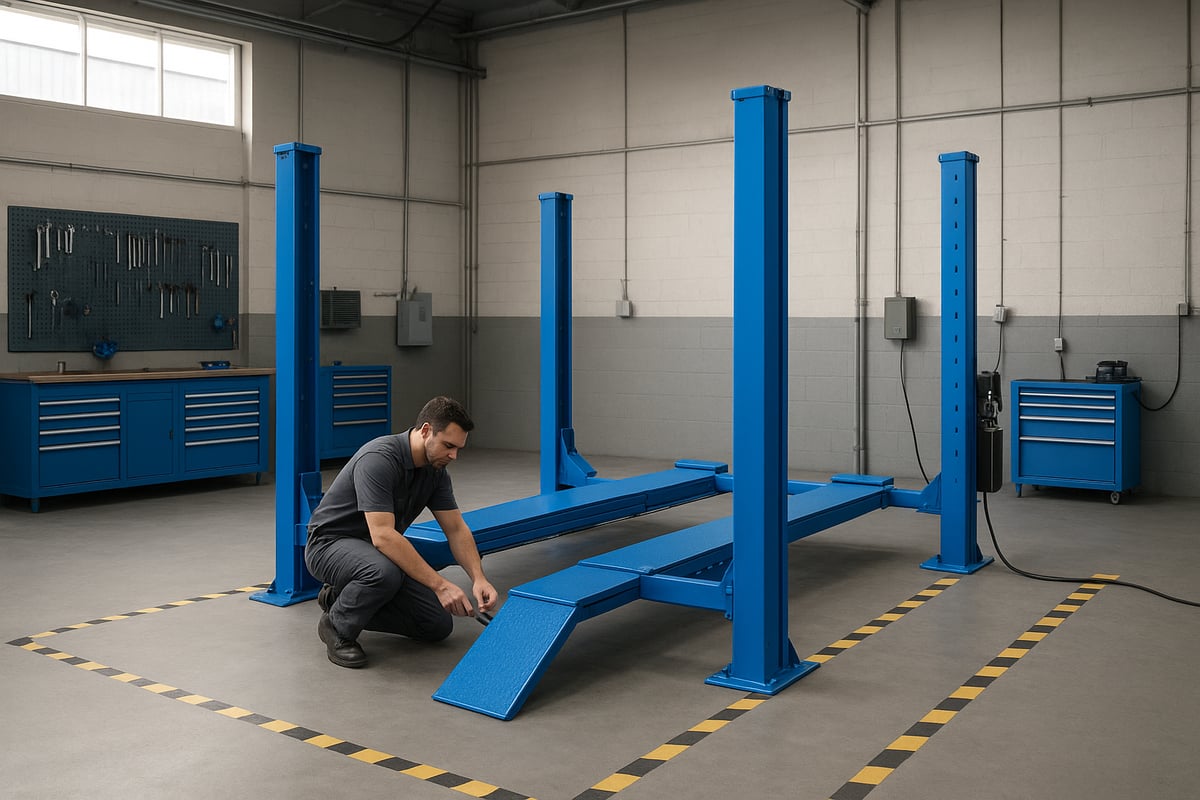
Preparing Your Shop or Garage
Before bringing in your new auto 4 post lift, take time to carefully assess your workspace. Start by checking that your garage floor is strong and level, as most lifts require a minimum concrete thickness and flat surface for safe anchoring. Measure ceiling height to ensure ample clearance for both the lift and raised vehicles.
Ensure you have the correct electrical supply available, matching the power requirements specified by your lift manufacturer. Plan for clear vehicle approach and egress, keeping pathways wide and unobstructed. Safety checks are essential: confirm you have fire extinguishers, safety signage, and adequate lighting. For those looking to fully outfit their workspace, exploring Shop Equipment by Department can help you find compatible tools and accessories for your auto 4 post lift setup.
Assembling the Lift: Tools and Tips
Assembling an auto 4 post lift typically requires basic hand tools, a torque wrench, and sometimes a drill for anchoring. Begin by laying out all components: posts, runways, crossbeams, and hardware. Follow the manufacturer's instructions step by step, starting with the posts, then attaching the runways and threading the cables.
Here’s a typical assembly checklist:
- Lay out all parts for inventory
- Bolt posts to the floor securely
- Attach runways and crossbeams
- Install cables and pulleys
- Double-check all fasteners
DIY installation can take a full day, while a professional team may finish in a few hours. Take your time and never rush, as safety and proper alignment are crucial for your auto 4 post lift's performance.
Electrical and Hydraulic Connections
Your auto 4 post lift needs reliable electrical and hydraulic connections. Verify the voltage and amperage requirements, and have a licensed electrician handle any wiring if you're not experienced. Most lifts use either 110V or 220V power, so double-check your supply.
Fill the hydraulic reservoir with the manufacturer-recommended fluid, then bleed the system to remove any air bubbles. After connecting the power and hydraulics, test the lift controls without a vehicle to ensure smooth operation. If you encounter issues—such as uneven lifting or unusual noises—consult the troubleshooting guide included with your auto 4 post lift. Address any leaks or electrical faults immediately before proceeding.
Calibration and Initial Testing
With assembly complete, it's time to calibrate your auto 4 post lift. Use a level to check that the runways are perfectly horizontal and adjust the cable tension as needed. Inspect all locking mechanisms to ensure they engage at each locking position.
Perform a full-cycle lift and lower test without a vehicle, listening for any odd sounds and watching for smooth movement. Document the install with photos and serial numbers, as this will be important for your warranty. Initial testing helps catch small issues before they become safety concerns, ensuring your auto 4 post lift is ready for regular use.
Professional vs. DIY Installation
Choosing between professional and DIY installation for your auto 4 post lift depends on your skill level, tools, and time. DIY can save on labor costs, but it requires attention to detail and strict adherence to safety guidelines. Pros of DIY include hands-on knowledge of your lift and flexibility with your schedule.
However, hiring a certified installer brings experience, efficiency, and peace of mind, especially if your lift is large or complex. Professional installation often comes with a service guarantee and may be required for warranty compliance. Weigh the costs and risks carefully—sometimes investing in expert help is the best way to ensure your auto 4 post lift is installed safely and correctly.
Safety Best Practices and Compliance in 2025
Safety is non-negotiable when it comes to operating any auto 4 post lift. Whether you work in a busy repair shop or maintain your vehicles at home, following best practices in safety and compliance is essential for protecting people, vehicles, and your investment. Let’s break down the key steps every operator should take in 2025.
Daily Safety Checks and Pre-Use Inspections
Before using an auto 4 post lift, a thorough daily inspection is a must. Start by examining cables, locks, and hydraulic lines for visible wear or leaks. Check that all safety locks engage properly, and ensure the lift area is clear of tools or debris.
A simple checklist can help:
- Inspect cables for fraying or corrosion
- Confirm safety locks are functional
- Check for hydraulic fluid leaks
- Keep the lift area free of clutter
Most lift-related accidents stem from overlooked maintenance or skipped checks. By making inspections part of your daily routine, you significantly reduce risks for everyone using the auto 4 post lift.
Operator Training and Certification
Proper training is the backbone of safe auto 4 post lift operation. Every operator, whether in a commercial or home setting, should receive hands-on instruction in lift controls, safe loading, and emergency procedures.
Certification is often required in professional shops. Programs like the ALI operator safety training ensure that users understand both the mechanics and hazards involved. For home users, many manufacturers offer online resources and manuals to supplement learning.
Investing time in training helps prevent costly mistakes and keeps every auto 4 post lift user safe and confident.
Common Hazards and How to Avoid Them
Awareness of hazards is essential for safe auto 4 post lift use. The leading risks include overloading, uneven vehicle placement, and bypassing safety features. Always match the lift’s capacity to the vehicle weight, and position vehicles with even distribution across the runways.
Avoid these common hazards:
- Exceeding weight limits
- Disengaging safety locks
- Placing vehicles off-center
Real-world incidents show that most accidents occur when shortcuts are taken. Staying vigilant and following procedures helps every auto 4 post lift operator avoid preventable injuries and equipment damage.
Regulatory Compliance and Industry Standards
Staying compliant with 2025 regulations is crucial for any auto 4 post lift owner. Look for lifts with valid ALI/ETL certification, which confirms the equipment meets strict safety standards. OSHA and local codes may also specify requirements for installation, operation, and documentation.
Maintain records of inspections and repairs, and display certification stickers as required. For a comprehensive overview of lift certification and compliance, see the Lift Certification FAQs.
Keeping up with standards ensures your auto 4 post lift is both legal and safe, protecting your shop or garage from fines and liability.
Emergency Procedures and Troubleshooting
Even with precautions, emergencies can happen. Every auto 4 post lift operator should know how to respond if a lift malfunctions or a vehicle becomes stuck. First, stop all operations and assess the situation. Use the manual lowering feature if available, and never try to fix a problem while a vehicle is elevated.
Essential emergency steps include:
- Lower the vehicle slowly and safely
- Disconnect power if there’s a hydraulic or electrical issue
- Contact manufacturer support for guidance
Having a clear emergency checklist on hand, and reviewing it regularly, ensures everyone knows how to act quickly and safely around an auto 4 post lift.
Maintenance and Longevity: Keeping Your 4 Post Lift in Top Shape
Keeping your auto 4 post lift performing at its best requires regular care and attention. A well-maintained lift not only ensures safety but also extends the lifespan of your investment. Let’s break down the essential steps to keep your lift in prime condition year after year.
Routine Maintenance Tasks
To keep your auto 4 post lift reliable, establish a regular maintenance schedule. Start by lubricating all moving parts, especially cables and pulleys. This reduces friction and prevents wear.
Inspect and tighten all bolts and anchoring points. A loose bolt can compromise safety. Clean runways and posts to remove debris, which can affect smooth operation.
- Lubricate cables and pulleys monthly
- Inspect and tighten bolts every 3 months
- Clean runways weekly
- Check hydraulic fluid levels regularly
Scheduling these routine tasks prevents unexpected breakdowns and keeps your auto 4 post lift operating smoothly.
Troubleshooting Common Issues
Even the best-maintained auto 4 post lift can develop issues over time. Hydraulic leaks are common and should be addressed immediately. If you notice oil spots or a drop in lift performance, inspect hoses and seals.
Cable wear is another frequent problem. Frayed or stretched cables need prompt replacement. Listen for unusual noises or uneven lifting, which may signal alignment issues.
- Look for hydraulic fluid leaks under the lift
- Inspect cables for fraying or slack
- Listen for grinding or squeaking during operation
- Test the lift’s locking mechanisms regularly
By tackling these problems early, you reduce downtime and protect your auto 4 post lift from major repairs.
Replacement Parts and Upgrades
Sourcing quality replacement parts is vital for the longevity of your auto 4 post lift. Always choose OEM parts when possible for best fit and reliability. Aftermarket options may save money but could impact performance.
Consider upgrades to adapt your lift to changing needs. Runway extensions, jack trays, and improved safety locks are popular choices. Use the table below for a quick comparison:
| Upgrade | Purpose | Cost Range (2025) |
|---|---|---|
| Runway Extensions | Accommodate longer vehicles | $400–$800 |
| Jack Trays | Support wheel-free work | $150–$300 |
| Safety Lock Upgrades | Enhanced security | $200–$400 |
Plan upgrades based on your vehicle mix and shop workflow to get the most from your auto 4 post lift.
Maximizing Lifespan and Performance
Long-term performance comes from smart storage and regular inspections. If you use your auto 4 post lift seasonally, store it clean and covered to prevent corrosion. Schedule professional inspections annually to catch hidden issues.
Protect against environmental damage by keeping the lift dry and applying rust inhibitors as needed. According to the 2025 Automotive Lift Market Forecast, the average quality lift lasts 15+ years with proper care.
- Store lift indoors when possible
- Apply rust inhibitor annually
- Schedule pro inspections every 12 months
These steps ensure your auto 4 post lift delivers reliable service for years.
When to Repair vs. Replace
Deciding whether to repair or replace your auto 4 post lift depends on safety, cost, and age. If repairs exceed half the cost of a new lift or if critical components like cables or hydraulics are repeatedly failing, replacement may be safer.
Signs that it’s time to replace include visible frame damage, recurring hydraulic leaks, or outdated safety features. Never compromise on safety—retire lifts that no longer meet current standards.
- Repair minor issues promptly
- Replace if frame or structure is compromised
- Upgrade if safety features are obsolete
Making the right call protects both your investment and everyone who uses your auto 4 post lift.
Future Trends and Innovations in Auto 4 Post Lifts
The future of the auto 4 post lift market is brighter than ever, with 2025 ushering in a new era of technology, sustainability, and market growth. As automotive shops and home garages seek smarter, safer, and more eco-friendly solutions, manufacturers are responding with innovations that transform how lifts are used and maintained.
Smart Features and Connectivity
In 2025, connectivity is revolutionizing the auto 4 post lift. Modern lifts now integrate with shop management systems, allowing real-time performance monitoring and maintenance tracking directly from your phone or tablet. IoT sensors collect data on cable tension, hydraulic pressure, and safety locks, sending predictive maintenance alerts before issues arise.
Remote diagnostics enable technicians to troubleshoot problems quickly, minimizing downtime. Many leading models offer wireless control panels and programmable lift heights, making operation smoother and safer. With these advancements, the auto 4 post lift becomes an intelligent partner in the workshop, streamlining workflows and reducing the risk of unexpected breakdowns.
Sustainability and Energy Efficiency
Eco-friendly design is a top priority for every new auto 4 post lift. Manufacturers are adopting biodegradable hydraulic fluids, recyclable materials, and energy-efficient motors to reduce environmental impact. Some lifts now feature regenerative lowering systems that recover energy during operation, helping shops lower utility costs.
New environmental regulations in 2025 push for reduced emissions and better waste management. As a result, shops investing in green lift technology not only support the planet but also benefit from improved operational efficiency. The auto 4 post lift is evolving to meet both the needs of modern vehicles and the expectations of eco-conscious consumers.
Market Outlook and Evolving Needs
The market for the auto 4 post lift is set for robust growth, driven by rising demand from both professional shops and home garages. As electric vehicles and larger trucks become more common, lifts are adapting with higher capacities and advanced safety features. Automation, remote management, and AI-based diagnostics are expected to shape the next generation of lifts.
For a deeper dive into these industry shifts and what lies ahead, check out the Future Trends in Automotive Lifts. Staying informed ensures that shop owners and enthusiasts can make smart investments, keeping their equipment up to date and ready for the vehicles of tomorrow.
Now that you have a solid grasp of what makes an auto 4 post lift essential for safety, productivity, and long term value in both professional shops and home garages, you might be wondering where to find the right equipment for your needs. At KGM Equipment, you’ll discover a wide selection of high quality lifts and collision repair tools designed to meet the latest industry standards and support your goals for 2025 and beyond. If you’re ready to take the next step or just want to explore your options further, Learn more and see how the right lift can transform your workspace.

