







The vehicle lift 4 post has become a must-have for anyone serious about car care, whether you are running a busy garage, a professional workshop, or working on vehicles at home. As technology advances, picking the ideal lift in 2025 means knowing what new features, safety updates, and market trends matter most.
This guide will walk you through the essentials, helping you make a smart choice that fits your needs, budget, and available space. Ready to find out how to choose the best 4 post lift for your garage or shop? Keep reading to get all the answers you need.
Understanding 4 Post Vehicle Lifts: Basics, Benefits, and Applications
A vehicle lift 4 post has become a staple in today’s garages and workshops. If you are just starting to explore lift options, it is important to understand what sets this type apart and why so many professionals and enthusiasts rely on it.
What Is a 4 Post Vehicle Lift?
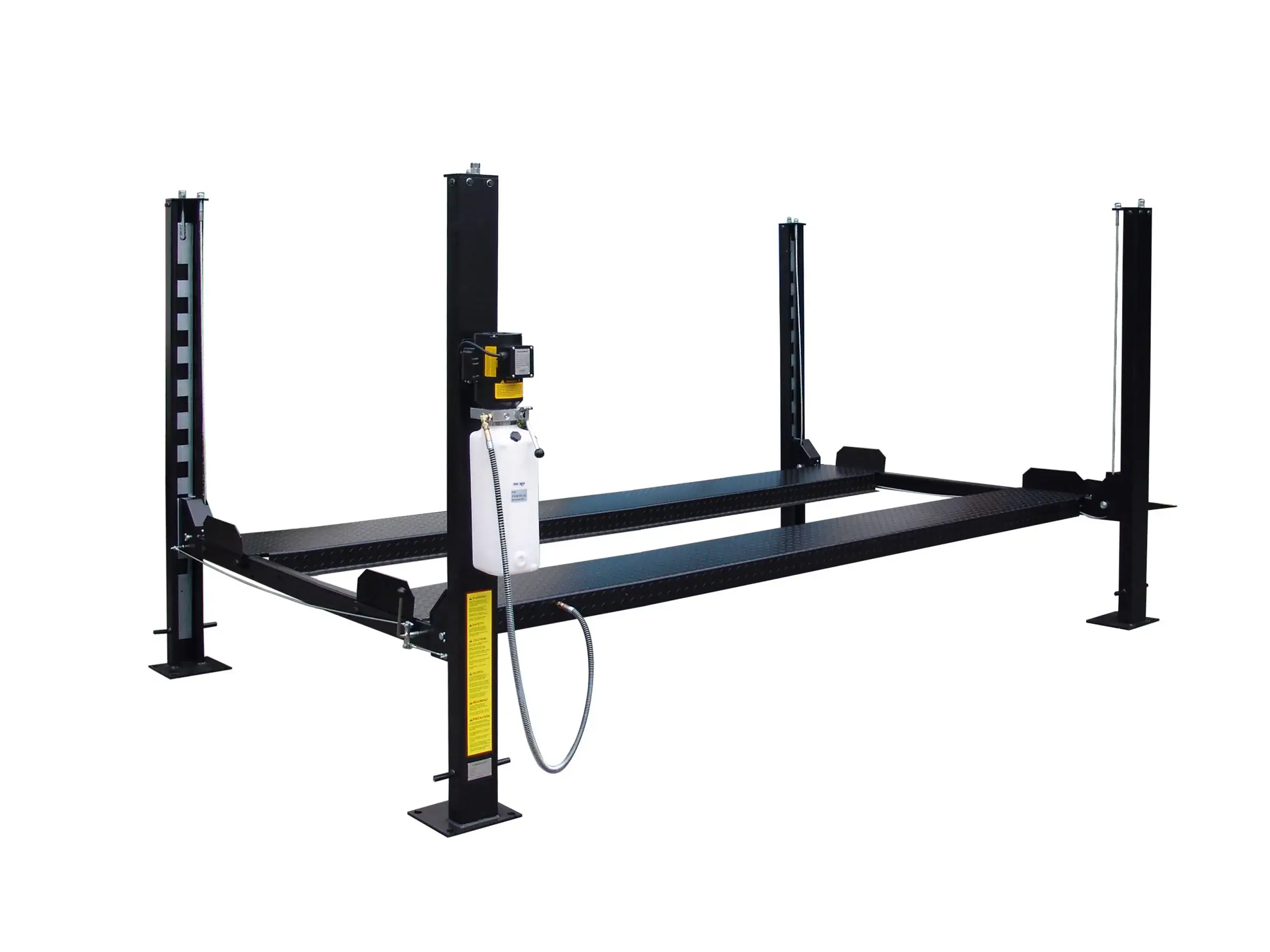
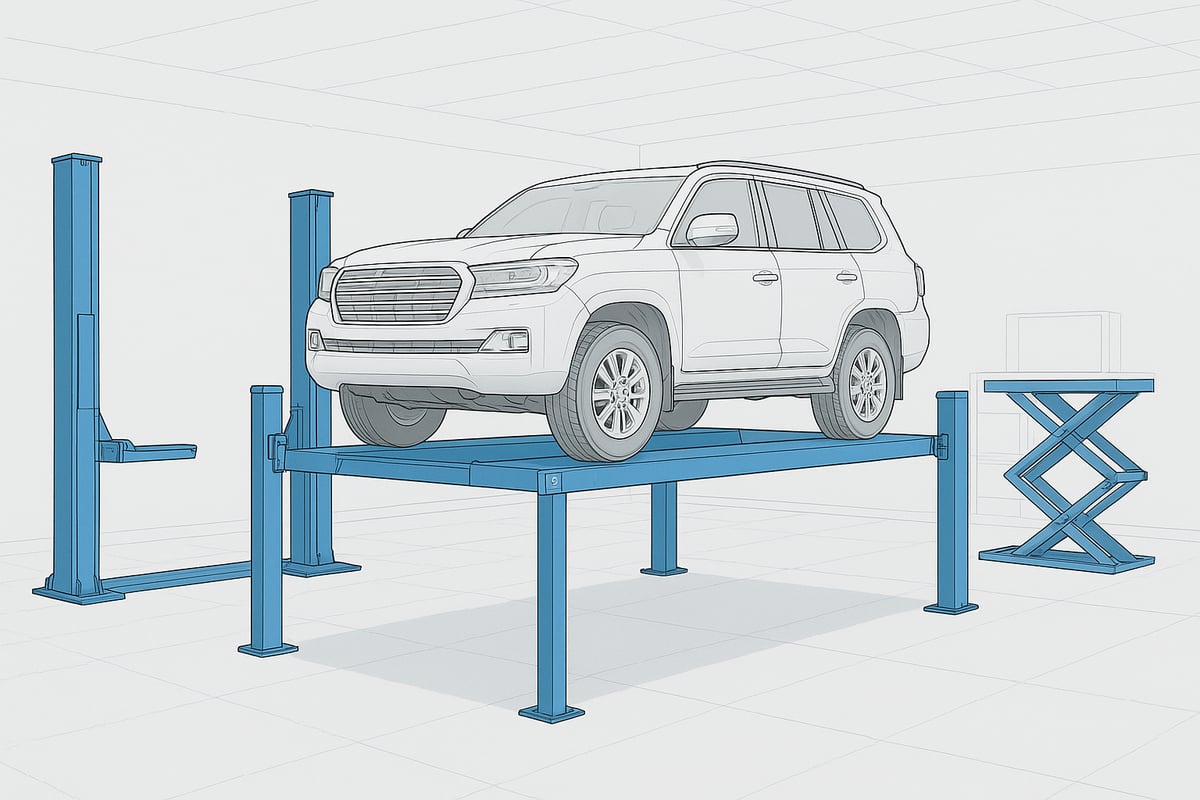
A vehicle lift 4 post is a heavy-duty mechanical system designed to raise vehicles using four sturdy columns and two parallel runways. Unlike a 2 post lift, which suspends a car from its frame, a 4 post lift supports the vehicle by its wheels, offering a stable platform. This design is different from scissor lifts too, which use an accordion-style mechanism.
Key components include:
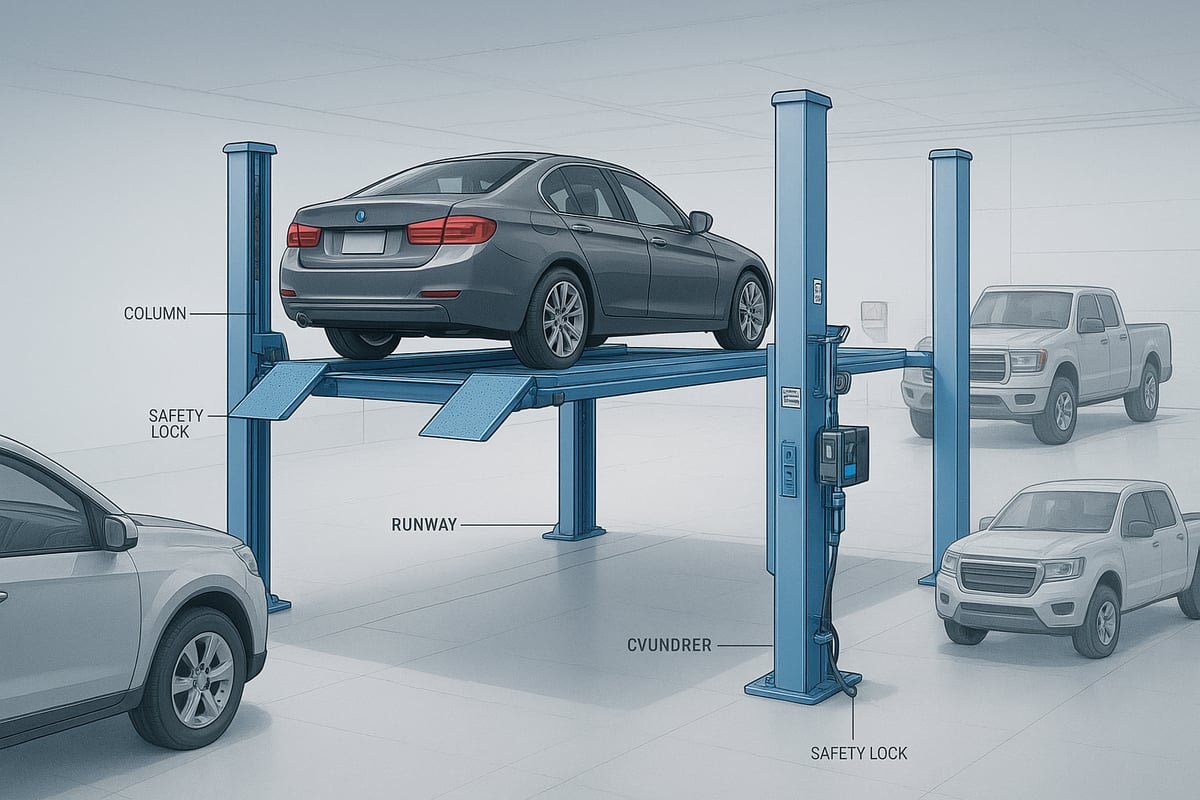
- Four steel columns for structural support
- Two long runways where the vehicle sits
- Hydraulic or electric lifting system
- Multiple safety locks for secure elevation
Typical lifting capacities range from 8,000 to 60,000 lbs, making the vehicle lift 4 post suitable for everything from sedans to heavy trucks. Models vary in lift height and width, allowing customization for different garages.
If you want to understand how this lift compares to others, check out the Types of car lifts explained for a full overview.
Key Benefits of 4 Post Vehicle Lifts
The vehicle lift 4 post stands out for its superior stability and even weight distribution. This makes it ideal for heavy vehicles, reducing the risk of tipping or imbalance. You can drive directly onto the runways and lift with minimal effort, making operation straightforward.
Key benefits include:
- Stability: Four points of contact provide unmatched balance.
- Versatility: Works for cars, SUVs, and light trucks.
- Dual-purpose: Great for both maintenance and long-term storage.
- Safety: Built-in locks and redundant safety features.
- Installation: Often requires little or no permanent floor anchoring.
Using a vehicle lift 4 post in your garage means you can handle more jobs safely and efficiently. Its design also allows for accessory add-ons like ramps, drip trays, and rolling jacks.
Common Applications in 2025
By 2025, the vehicle lift 4 post has found its place in a variety of settings. Professional repair shops rely on them for easy access to the undercarriage during inspections, brake work, and alignments. Home garages are adopting these lifts for vehicle storage, letting enthusiasts and collectors maximize space.
Other common uses include:
- Commercial parking solutions with stacked storage
- Fleet maintenance for businesses with multiple vehicles
- Integration into smart garages with digital controls
Whether you need maintenance access or a parking upgrade, a vehicle lift 4 post adapts to your needs. With modern advancements, these lifts are now smarter and safer than ever.
Types of 4 Post Lifts: Comparing Models and Features
Choosing the right vehicle lift 4 post model starts with understanding the wide range of types available today. Each type is tailored for specific uses, capacities, and spaces, making the selection process more straightforward when you know what to look for. From standard models to specialized designs, let’s break down the main categories and features you’ll encounter as you shop for a vehicle lift 4 post solution in 2025.
Standard 4 Post Lifts
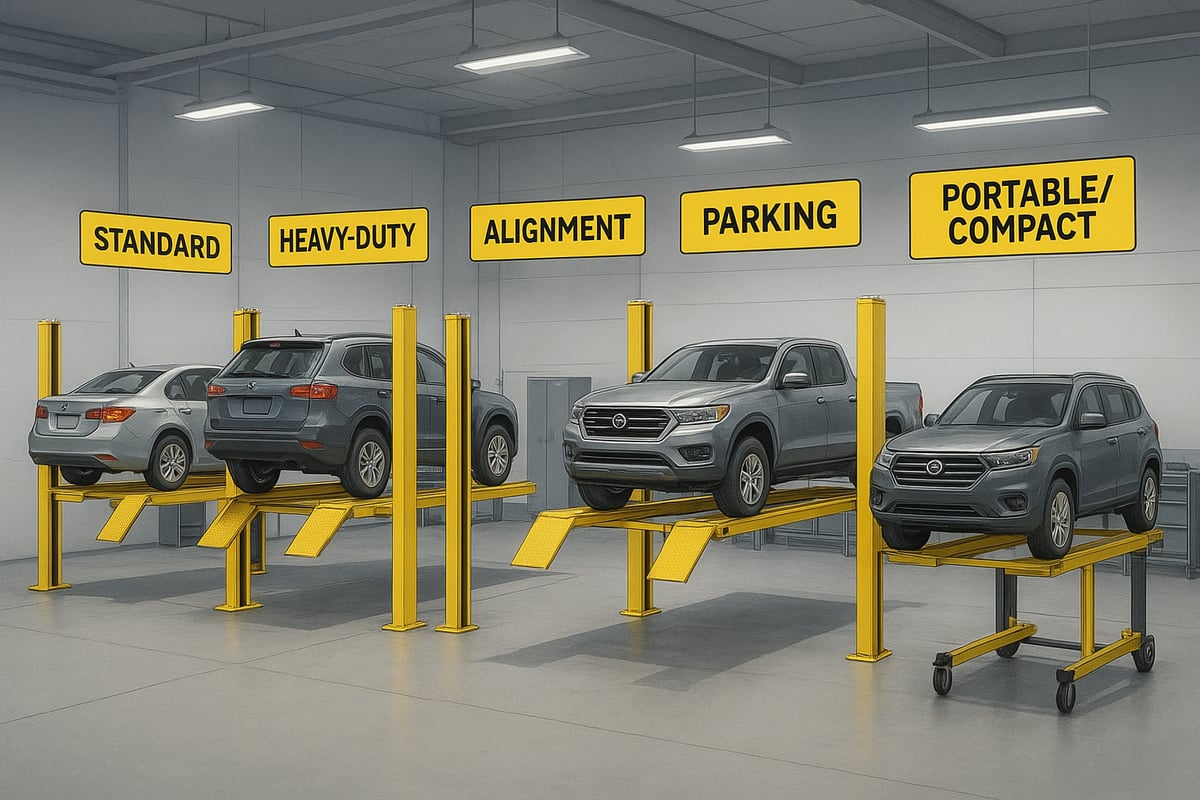
Standard vehicle lift 4 post models are the backbone of home garages and small automotive shops. They are built for general vehicle servicing, routine maintenance, and long-term storage. With typical lifting capacities ranging from 8,000 to 10,000 lbs, these lifts can support everything from compact cars to light trucks.
Most standard lifts feature drive-on runways, four upright columns, hydraulic cylinders, and mechanical safety locks. Runway lengths vary, allowing you to fit different vehicle sizes. These lifts usually require minimal floor anchoring, making installation less complex.
Popular examples include the Triumph NSS-8 and Supreme SP-85P, both known for reliability and straightforward operation. If you want a versatile vehicle lift 4 post solution for everyday use, standard models are often the best starting point.
Heavy-Duty 4 Post Lifts
When it comes to lifting commercial vehicles, larger trucks, or fleet vehicles, a heavy-duty vehicle lift 4 post is essential. These lifts are engineered for maximum strength, with reinforced steel construction and industrial-grade hydraulics.
Lifting capacities for heavy-duty models range from 12,000 lbs to an impressive 60,000 lbs. These lifts accommodate everything from delivery vans to buses and RVs. The runways and columns are wider and thicker to ensure stability under heavier loads.
Heavy-duty lifts often include extra-long runways and advanced safety systems, making them suitable for busy commercial garages. If your workspace handles a range of large vehicles, investing in a heavy-duty vehicle lift 4 post will deliver the power and durability you need.
Alignment 4 Post Lifts
Alignment vehicle lift 4 post models are designed specifically for precision wheel alignment and suspension work. What sets them apart are integrated turnplates and slip plates, which allow for accurate adjustments during alignment procedures.
These lifts are compatible with advanced alignment systems found in modern repair shops. The runways are engineered to keep vehicles level and stable, minimizing measurement errors. Lifting capacities typically start at 9,000 lbs, with options for heavier vehicles.
Alignment lifts also support brake work and undercarriage inspections. For shops that offer alignment as a core service, an alignment vehicle lift 4 post is a must-have for efficiency and accuracy.
Parking 4 Post Lifts
Parking vehicle lift 4 post models are built to solve space challenges in both residential and commercial environments. Their primary feature is the ability to stack vehicles, doubling your parking capacity without expanding your garage footprint.
These lifts offer extended runways and higher lift heights, making them suitable for SUVs and taller vehicles. Safety locks and easy-to-use drive-on ramps ensure secure, hassle-free operation. Parking lifts are commonly found in condo garages, car storage facilities, and even private homes.
If you need to maximize your available space for storage or daily parking, a parking vehicle lift 4 post provides a practical and efficient solution.
Portable and Compact 4 Post Lifts
For those with limited space or a need for mobility, a portable or compact vehicle lift 4 post is the answer. These models are designed for quick installation and easy relocation, making them ideal for home garages, car clubs, or temporary setups.
Portable lifts often have lower lifting capacities, typically between 7,000 and 9,000 lbs, but they still offer the essential safety and convenience features of larger models. Compact designs fit in smaller garages, and some units can be disassembled for storage when not in use.
If flexibility and space-saving are top priorities, a portable vehicle lift 4 post gives you the freedom to adapt your workspace as needed.
Key Feature Comparisons
Comparing the main features of each vehicle lift 4 post type helps you pinpoint the best fit for your needs. Key factors include lift height, width, runway length, power source, and safety mechanisms. For a detailed overview of how 4 post lifts compare with other lift types, check out this Car lift comparison and use cases guide.
Here’s a quick comparison table:
| Type | Capacity (lbs) | Runway Length | Best For | Safety Features |
|---|---|---|---|---|
| Standard | 8,000–10,000 | Medium | General service/storage | Mechanical locks |
| Heavy-Duty | 12,000–60,000 | Long | Trucks, fleets | Redundant safety locks |
| Alignment | 9,000+ | Medium/Long | Alignment, inspections | Integrated slip plates |
| Parking | 7,000–10,000 | Extended | Storage, parking | Multi-position locks |
| Portable | 7,000–9,000 | Short/Medium | Small garages, mobility | Quick-release locks |
When evaluating a vehicle lift 4 post, also consider accessory compatibility, such as ramps, jacks, and drip trays, as well as power options like hydraulic versus electric operation. Safety lock redundancy and emergency lowering systems are critical for peace of mind and compliance with the latest standards.
Essential Buying Considerations for 2025
Selecting the best vehicle lift 4 post for your garage or workshop in 2025 means looking beyond just price and capacity. You'll want a solution that fits your space, meets safety standards, leverages new technology, and offers long-term value. Below, we break down the most important factors to help you make a confident and informed decision.
Assessing Your Needs and Workspace
Before purchasing a vehicle lift 4 post, start by evaluating your unique requirements. Consider the types of vehicles you plan to lift, such as sedans, SUVs, or light trucks, and estimate their average and maximum weights.
Measure your garage or workspace dimensions carefully. Check ceiling height, floor area, and access points to ensure your chosen vehicle lift 4 post will fit safely and allow for comfortable movement around the lift.
Ask yourself these questions:
- Will you use the lift mainly for repairs, storage, or both?
- How often will you operate the lift?
- Do you expect to add more or larger vehicles in the future?
Planning ahead ensures your investment in a vehicle lift 4 post will serve your needs for years.
Safety Standards and Certifications
Safety is non-negotiable when it comes to a vehicle lift 4 post. Look for models certified by organizations like Automotive Lift Institute (ALI) or ETL. These certifications indicate the lift meets rigorous safety and performance standards.
In 2025, updated regulations require redundant safety locks and emergency lowering systems on all new vehicle lift 4 post models. Make sure your lift includes:
- Automatic locking systems
- Mechanical and hydraulic redundancies
- Overload protection features
Always follow installation guidelines and routine inspections. Certified lifts not only keep you safe but also protect your investment and may be required by insurance providers.
Technological Advancements and Smart Features
The vehicle lift 4 post market is rapidly evolving, introducing features that make operation safer and more convenient. Many new lifts offer digital control panels, remote operation, and smart sensors that alert you to maintenance needs or safety issues.
Energy efficiency is also improving, with eco-friendly hydraulic systems reducing power consumption. For a deeper look at the latest innovations, check the 2025 Update on Vehicle Lift Trends.
When evaluating a vehicle lift 4 post, look for:
- Digital safety alerts
- Remote monitoring or control
- Integration with smart garage systems
These advancements can boost productivity and provide peace of mind.
Installation and Maintenance Requirements
Proper installation of a vehicle lift 4 post is essential for safety and performance. Decide if you'll use professional installers or handle setup yourself. Professional installation ensures correct anchoring, power connection, and calibration.
Consider these installation needs:
- Adequate power supply (check voltage and amperage)
- Proper floor preparation for stability
- Sufficient workspace for operation and maintenance
Routine maintenance is key for longevity. Regularly inspect hydraulics, cables, safety locks, and moving parts. Most modern vehicle lift 4 post models come with service reminders and easy-access panels for quick checks.
Budgeting and Total Cost of Ownership
A vehicle lift 4 post can cost anywhere from $2,500 to over $60,000, depending on capacity, features, and brand. While upfront price is important, focus on total cost of ownership, including installation, maintenance, and potential repairs.
Here's a quick comparison:
| Cost Factor | Typical Range | Notes |
|---|---|---|
| Purchase Price | $2,500 – $60,000+ | Varies by type and capacity |
| Installation | $500 – $2,000 | Professional vs. DIY |
| Annual Maintenance | $200 – $600 | Depends on usage and parts availability |
| Warranty Coverage | 1 – 5 years | Longer is better for peace of mind |
Look for value in features, safety, and support. Sometimes, a higher initial investment in a vehicle lift 4 post pays off with lower maintenance and higher reliability.
Brand Reputation and Customer Support
Choosing a reputable brand for your vehicle lift 4 post can save time and headaches. Established brands like BendPak, AMGO, Supreme, and Triumph are known for quality engineering and responsive support.
Check for:
- Easy access to technical help and replacement parts
- Positive user reviews and testimonials
- Warranties and after-sales service
A dependable vehicle lift 4 post from a trusted brand will provide better long-term satisfaction. Make sure to verify the availability of service centers or online support before finalizing your purchase.
Top 4 Post Lift Brands and Models for 2025
Choosing a vehicle lift 4 post system is a major investment, so knowing which brands and models lead the market can make all the difference. In 2025, the best options combine proven safety, smart technology, and long-term reliability. Let’s look at which brands and models stand out, how they compare, and the innovations that are shaping the future of vehicle lift 4 post solutions.
Leading Brands in the Market
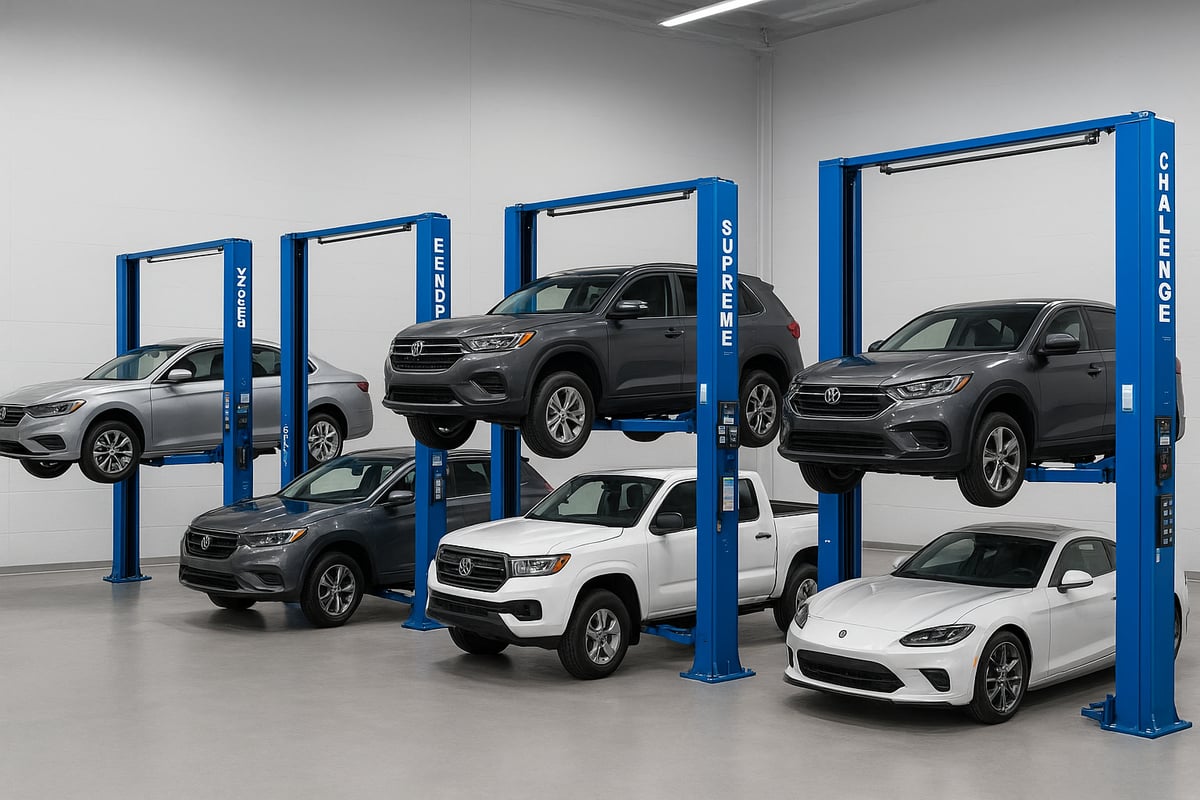
Several brands dominate the vehicle lift 4 post landscape in 2025. BendPak is renowned for its engineering excellence and robust construction, making it a go-to for professionals. AMGO Hydraulics impresses with innovation, offering smart safety features and reliable performance. Supreme is favored for its affordable yet durable lifts, especially for home garages.
Triumph stands out for its versatile models that blend value and functionality, while Atlas is celebrated for its user-friendly designs and strong customer support. Challenger appeals to commercial users who demand reliability and advanced features. These brands have built reputations on quality, service, and a commitment to evolving safety standards.
No matter your needs, choosing a vehicle lift 4 post from these trusted brands ensures access to technical support and a wide range of compatible accessories.
Best-Selling Models and Their Features
2025 brings a lineup of best-selling vehicle lift 4 post models to suit every garage size and budget. The Triumph NSS-8 is a favorite for home users, offering versatility and a compact footprint. Supreme’s SP-85P excels at parking and light-duty storage, making it ideal for collectors and enthusiasts.
BendPak’s HD-9 is a professional-grade model, known for its superior safety locks and smooth hydraulic operation. The Atlas Garage Pro 8000 is popular for its easy installation and reliable performance in home settings. For heavy-duty needs, the AMGO PRO-14 delivers industrial strength, supporting larger vehicles and commercial fleets.
Here’s a quick comparison table of top models:
| Model | Capacity (lbs) | Notable Feature | Best For |
|---|---|---|---|
| Triumph NSS-8 | 8,000 | Compact, affordable | Home garages |
| Supreme SP-85P | 8,500 | Stacking, storage | Parking/storage |
| BendPak HD-9 | 9,000 | Pro safety, smooth lift | Service centers |
| Atlas Garage Pro8000 | 8,000 | Easy install | DIY/home use |
| AMGO PRO-14 | 14,000 | Heavy-duty, robust | Commercial shops |
Comparing Price, Performance, and Reliability
When comparing vehicle lift 4 post models, consider how price aligns with features and reliability. Entry-level models like the Triumph NSS-8 and Atlas Garage Pro 8000 are budget-friendly, typically ranging from $2,500 to $4,000. These deliver strong value for home and light commercial use.
Mid-range lifts such as the BendPak HD-9 and Supreme SP-85P offer enhanced safety, accessory options, and smoother operation. These usually cost between $4,000 and $7,000. For heavy-duty applications, the AMGO PRO-14 stands out, built for demanding tasks and supporting larger vehicles, with prices moving into the $10,000+ range.
Customer reviews consistently highlight ease of use, long-term reliability, and responsive support as key differentiators. Choosing a vehicle lift 4 post system that matches your budget and needs ensures satisfaction for years to come.
Innovations to Watch in 2025
The vehicle lift 4 post market is evolving fast, with new advancements making lifts smarter, safer, and more eco-friendly. Many brands now integrate digital controls, remote operation, and maintenance reminders, streamlining daily use. Eco-conscious buyers will appreciate lifts using energy-efficient hydraulics and modular designs for future upgrades.
Industry leaders are focusing on enhanced safety systems, like redundant locking mechanisms and intelligent sensors. For those interested in broader trends and global insights, the Worldwide Car Four-Post Lifts Market Research Report 2025 offers a detailed look at new technologies and what’s next for vehicle lift 4 post solutions.
Staying informed about these innovations means you can invest in a lift that not only meets today’s standards but is ready for tomorrow’s demands.
Step-by-Step Guide: How to Choose the Right 4 Post Lift
Choosing the ideal vehicle lift 4 post can feel overwhelming, but a structured approach makes the process simple. Follow these essential steps to ensure your lift matches your needs, workspace, and budget.
Step 1: Define Your Lifting Needs
Start by identifying the types of vehicles you plan to lift. Will your vehicle lift 4 post need to support compact cars, SUVs, or even light trucks? Make a list of vehicle weights and dimensions to ensure you select a lift with enough capacity.
Think about how often you will use your vehicle lift 4 post. Daily use in a busy shop requires a robust, high-capacity model, while occasional home use may allow for a lighter-duty option. Planning with future vehicles in mind prevents outgrowing your lift too soon.
Step 2: Measure and Plan Your Space
Accurate measurements are critical before installing a vehicle lift 4 post. Measure your garage’s ceiling height, floor area, and access points. Include space for opening doors and moving around the lift safely.
Consider how the lift will fit into your workflow. Will you need extra clearance for larger vehicles or overhead lights? Sketch out a layout and check for possible obstructions, such as beams or storage racks. Good planning ensures efficient, safe operation.
Step 3: Research Safety and Compliance
Safety is non-negotiable when selecting a vehicle lift 4 post. Verify that any lift you consider meets current industry certifications, such as ALI and ETL. Staying updated on safety regulations protects your investment and everyone using the lift.
For the latest standards, review the New ANSI/ALI Safety Standard for Vehicle Lifts. Look for redundant safety locks, emergency lowering systems, and clear operating instructions. Prioritize models with strong safety records and independent testing.
Step 4: Compare Models and Features
With your needs and safety requirements defined, compare available vehicle lift 4 post models. Focus on features that match your specific use case, such as lift height, runway length, and power source.
A comparison table can help organize your options:
| Feature | Standard Lift | Heavy-Duty Lift | Alignment Lift | Parking Lift |
|---|---|---|---|---|
| Capacity | 8,000–10,000 lbs | 12,000–60,000 lbs | 9,000–14,000 lbs | 8,000–10,000 lbs |
| Application | Service/Storage | Fleet/Trucks | Wheel Alignment | Parking/Storage |
| Accessories | Basic | Advanced | Turnplates, Jacks | Stacking Ramps |
If you are deciding between lift styles, see this helpful Car lift two post vs four post guide for a detailed comparison.
Step 5: Set Your Budget and Evaluate Costs
Determine your overall budget for a vehicle lift 4 post, including installation and future maintenance. Prices vary widely, from entry-level models to heavy-duty commercial lifts. Consider the value each model offers, not just the upfront price.
Check what is included in the purchase, such as warranty terms, accessories, and after-sales support. Factor in ongoing costs for parts, service, and potential upgrades. A smart investment balances cost with performance and reliability.
Step 6: Check Brand Reputation and Support
Choose a vehicle lift 4 post brand with a solid reputation for quality and customer service. Research user reviews, testimonials, and ratings to gauge satisfaction. Reliable brands often provide better technical support and easier access to replacement parts.
Ask fellow professionals or enthusiasts for recommendations. Brands with established track records and responsive support teams help reduce downtime and headaches if issues arise.
Step 7: Plan for Installation and Maintenance
Decide whether to install your vehicle lift 4 post yourself or hire a professional. Professional installation is recommended for most users, ensuring correct setup and compliance with safety standards. DIY installation can be cost-effective but requires careful attention to detail.
Establish a routine maintenance schedule. Regular inspections of hydraulics, safety locks, and cables keep your lift running smoothly and extend its lifespan. Always follow the manufacturer’s guidelines for safe operation and servicing.
Frequently Asked Questions About 4 Post Vehicle Lifts
Curious about getting the most out of your vehicle lift 4 post? Here are answers to the most common questions, helping you make informed decisions and maximize safety and efficiency in your garage or shop.
Are 4 post lifts safe for home use?
Yes, a vehicle lift 4 post is designed with safety in mind, making it suitable for home garages when installed and used correctly. Features like automatic safety locks and sturdy columns provide stability. Always follow the manufacturer's installation instructions and never exceed the lift’s rated capacity. Regular checks of safety mechanisms are essential. For residential use, choose models certified by recognized organizations for maximum peace of mind.
How much space do I need for a 4 post lift?
The space required for a vehicle lift 4 post depends on the model and your intended use. Typical lifts need at least 12 feet in length and 8 feet in width, with ceiling heights starting around 8 feet. Allow extra room for ramps and vehicle entry. If you plan to install two lifts, make sure to factor in additional clearance between units. Always measure your workspace before making a purchase.
Can I use a 4 post lift for storage and repair?
Absolutely! A vehicle lift 4 post is versatile, allowing you to perform maintenance tasks like oil changes, brake work, and inspections, while also serving as an excellent storage solution. Many units support stacking one car above another, freeing up valuable floor space. Add-on accessories, such as rolling jacks or drip trays, can increase the lift’s utility for both repair and storage needs in your garage.
What maintenance is required for a 4 post lift?
Routine maintenance for a vehicle lift 4 post includes inspecting hydraulic fluid levels, checking cables for wear, and ensuring safety locks function smoothly. Clean the runways and columns regularly to prevent debris buildup. Lubricate moving parts as recommended by the manufacturer. Schedule professional inspections annually to catch potential issues early, keeping your lift reliable and extending its lifespan.
How do I choose between a 2 post and a 4 post lift?
Choosing between a 2 post and a vehicle lift 4 post depends on your needs. A 2 post lift offers better wheel access and is ideal for frequent repairs, while a 4 post lift provides superior stability and is perfect for storage or heavy vehicles. For a detailed comparison, check out Car lift scissor lift alternatives to explore all your options and make the best choice for your garage setup.
What are the most important safety features to look for?
Key safety features in a vehicle lift 4 post include redundant locking systems, automatic locks at multiple positions, and emergency lowering mechanisms. Modern lifts in 2025 often integrate smart sensors that alert you to overloads or maintenance needs. For more on the latest innovations, see Emerging Technologies in Automotive Lifts. Always verify that your lift meets current safety standards and certifications.
Now that you’ve got a solid understanding of what makes 4 post vehicle lifts such a valuable tool for both professionals and enthusiasts, you’re one step closer to making the right choice for your garage or shop. We’ve covered everything from key features and safety standards to the latest innovations and trusted brands for 2025, so you can feel confident moving forward. If you’re ready to take the next step or want to explore the full range of high quality lifts and collision repair equipment, Shop Now and find the perfect solution tailored to your needs.

