

Table of Contents
- What Makes an Advanced Aluminum Repair System Worth the Investment
- Advanced Aluminum Repair System Reviews: Top Professional Tools Compared
- DIY vs. Professional Grade: Understanding the Real Difference
- Alternatives to Aluminum Body Panel Replacement
- Aluminum Repair Station Requirements for Professional Shops
- Long-Term Durability and Environmental Safety Standards
- Which Aluminum Repair System Should Your Shop Choose?
- Conclusion
Last Updated: August 27, 2026
Aluminum repair has become one of the most technically demanding disciplines in modern collision work. The equipment you choose determines whether your shop delivers OEM-quality results or creates costly comebacks. This guide breaks down the top advanced aluminum repair system options available today, what separates professional-grade from consumer-grade equipment, and how to match the right system to your shop’s workload.
Aluminum’s unique metallurgy, including susceptibility to work hardening, heat-affected zone distortion, and galvanic corrosion when contaminated with steel particles, means using the wrong tool can compromise structural integrity in ways that aren’t visible until the next collision (nist.gov).
Quick Picks:
- Best All-in-One Dent System: Dent Fix Aluspot Extended DF-900DXE
- Best Portable Workstation: BETAG Innovation Alu Flatliner
- Best Multi-Process MIG Welder: Pro Spot SP-5 Smart MIG
- Best for Smaller Shops: ARC Dent Killer, 110-volt operation
What Makes an Advanced Aluminum Repair System Worth the Investment
An advanced aluminum repair system is a purpose-built combination of tools, welders, and pulling equipment engineered specifically for aluminum alloys used in modern vehicle construction.
Standard steel repair tools fail on aluminum because aluminum work hardens rapidly when deformed. Aggressive pulling or improper heat application creates metal fatigue that weakens the panel permanently. Professional aluminum repair systems account for this through controlled pulling force, precise heat management, and dedicated consumables that prevent cross-contamination with steel.
The business case is straightforward: aluminum panel replacement on a modern vehicle is expensive and time-consuming. A shop equipped with professional dent pulling systems and precision welding tools can repair panels that other shops would replace, improving margins significantly. A single steel particle embedded in an aluminum surface creates a galvanic corrosion site that will fail over time, which is why certified repair facilities maintain dedicated workspaces and specific surface preparation protocols.
The real value of a professional aluminum repair system is the ability to restore structural panel integrity to OEM specifications without replacement, which directly improves cycle times and gross profit per repair order.
Advanced Aluminum Repair System Reviews: Top Professional Tools Compared
Professional technicians evaluating an aluminum repair system need to assess welding performance, burn-through prevention, pulling force calibration, and workflow integration.
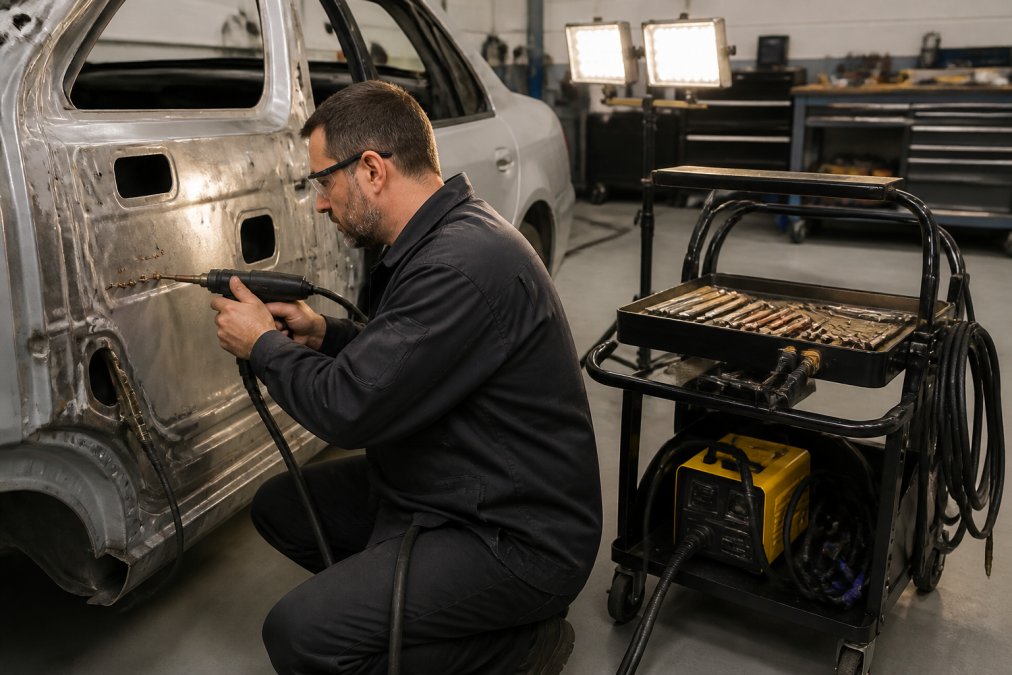
1. Dent Fix Aluspot Extended Aluminum Repair System DF-900DXE
The Dent Fix Aluspot Extended combines spot welding, stud welding, and integrated dent pulling tools into a single kit engineered for aluminum body repair. Specialized attachments handle difficult-to-reach areas where standard pulling tools can’t generate sufficient force without risking further panel deformation.
Best for: Professional auto body shops specializing in aluminum collision repair.
Pros:
- Dedicated aluminum capabilities across spot welding, stud welding, and pulling
- Comprehensive tool set reduces need for separate equipment purchases
- Designed to achieve OEM-quality repairs and restore structural integrity
Cons:
- Pricing requires a direct quote
- Technicians may need additional training
2. BETAG Innovation Alu Flatliner System
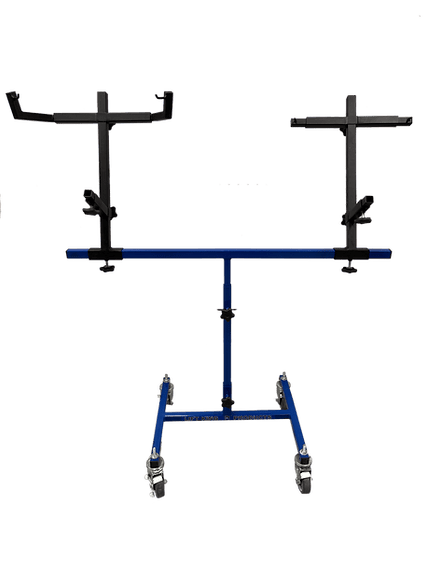
The BETAG Alu Flatliner is a portable workstation built around a trolley that organizes all tools for easy movement through the shop. The Alumet Welder handles precise stud welding on aluminum panels, while two bridges with exchangeable components address many panel deformation scenarios. Portability is underrated, shops with multiple bays benefit from a system that moves to the vehicle rather than requiring the vehicle to move to a fixed station.
Best for: Repair workshops needing an all-in-one solution with shop-floor flexibility.
Pros:
- Integrates all necessary repair methods into one organized, portable workstation
- Alumet Welder provides precise stud welding for aluminum
- Trolley design improves technician efficiency and tool organization
Cons:
- Pricing not publicly available
- Full proficiency requires dedicated training time
3. Pro Spot SP-5 Smart MIG Welder
The Pro Spot SP-5 is the welding performance benchmark for multi-material collision repair. Three dedicated MIG torches handle aluminum, silicon bronze, and steel respectively, with automatic switching of weld settings and gas between materials. This eliminates contamination risk from shared consumables. Double Pulse Technology provides precise heat control during vertical welding, preventing burn-through on thin aluminum panels. The SMART Software includes preloaded weld programs calibrated for automotive repair situations, reducing manual parameter adjustment and improving consistency across technicians.
Best for: Professional collision repair shops handling aluminum, high-strength steel, and MIG brazing applications.
Pros:
- Three dedicated torches prevent cross-contamination between materials
- Double Pulse Technology prevents burn-through on thin aluminum
- SMART Software simplifies complex welding tasks with preloaded programs
- USB port supports diagnostics and parameter saves
Cons:
- Significant initial investment at $12,111.00
- Requires 208/220 single-phase power supply
4. Chief Automotive Technologies MultiMig 525
The Chief MultiMig 525 features three Quick-Switch torches for steel, aluminum, and silicone bronze. Double Pulse Technology produces a TIG-like weld bead on aluminum that most technicians find easier to control than standard MIG pulse. The 75+ advanced welding programs with adjustable arc length and inductance give experienced technicians fine-grained control.
Best for: Collision repair facilities seeking versatile MIG/MAG welding across aluminum, steel, and silicone bronze.
Pros:
- 75+ welding programs reduce setup time and improve consistency
- Double Pulse Technology improves aluminum weld quality
- Push-pull torch with digital adjustment enhances control
Cons:
- Pricing requires a direct quote
- Requires 230V single-phase input
5. ARC Dent Killer Aluminum and Steel
The ARC Dent Killer is the entry point for shops needing aluminum dent pulling capability without major investment. Operating on 110 volts, it runs in any standard shop outlet, removing the power supply barrier that stops many smaller operations from adding aluminum capability. Changeable tips handle specific aluminum and steel applications. At approximately 46 lbs, it’s genuinely portable.
Best for: Smaller auto body shops or technicians needing an affordable, versatile dent pulling system for both steel and aluminum.
Pros:
- Cost-effective at $2,000.00 for dual aluminum and steel capability
- 110-volt operation removes power supply barriers
- Changeable tips add material versatility
Cons:
- Less advanced precision than higher-end professional systems
- Not suited for complex structural repairs or high-volume aluminum work
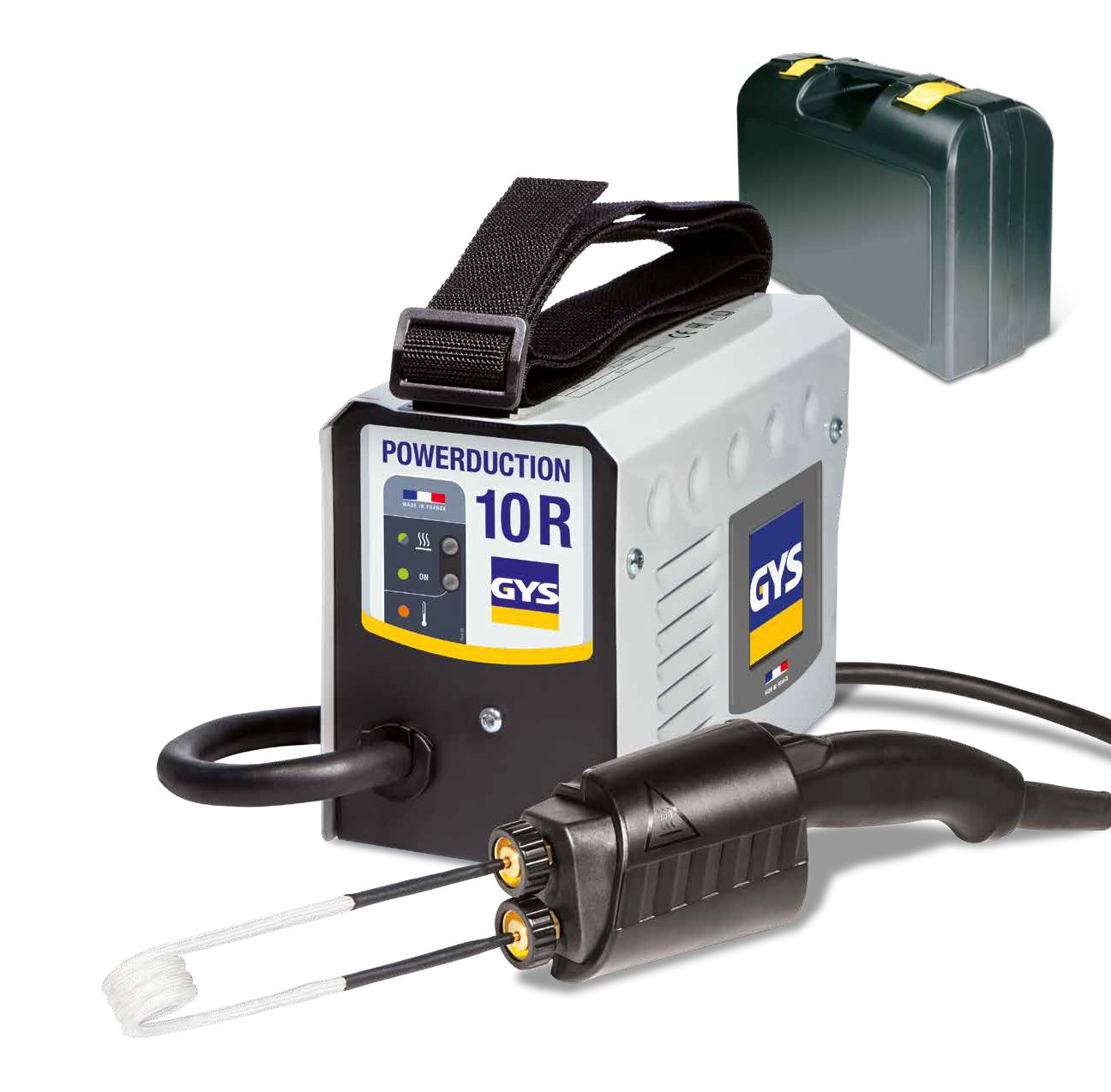
6. GYS PTI-G Inverter Spot Welder
The GYS PTI-G is engineered for OEM-approved spot welding on high-strength steels and aluminum. Welding current up to 14,500 amps with a clamping force of 550 daN at 8 bar air pressure puts it in a different class from lighter-duty spot welders. AUTO mode automatically recognizes steel type, sheet-metal thickness, and panel bond presence, then calculates welding parameters accordingly. The traceability recording feature saves welding spot characteristics to an SD card, supporting documentation requirements that insurance carriers and OEM-certified repair programs increasingly demand.
Best for: Collision repair shops needing a powerful, precise, OEM-approved spot welder for high-strength steel and aluminum.
Pros:
Subscribe to our newsletter! →
- 14,500-amp capacity and 550 daN clamping force for demanding applications
- AUTO mode removes guesswork from parameter selection
- Weld traceability documentation supports OEM certification requirements
- Ergonomic lightweight gun reduces technician strain
Cons:
- Investment just under $30,000
- Requires 220V, 30A power supply
7. Car-O-Liner CTR9 Resistance Spot Welder
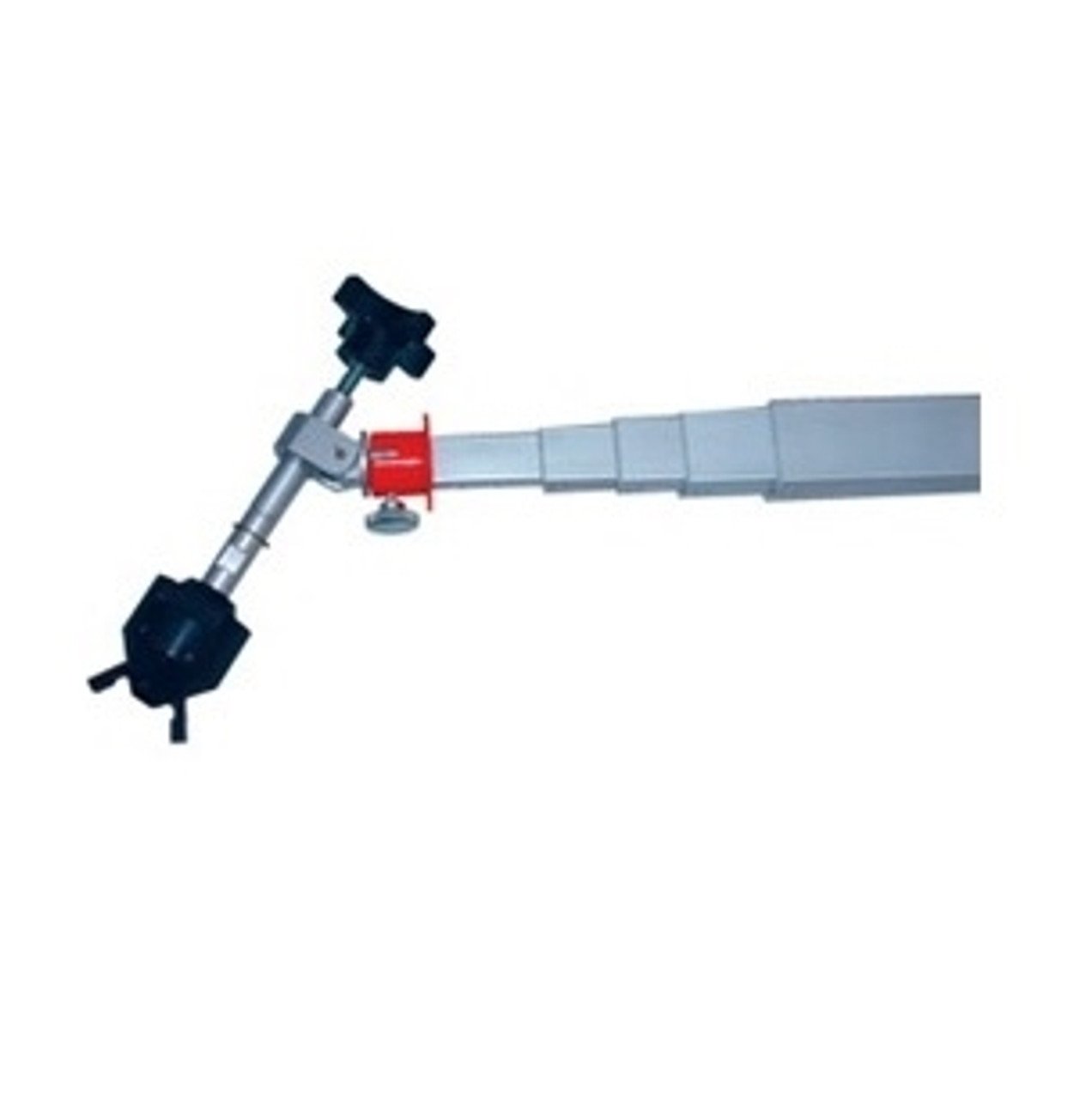
The Car-O-Liner CTR9 is the most automated spot welder in this comparison. Fully automatic operation instantly measures metal panels and calculates exact welding parameters, ensuring consistent, high-quality welds regardless of which technician operates it. The 16,000-amp transformer and CANBUS communication deliver welding performance that handles all steel materials in automatic mode. The telescopic support arm, made of extruded aluminum and adjustable vertically and horizontally, gives technicians maximum freedom of movement. Built-in weld documentation with PC software supports insurance or OEM program compliance.
Best for: Auto body shops requiring high-performance, ergonomic, fully automatic spot welding for modern vehicle materials.
Pros:
- Fully automatic parameter calculation ensures consistent weld quality
- 16,000-amp transformer handles all steel grades in automatic mode
- Weld documentation built in for quality control and compliance
- Exceptional ergonomic design reduces fatigue
Cons:
- $36,047.00 price point is the highest in this comparison
- Requires 208V power supply
| System | Starting Price | Best For | Key Capability |
|---|---|---|---|
| Dent Fix DF-900DXE | Contact for quote | Aluminum specialists | Integrated stud welding + dent pulling |
| BETAG Alu Flatliner | Contact for quote | Multi-bay flexibility | Portable all-in-one workstation |
| Pro Spot SP-5 | $12,111.00 | Multi-material MIG | Triple torch, double pulse |
| Chief MultiMig 525 | Contact for quote | Versatile MIG/MAG | 75+ welding programs |
| ARC Dent Killer | $2,000.00 | Smaller shops | 110V dual-material dent pulling |
| GYS PTI-G | ~$30,000 | OEM-certified shops | 14,500A auto spot welding |
| Car-O-Liner CTR9 | $36,047.00 | High-volume precision | Fully automatic 16,000A spot welding |
DIY vs. Professional Grade: Understanding the Real Difference
The gap between consumer-grade and professional-grade aluminum repair equipment isn’t primarily about power output or price. It’s about process control.
Consumer-grade dent pulling systems lack the calibrated pulling force management that professional systems provide. On aluminum, uncontrolled pulling force triggers work hardening, which stiffens the metal and makes further repair progressively more difficult. Consumer MIG welders lack the synergic curves and double pulse technology that prevent burn-through on aluminum panels. A burned-through panel on a structural section is a structural integrity failure that requires replacement.
Using steel tools on aluminum panels without dedicated separation creates galvanic corrosion sites. Steel particles embedded in aluminum surfaces cause corrosion failures that may not appear for months but will compromise the repair long-term.
Equipment calibration is also a professional-grade differentiator. Systems like the GYS PTI-G and Car-O-Liner CTR9 include automatic parameter calculation and weld documentation. Consumer tools have neither. For shops pursuing OEM certification, documented weld data is often a program requirement. DIY-grade tools are appropriate for occasional minor dent removal on non-structural panels. Any repair involving structural panels, high-strength steel adjacency, or OEM certification requirements demands professional-grade systems with proper process controls.
Alternatives to Aluminum Body Panel Replacement
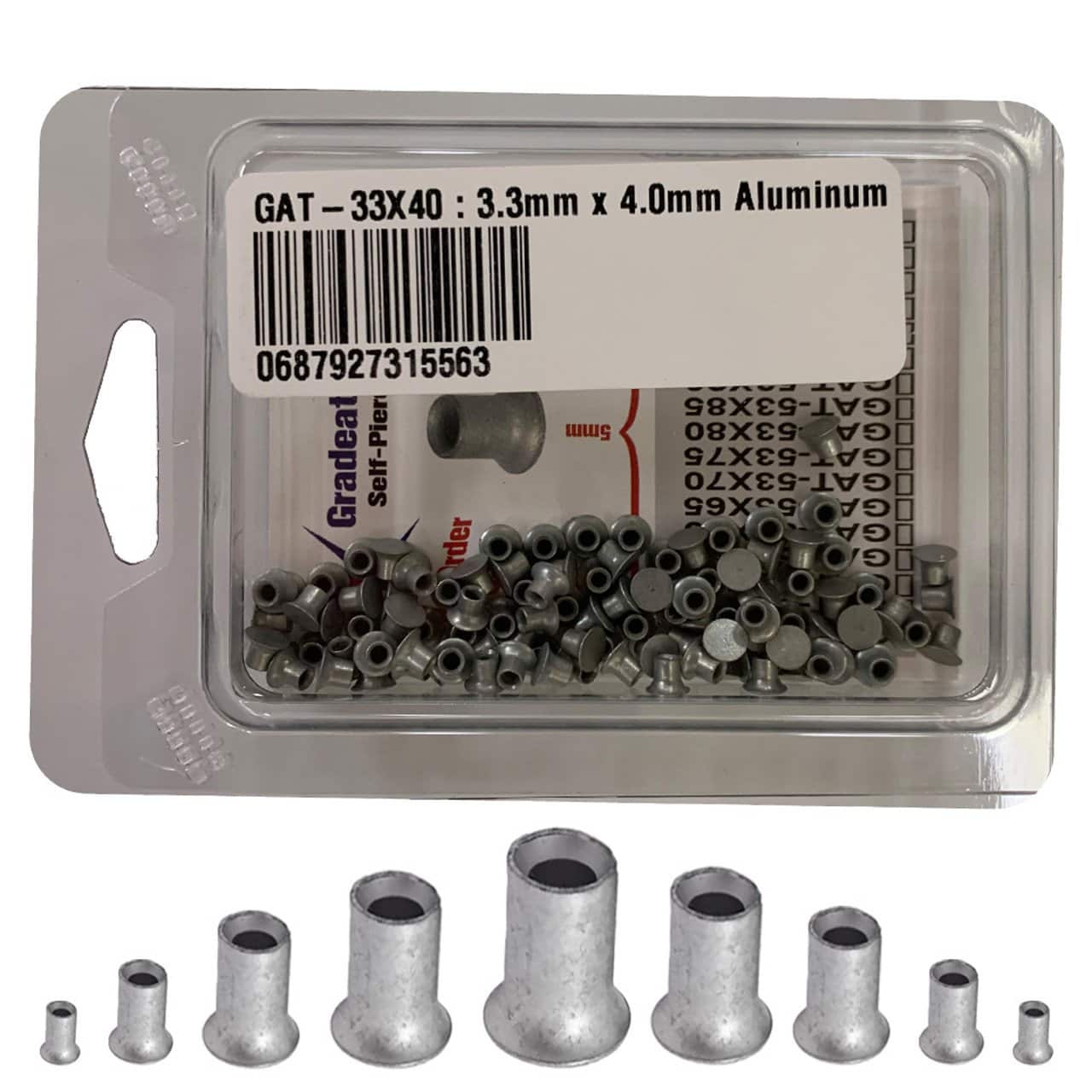
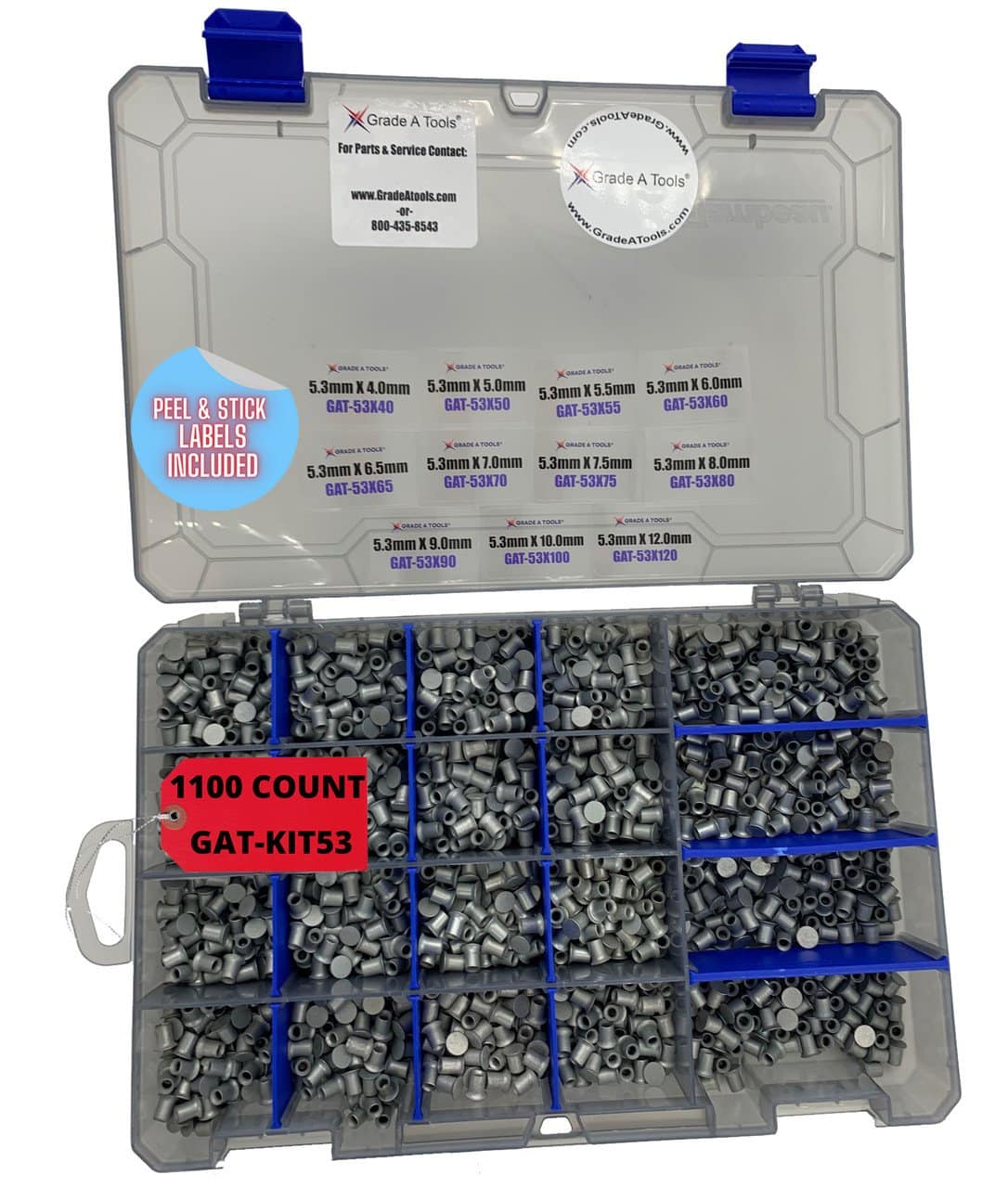
Alternatives to aluminum body panel replacement include stud welding and dent pulling, self-piercing riveting for structural panels, and targeted welding repairs.
Stud Welding and Dent Pulling
Stud welding is the primary technique for aluminum dent removal on non-structural panels. A stud welder attaches small pulling studs to the damaged surface, then a pulling bridge applies controlled pulling force to draw the deformation back toward its original geometry. This avoids the heat-affected zone damage that comes from aggressive torch heating. Surface preparation before stud welding is non-negotiable. Contaminated surfaces produce weak stud welds that pull free under tension.
Self-Piercing Riveting for Structural Panels
Self-piercing riveting is the OEM-specified joining method for structural aluminum panels on many modern vehicles. The Dent Fix DF-SPR67 Self-Piercing Riveter uses cold forming with 8 tons of insertion force to set rivets without heat or pre-drilled holes, matching factory fastener integration specifications.
When replacing self-piercing rivets, always use the OEM-specified rivet diameter and material grade for the vehicle being repaired. Substituting a different rivet specification can result in a joint that meets visual inspection but fails under crash loading.
When Replacement Is the Only Option
Panel replacement becomes the correct answer when damage exceeds the elastic recovery limit of the aluminum alloy, when structural panel deformation affects load paths that cannot be verified as restored to OEM specifications, or when the repair cost exceeds the economic threshold for the vehicle.
Aluminum Repair Station Requirements for Professional Shops
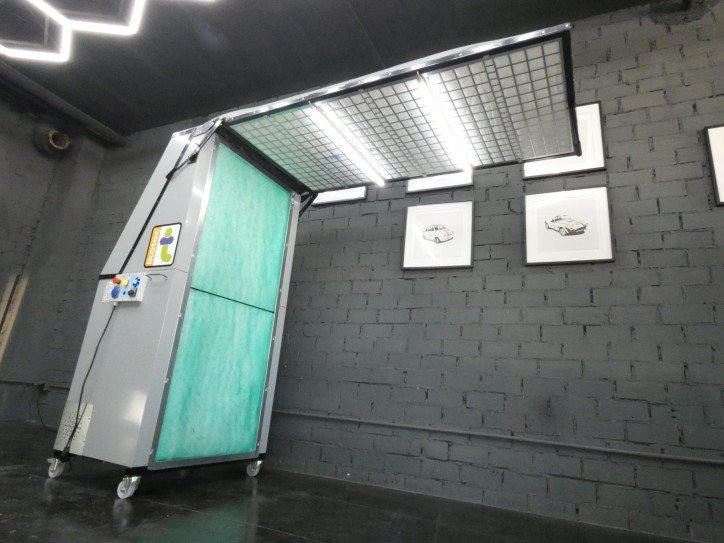
An aluminum repair station is a dedicated, physically separated workspace equipped with aluminum-specific tools, proper ventilation, and power infrastructure to support professional aluminum body repair without risk of steel contamination or process failure.
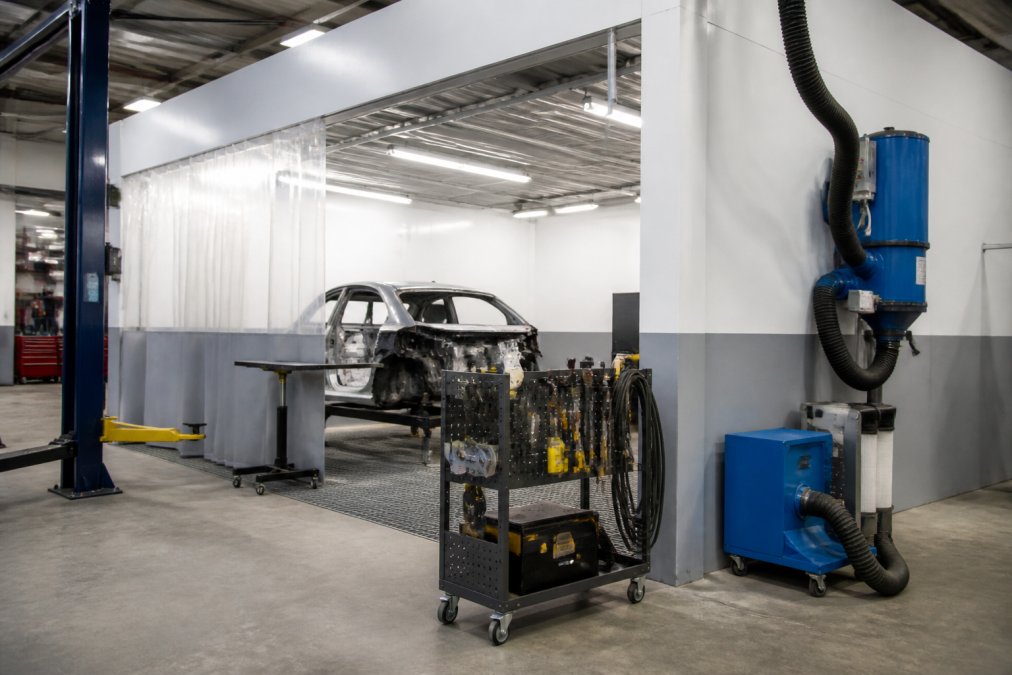
Dedicated Workspace and Contamination Control
The single most important requirement for an aluminum repair station is physical separation from steel repair areas. Steel dust and particles generated by grinding, welding, or cutting steel are airborne in a typical body shop environment. When these particles land on aluminum surfaces or aluminum tooling, they create galvanic corrosion sites that compromise both the repair and future aluminum work.
Dedicated aluminum tools must never contact steel. This means separate grinders, separate wire brushes, separate welding wire spools, and dedicated pulling attachments. Many shops use color-coded tooling to prevent cross-contamination. Ventilation requirements for aluminum welding are governed by OSHA standards (osha.gov). Aluminum welding produces fumes that require local exhaust ventilation at the point of generation.
Power Supply and Equipment Calibration
Professional aluminum welding and spot welding equipment places significant demands on shop electrical infrastructure. The GYS PTI-G requires 220V, 30A dedicated service. The Car-O-Liner CTR9 requires 208V. The Pro Spot SP-5 requires 208/220 single-phase power. Shops adding multiple systems need to confirm their electrical panels can support simultaneous operation without voltage drops that affect weld quality. Equipment calibration is an ongoing requirement. Spot welder electrode condition directly affects weld quality; worn or contaminated electrodes produce inconsistent welds even when all other parameters are correct.
Long-Term Durability and Environmental Safety Standards
The long-term durability of an aluminum repair depends on the quality of the repair process, the equipment used, and whether the repair meets OEM specifications for the specific vehicle. Repairs performed with professional-grade equipment following OEM procedures maintain structural integrity over the vehicle’s service life. Repairs performed with undersized equipment, incorrect techniques, or contaminated tooling can appear acceptable at delivery but develop corrosion, fatigue cracks, or structural weakness over time.
OSHA standards govern technician exposure to welding fumes and noise. EPA regulations address the disposal of aluminum grinding dust and welding waste, which are classified as industrial waste streams requiring proper handling (the EPA). Work hardening is an environmental durability factor that many shops overlook. Aluminum that has been work hardened during an improper repair attempt has reduced ductility. In a subsequent collision, a work-hardened panel absorbs less energy before fracturing, which can affect occupant protection.
Long-term repair durability isn’t just about corrosion resistance. It’s about maintaining the aluminum panel’s original mechanical properties, including ductility and energy absorption, which affect vehicle safety performance in subsequent collisions.
Which Aluminum Repair System Should Your Shop Choose?
The right aluminum repair system depends on your shop’s volume, vehicle mix, and existing infrastructure.
For shops new to aluminum work with limited volume: The ARC Dent Killer at $2,000.00 provides a low-barrier entry point for basic dent pulling on both aluminum and steel without power supply upgrades.
For shops specializing in aluminum collision repair: The Dent Fix Aluspot Extended DF-900DXE or BETAG Alu Flatliner provides integrated capability to handle the full range of aluminum body repair without sourcing tools from multiple vendors.
For shops handling multi-material vehicles including high-strength steel: The Pro Spot SP-5 Smart MIG or Chief MultiMig 525 delivers the welding performance and process control needed for modern mixed-material vehicle construction, with dedicated torches that prevent cross-contamination.
For OEM-certified collision repair centers: The GYS PTI-G or Car-O-Liner CTR9 provides the automatic parameter control, welding performance, and weld documentation that OEM certification programs require.
Professional aluminum repair systems are sized for shop environments, not production facilities. A single Dent Fix DF-900DXE or BETAG Alu Flatliner can support multiple technicians in a properly organized shop. Professional-grade systems are built for daily shop use and are not tools that wear out in two years of normal operation.
Aluminum body repair is becoming a core competency for any shop that wants to stay competitive as vehicle manufacturers continue shifting to aluminum-intensive construction. KGM Equipment supplies professional-grade aluminum repair systems, including dent pulling tools, spot welders, and multi-process MIG welders, backed by expert technical support. For shops evaluating which system fits their operation, contact the KGM Equipment team for guidance on equipment selection, power requirements, and training resources.
Frequently Asked Questions
What is the best aluminum dent repair system for collision shops?
The best aluminum repair system depends on your shop's volume and specialization. Comprehensive all-in-one systems like the Dent Fix Aluspot DF-900DXE or BETAG Alu Flatliner suit shops handling frequent aluminum work, combining stud welding, dent pulling, and spot welding in one package. Shops doing mixed steel and aluminum repairs benefit more from multi-process MIG welders like the Pro Spot SP-5 or Chief MultiMig 525. Contact KGM Equipment to match the right system to your specific bay count and repair volume.
Is aluminum body repair more difficult than steel repair?
Aluminum body repair requires more specialized training and equipment than steel work. Aluminum's lower tensile strength and tendency toward work hardening mean technicians must apply controlled pulling force to avoid metal fatigue and panel deformation. Heat-affected zone management is critical since aluminum conducts heat faster than steel, raising burn-through risk. Galvanic corrosion is another concern when aluminum contacts steel tools or fasteners. Dedicated aluminum repair stations, separate tools, and certified technician training are essential to achieving OEM-quality results consistently.
What tools are required for professional aluminum body work?
Professional aluminum body repair requires a dedicated dent pulling system with stud welding capability, a compatible MIG or spot welder with aluminum-specific programs, self-piercing riveting tools for structural panel joining, and a 3D electronic measuring system to verify repair geometry against OEM specifications. A separate aluminum repair station with contamination controls prevents galvanic corrosion from cross-contamination with steel particles. Surface preparation tools and proper ventilation round out the minimum aluminum repair station requirements for a compliant, professional setup.
Can steel repair tools be used on aluminum body panels?
Steel repair tools should never be used directly on aluminum panels. Steel particles transferred from hammers, dollies, or grinders embed in aluminum surfaces and cause galvanic corrosion, compromising long-term repair integrity. Welding equipment calibrated for steel delivers incorrect heat input on aluminum, creating burn-through or inadequate fusion. Shops must maintain dedicated aluminum-only tool sets, separate storage, and clearly marked workstations. This separation is a core aluminum repair station requirement recognized by OEM repair procedures and I-CAR training standards.
What are the safety requirements for aluminum collision repair?
OSHA 29 CFR 1910.252 governs welding safety in body shops, requiring proper ventilation, fire protection, and PPE for welding operations including aluminum. Aluminum dust and fumes are classified as nuisance particulates but require respiratory protection in enclosed spaces. Shops must maintain dedicated aluminum workstations to prevent cross-contamination with steel, which creates galvanic corrosion. Equipment calibration logs, technician training documentation, and adherence to OEM repair procedures are standard compliance expectations for certified repair facilities handling aluminum-intensive vehicles.
This article was written using GrandRanker

