

Table of Contents
- Essential Hand Tools Every Vehicle Restoration Shop Needs
- Must-Have Power Tools for Vehicle Restoration
- Aluminum Repair Tools for Auto Body Work
- Welding and Metal Fabrication Gear for Modern Restorations
- Paint, Bodywork, and Surface Prep Tools
- Digital Diagnostic Tools and Modern Vehicle Restoration Integration
- Automotive Shop Efficiency Strategies: Organizing Your Tool Investment
- Conclusion
Last Updated: August 28, 2026
Modern vehicle restoration demands fundamentally different tooling than classic steel-body rebuilds. Today’s vehicles incorporate ultra-high-strength steels, aluminum-intensive structures, and sophisticated electronics that require a new approach. This guide covers every tool category you need, from hand tools to digital diagnostics, with clear guidance on where to invest and where to save. The shops winning on cycle time and repair quality in 2026 have built their tool inventory around modern materials and diagnostics.
Essential Hand Tools Every Vehicle Restoration Shop Needs
A well-equipped shop starts with hand tools. No amount of sophisticated equipment compensates for weak fundamentals.
Socket Sets, Torque Wrenches, and Breaker Bars
Professional restoration demands comprehensive socket sets spanning metric and SAE, with deep sockets for recessed fasteners and impact-rated sockets for pneumatic and cordless drivers. A 3/8-inch drive set handles most interior and engine bay work, while a 1/2-inch drive set with a quality breaker bar manages chassis and drivetrain fasteners.
Torque wrenches are critical for modern work. Precise torque values are specified for suspension and brake components, and over-tightening aluminum fasteners strips threads or cracks brackets. A click-type torque wrench in the 10-150 ft-lb range covers most suspension and brake work. Calibrate torque wrenches annually, a wrench reading 10% high creates bearing preload errors and other failures.
A 24-inch 1/2-inch drive breaker bar provides mechanical advantage for seized fasteners without damaging the socket or fastener head.
Lifting Equipment: Floor Jacks, Jack Stands, and Creepers
A professional floor jack rated for at least 3 tons handles passenger cars and light trucks safely. Low-profile floor jacks are worth the investment for sports cars and lowered vehicles.
Jack stands are non-negotiable. The OSHA automotive lift safety guidelines are clear: no technician should work under a vehicle supported only by a jack. Use rated jack stands at designated lift points always. A quality creeper with padded headrest makes extended undercarriage work less punishing and improves productivity.
Never use a floor jack as long-term support while working under a vehicle. Jack stands rated to the vehicle’s weight must be in place before any technician goes underneath. A jack failure is catastrophic and entirely preventable.
Must-Have Power Tools for Vehicle Restoration
Power tools define restoration pace. The right selection compresses hours of hand work into minutes.
Impact Wrenches and Cordless Power Tools
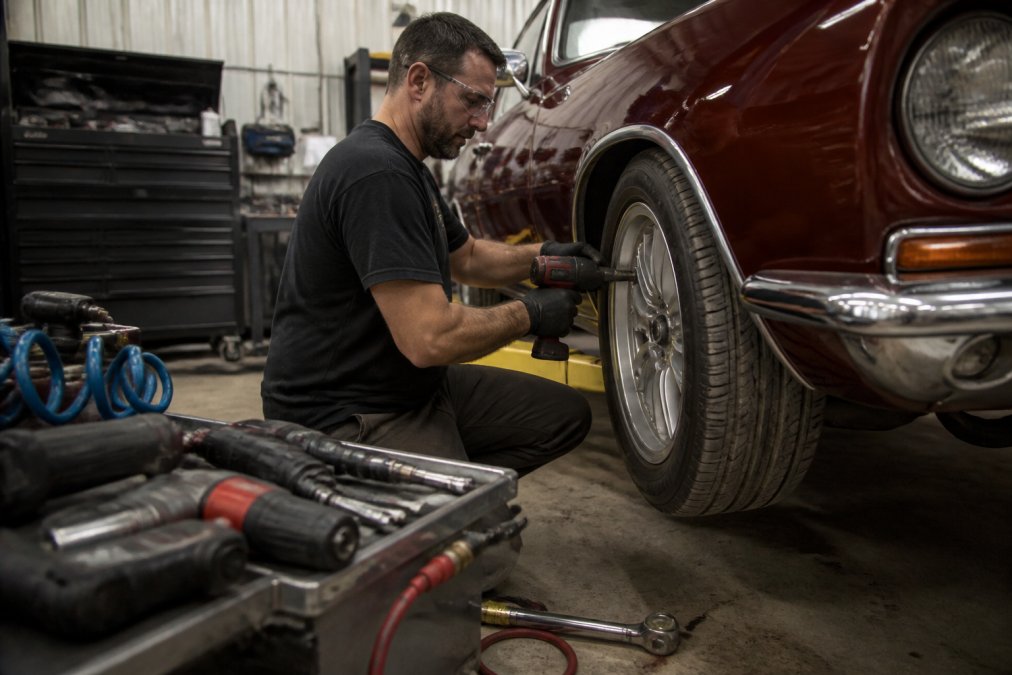
The shift from pneumatic to cordless impact wrenches is a major quality-of-life improvement. The Milwaukee M18 FUEL 1/2" High Torque Impact Wrench delivers up to 2,000 ft-lbs of breakaway torque, handling lug nuts, suspension bolts, and drivetrain fasteners without an air line. Cordless freedom eliminates air hose tangles and trip hazards in busy shops.
The tradeoff is weight. For wheel removal and chassis work, this is minimal. For extended overhead tasks, a lighter pneumatic tool may be preferable. The best shops run a mix: cordless for mobility, pneumatic for sustained high-volume tasks.
Standardize on a single battery platform across your cordless tool lineup. This means fewer chargers, fewer battery types to track, and lower total cost over time.
Die Grinders, Heat Guns, and Air Compressor Requirements
Die grinders are essential for rust removal, weld prep, and fitting body panels. A pneumatic die grinder with carbide burrs and sanding discs handles detailed metalwork that larger grinders cannot reach.
Heat guns serve two functions: softening adhesives and body sealants for removal, and warming metal for straightening without distortion risk. A variable-temperature heat gun ranging from 120°F to 1,100°F covers both applications.
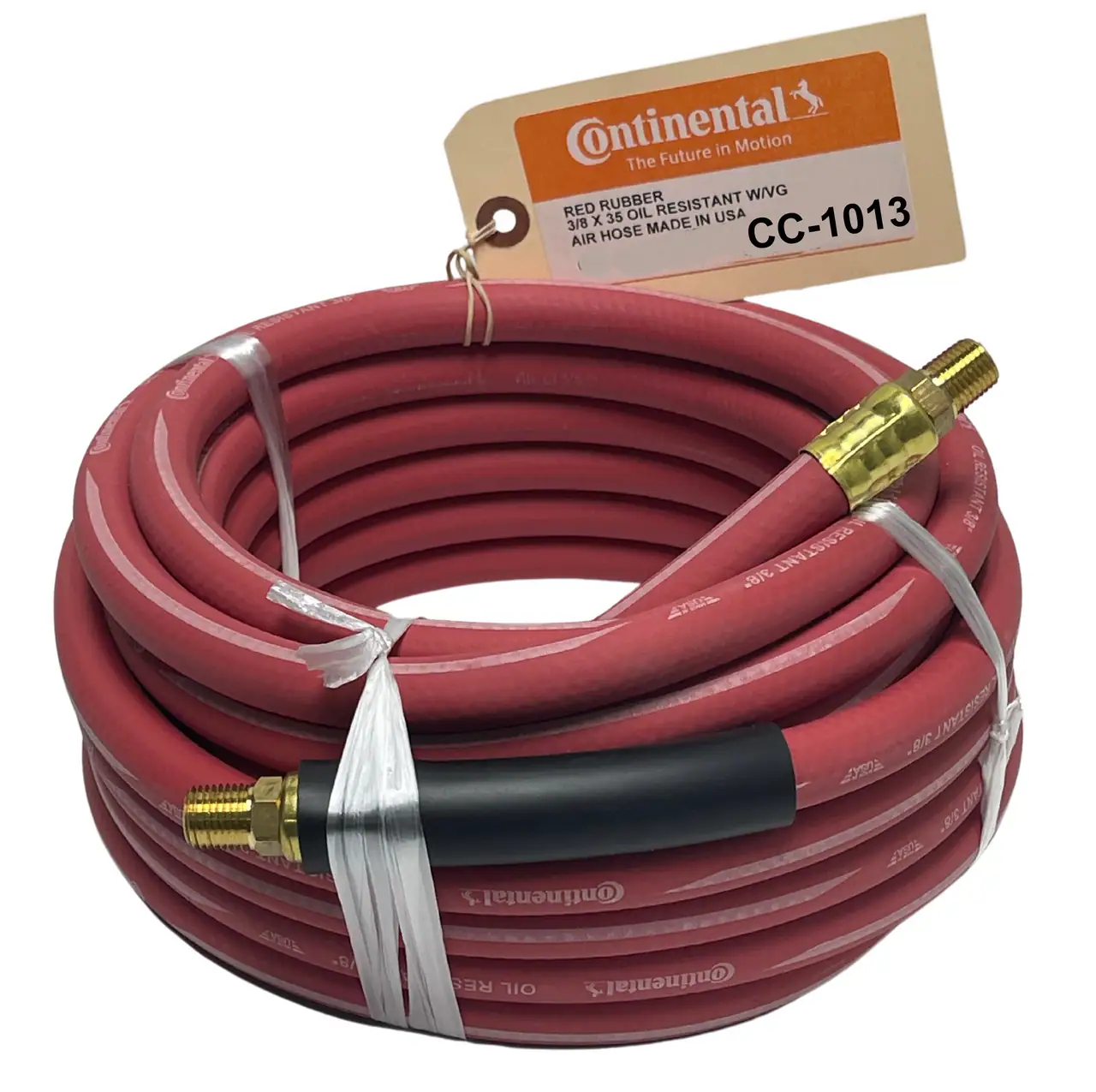
All pneumatic tooling demands a capable air compressor. A two-stage compressor rated at minimum 60 gallons and 5-7 CFM at 90 PSI handles impact wrenches, die grinders, and spray guns running simultaneously. Undersizing your compressor causes constant cycling, pressure loss at the tool, and shortened compressor life.
Aluminum Repair Tools for Auto Body Work
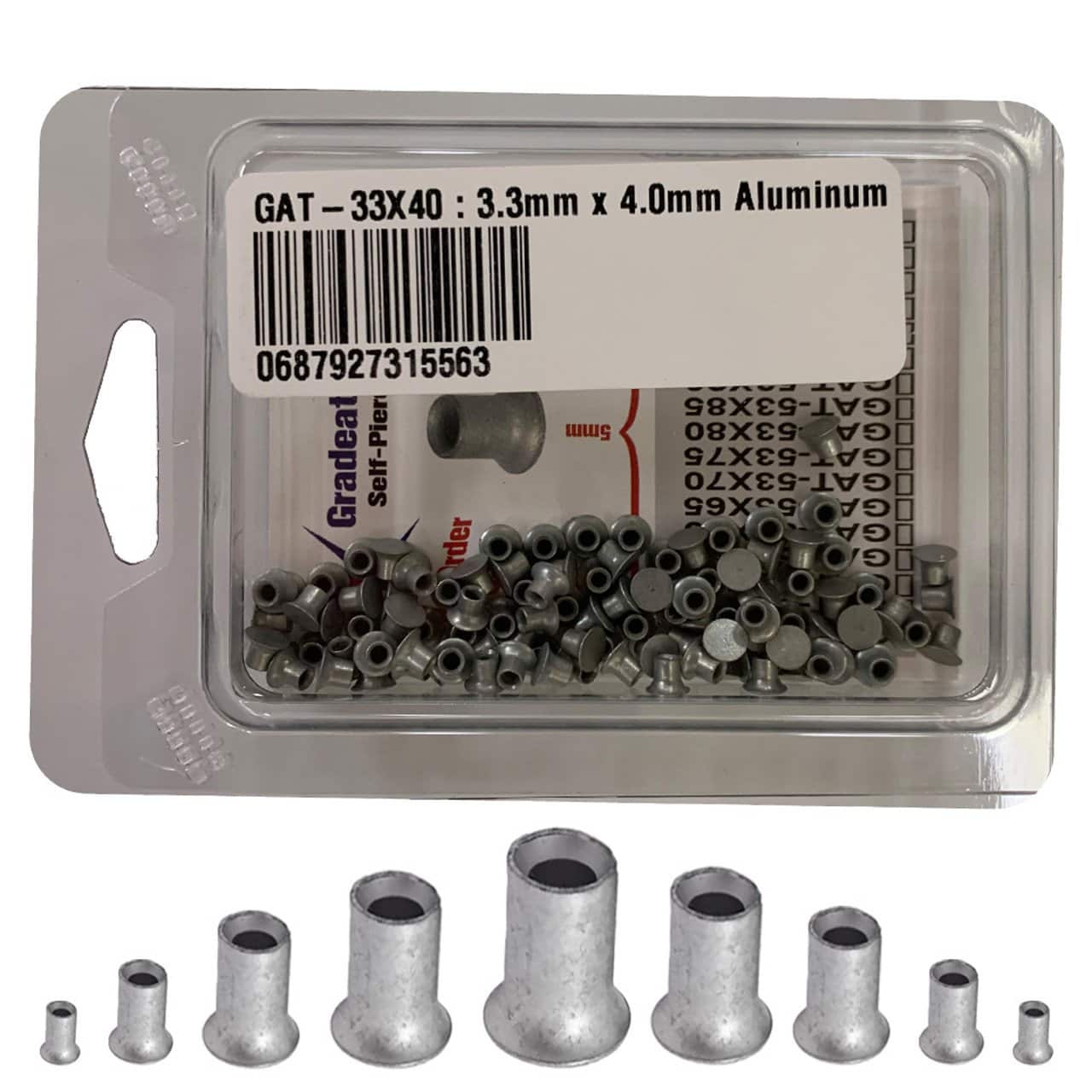
Aluminum repair tools represent the single biggest tooling shift facing collision repair shops. Modern vehicles increasingly use aluminum body panels and structural components. Repairing aluminum with steel-dedicated tools causes galvanic contamination that accelerates corrosion.
How Aluminum Tools Differ from Traditional Steel Equipment
Aluminum repair requires dedicated equipment that never contacts steel. This means separate dollies, hammers, spoons, and sanding discs. Cross-contamination introduces iron particles into aluminum, creating corrosion sites that undermine repairs.
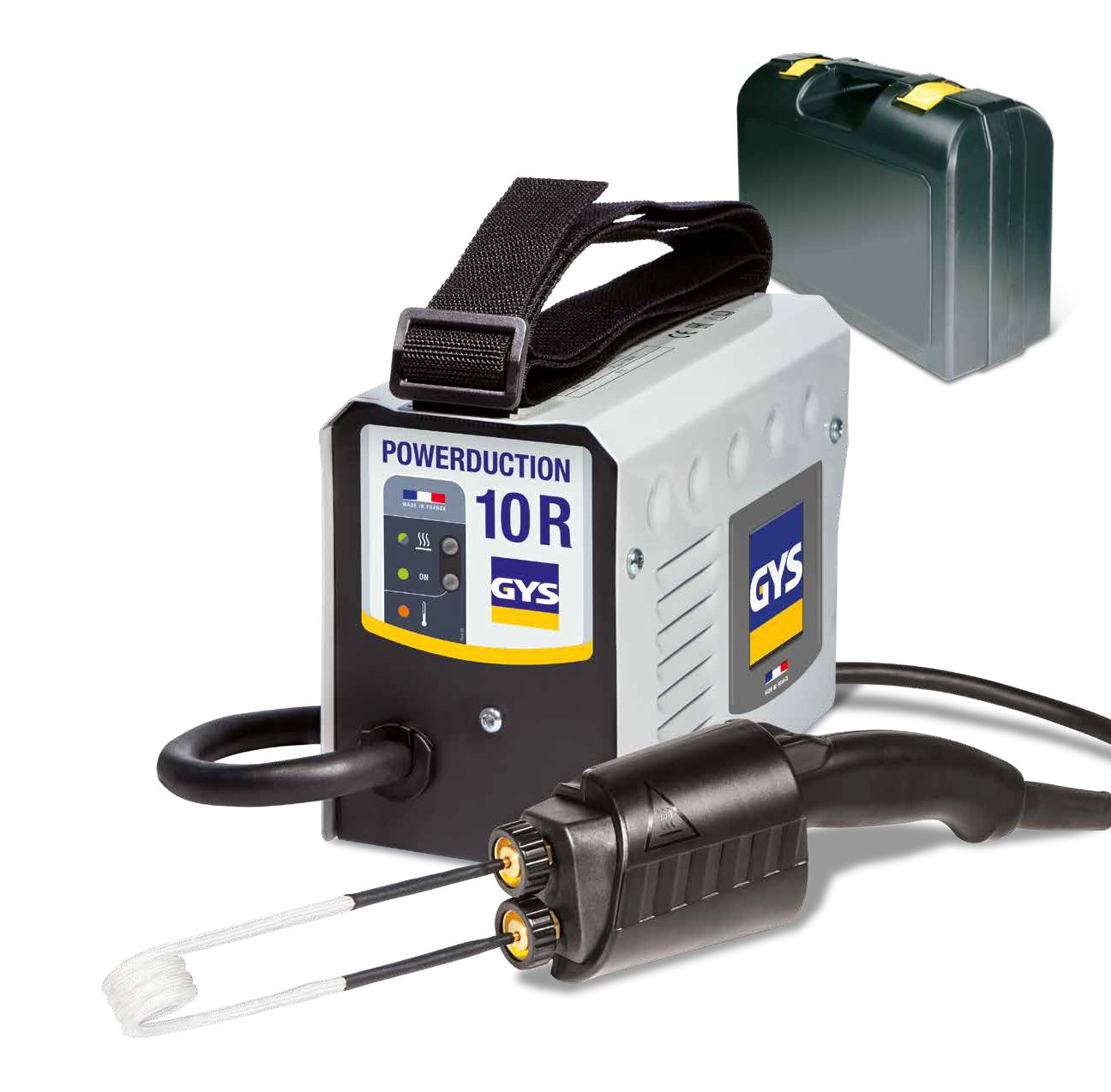
Aluminum dent repair requires different technique. The metal work-hardens faster than steel, so excessive hammering without annealing creates cracks. A dedicated aluminum stud welder allows technicians to weld aluminum pins to panels for pulling without heat distortion from MIG welding. Slide hammers and pulling bridges designed for aluminum complete the kit.
According to the Aluminum Association’s automotive industry resources, aluminum use in vehicle body structures is now standard across many segments. Shops without proper aluminum repair capability are turning away an increasing share of modern collision work.
Welding and Metal Fabrication Gear for Modern Restorations
Modern restoration diverges most sharply from traditional practice in welding. Ultra-high-strength steels used in modern chassis cannot be welded with settings for mild steel. Overheating destroys their strength properties, creating repairs that look correct but fail structurally.
The Pro Spot i5 Smart Spot Resistance Welder delivers over 13,000 amps with more than 1,000 lbs of squeeze pressure, handles ultra-high-strength steels including boron, and includes automatic thickness measurement. For shops working on modern collision repair, a resistance spot welder capable of matching OEM weld specifications is essential.
For fabrication work, a MIG welder with adjustable wire speed and voltage handles panel replacement and custom fabrication. The key specification is the ability to weld thin-gauge material without burn-through. A quality MIG setup with a spool gun attachment enables aluminum MIG welding for structural repairs.
A blasting cabinet rounds out the metal fabrication toolkit. Media blasting is the most effective method for rust removal on chassis components, producing a clean surface for coating without dimensional loss from aggressive grinding.
For modern vehicle restoration, your welder must match the material. A basic MIG welder is sufficient for mild steel panel work, but ultra-high-strength steel chassis repairs require a resistance spot welder with OEM-level specifications. Cutting corners on welding equipment produces repairs that pass visual inspection and fail structurally.
Paint, Bodywork, and Surface Prep Tools
Surface preparation determines paint quality more than the spray gun does. This is where most shops underinvest.
Spray Guns, Sanding Discs, and Dust Extraction
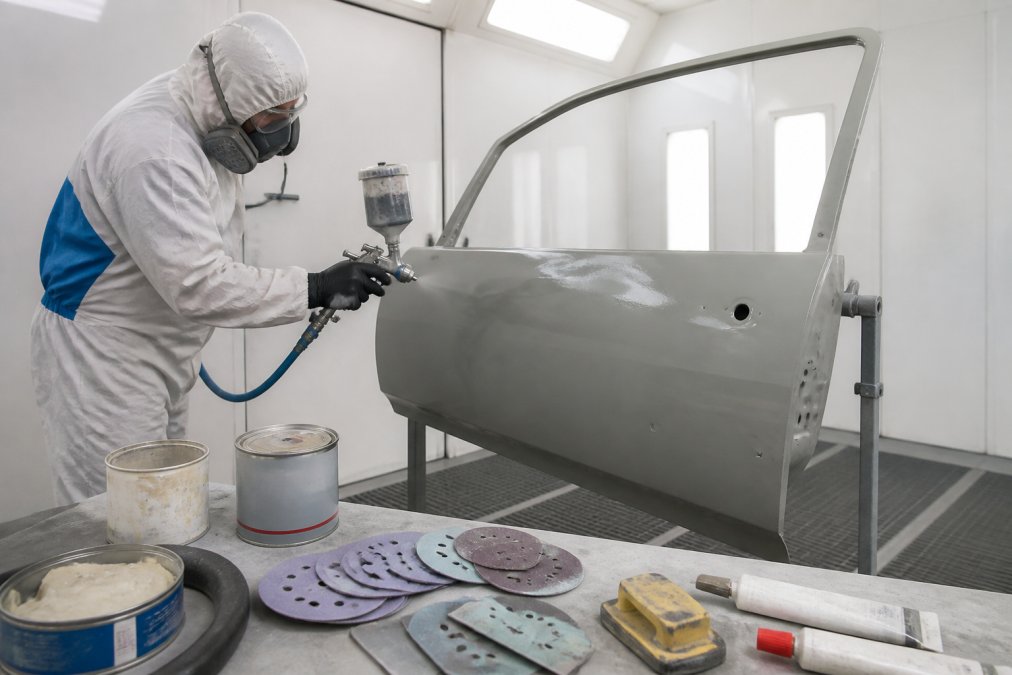
The SATAjet X 5500 spray gun is a professional benchmark. Available in HVLP and RP configurations, it delivers consistent fan patterns and high transfer efficiency, reducing material waste. For shops doing high-volume paint work, efficiency gains pay for the investment through reduced material cost.
Sanding discs are a consumable where quality directly affects output. Products like 3M’s Cubitron II use precision-shaped grain technology for faster cutting and longer disc life. Using the right grit progression eliminates rework from skipped stages.
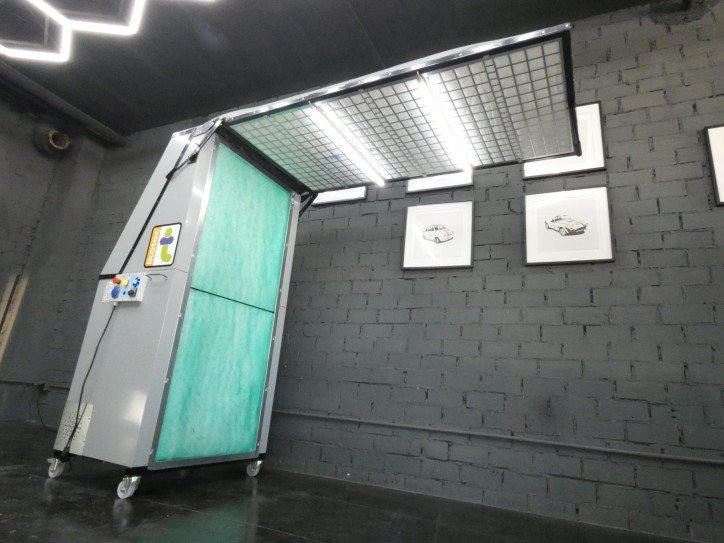
Dust extraction is critical. Sanding without proper extraction creates contaminated paint environments, health hazards for technicians, and abrasive particles that load sanding discs prematurely. The Mirka Dust Extractor 1230 HEPA PC provides HEPA-certified filtration with 250 mbar vacuum and 4,500 liters per minute airflow. The NIOSH guidelines on occupational exposure to wood and automotive dust confirm that prolonged exposure to fine particulates carries respiratory risk. A quality dust extractor is a safety investment as much as a productivity one.
Body filler application requires flat, rigid sanding blocks. Hand sanding with flexible backing produces waves; proper sanding blocks keep surfaces true.
Digital Diagnostic Tools and Modern Vehicle Restoration Integration
Modern vehicle restoration now includes digital diagnostics, a category that didn’t exist in traditional shop guides. Modern vehicles are rolling networks of control modules, and restomod builds that don’t address electronic architecture are incomplete.
The Autel MaxiSYS Ultra represents the professional standard. It covers OE-level functionality for over 80 vehicle brands and 10,000 models, includes a 5-in-1 VCMI device combining oscilloscope, multimeter, waveform generator, VCI, and CAN BUS tester, and runs AI-powered diagnostic topology mapping. For shops integrating modern drivetrains into classic builds, a diagnostic tool capable of programming and coding replacement modules is essential.
The Spanesi Touch Electronic Measuring System addresses structural collision repair. This 3D measuring system maps frame and structural damage with precision, enabling accurate repair planning before metal work begins. It’s approved by major vehicle manufacturers. For insurance-grade collision repair, this documentation level is increasingly required.
Diagnostic and measurement tools also serve as liability protection. Documented pre- and post-repair measurements demonstrate that structural repairs met specification. As I-CAR’s professional development resources for collision repair note, proper documentation of structural repairs is a professional standard.
Automotive Shop Efficiency Strategies: Organizing Your Tool Investment
Shop efficiency starts with tool organization. A disorganized shop loses hours weekly searching for tools, and technicians working around clutter make more mistakes.
Must-Haves vs. Nice-to-Have Upgrades: ROI-Based Buying
The most common mistake is buying nice-to-have tools before must-haves are covered. Here is a clear framework:
| Tool Category | Must-Have | Nice-to-Have Upgrade | Primary ROI Driver |
|---|---|---|---|
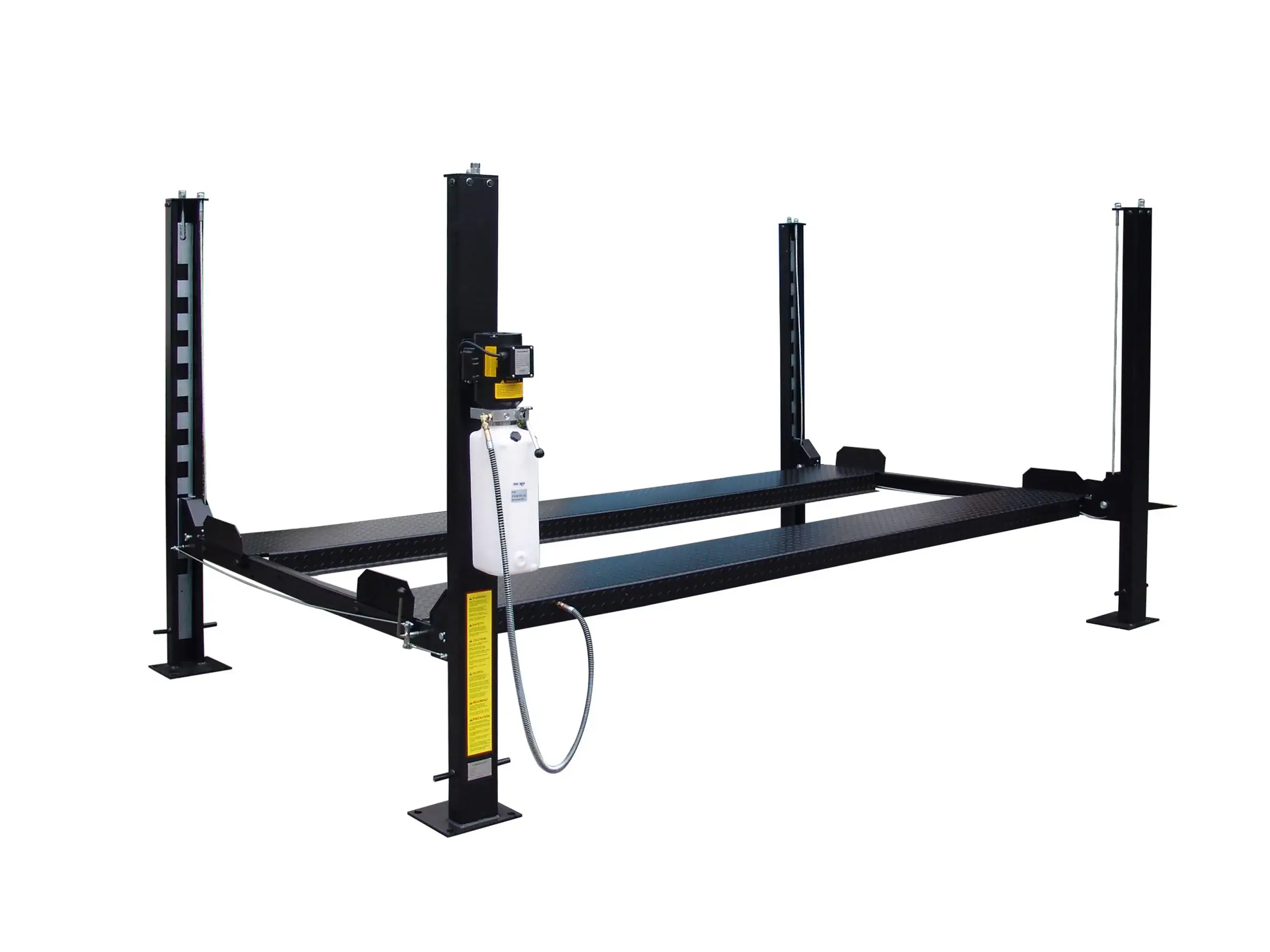
| Lifting equipment | 3-ton floor jack + rated jack stands | Two-post or four-post lift | Cycle time on full-vehicle access |
| Impact fastening | Cordless 1/2" impact wrench | Pneumatic high-torque for sustained use | Technician mobility, speed |
| Welding | MIG welder for panel work | Resistance spot welder for structural repair | OEM-spec repair quality |
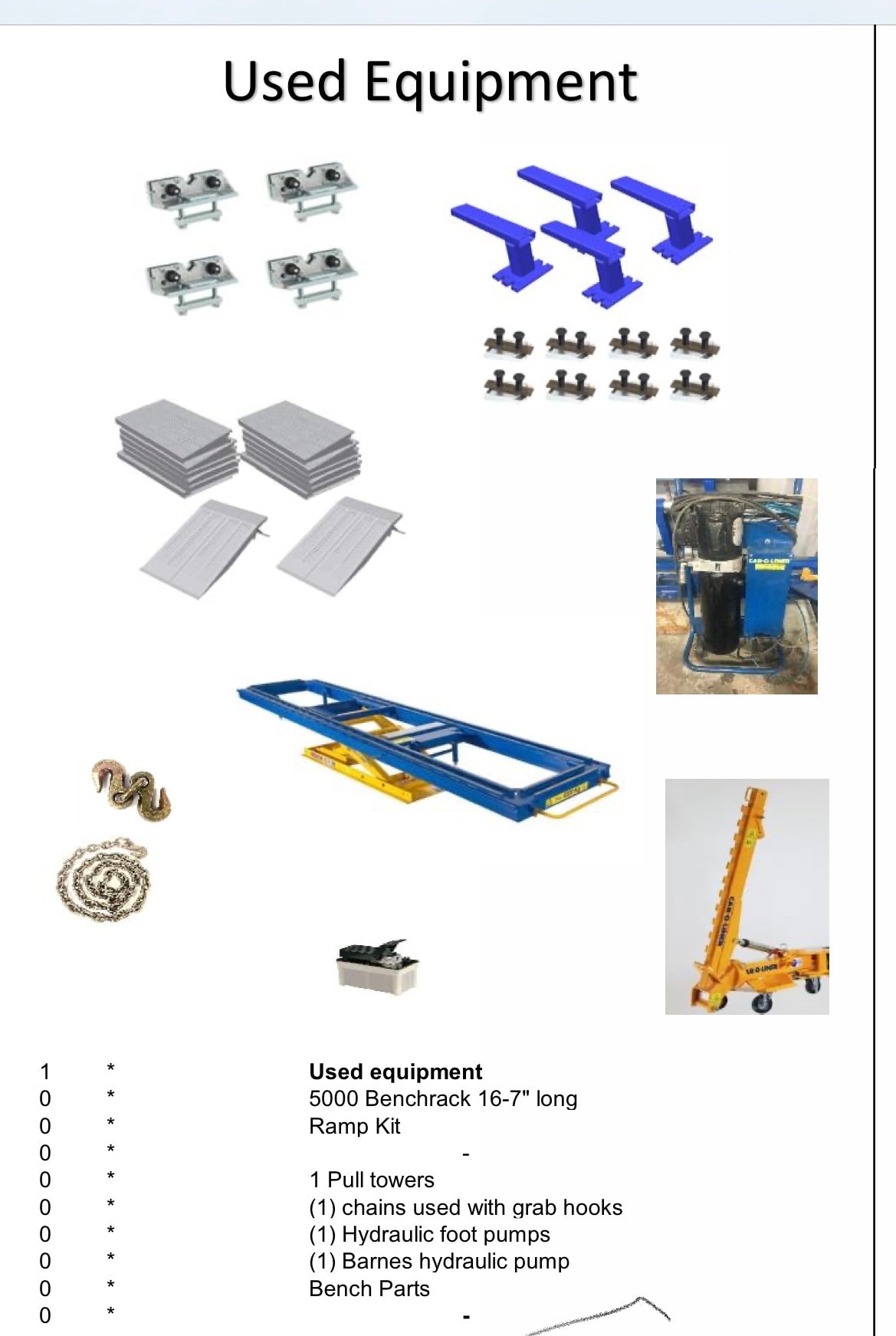
| Aluminum repair | Dedicated stud welder + pulling tools | Full aluminum bench system | Access to modern vehicle work |
| Diagnostics | Professional scan tool | 3D measuring system | Documentation, liability protection |
| Paint application | Professional HVLP spray gun | Integrated dust extraction system | Finish quality, material efficiency |
| Surface prep | Quality sanding discs + rigid blocks | Orbital sander with dust extraction | Speed, technician health |
Shops with five bays or fewer should prioritize the must-have column completely before investing in upgrades. The ROI on a professional scan tool comes from the diagnostic work it enables. The ROI on a 3D measuring system comes later, when the shop handles enough structural repairs to justify the capital.
Safety Gear, PPE, and Tool Maintenance
Safety gear is part of tool investment, not a separate budget line. Every technician working with pneumatic tools, welding equipment, or paint products needs appropriate PPE: safety glasses rated for impact, hearing protection, respirators appropriate to the task, and welding helmets with auto-darkening lenses.
Tool maintenance directly affects safety and ROI. A torque wrench not calibrated in three years is not a torque wrench, it’s a breaker bar with a false readout. Calibrate precision tools on a documented schedule, inspect air hose connections before each use, and keep cutting tools sharp. Dull sanding discs work slowly and generate excess heat, which can lift paint and damage substrates.
Pneumatic tool maintenance includes regular lubrication through the air inlet, draining moisture from the compressor tank weekly, and inspecting fittings for leaks. A 10% pressure drop at the tool from a leaking fitting means 10% reduction in tool performance across every pneumatic tool in the shop.
Frequently Asked Questions
What tools are essential for modern vehicle restoration?
A solid vehicle restoration setup starts with a quality floor jack and jack stands for safe lifting, a torque wrench and socket set for fasteners, and an impact wrench for heavy removal work. Beyond hand tools, you need an air compressor to run pneumatic tools, a welder suited to the vehicle's materials, and surface prep gear like sanding discs and a spray gun. For modern vehicles, a diagnostic scan tool is increasingly non-negotiable to read and reset ECU data after structural or drivetrain work.
How does aluminum repair equipment differ from traditional steel tools?
Aluminum and steel require completely separate tool sets to prevent cross-contamination, which causes corrosion on aluminum panels. Dedicated aluminum repair tools use different dent pulling methods, stud welders calibrated for lower heat, and non-ferrous sanding and grinding equipment. Sharing grinders or files between steel and aluminum work deposits iron particles into the softer metal, causing rust from the inside out. Shops handling both materials need clearly labeled, dedicated tooling for each substrate to meet OEM repair standards.
What are the best diagnostic tools for modern car restoration?
Professional-grade scan tools like the Autel MaxiSYS Ultra and Snap-on VERUS Edge cover OE-level diagnostics, ECU programming, and advanced testing across thousands of vehicle models. For restoration work, the ability to read live data, run guided component tests, and perform module calibrations after chassis or drivetrain changes is critical. These tools also support restomod builds where modern electronics are integrated into classic car platforms, making digital diagnostics a core part of the restoration workflow rather than an optional add-on.
How can I improve shop efficiency during a vehicle restoration?
Automotive shop efficiency during restoration projects improves most when tools are organized by workflow stage: disassembly, metalwork, paint prep, and reassembly. Investing in a dust-free sanding system with a HEPA extractor reduces cleanup time and protects abrasives, extending their life. Cordless power tools eliminate hose management delays. Precision measuring systems catch frame damage early, preventing costly rework later. Standardizing on a core tool platform also reduces technician retraining time when staff rotate between bays or projects.
Do I need specialized equipment for modern vehicle bodywork compared to classic car restoration?
Yes. Modern vehicles use advanced high-strength steels, aluminum alloys, and multi-material construction that standard legacy tools cannot handle safely or correctly. Ultra-high-strength steel panels require resistance welders with sufficient amperage and squeeze pressure, such as systems exceeding 13,000A. Aluminum panels need dedicated non-ferrous tools. Additionally, modern vehicles have complex sensor and ADAS systems that require recalibration after bodywork, making a professional diagnostic scan tool part of the standard bodywork toolkit rather than optional shop equipment.
The challenge every restoration shop faces is the same: modern vehicles demand modern tooling, but capital is finite and every purchase needs to earn its place. KGM Equipment offers top-quality auto body and industrial machinery, including specialized aluminum repair tools and advanced collision repair equipment, built for professional shops that can’t afford downtime. Subscribe to our newsletter for tool guides, product updates, and shop efficiency strategies delivered directly to your inbox.
This article was written using GrandRanker

